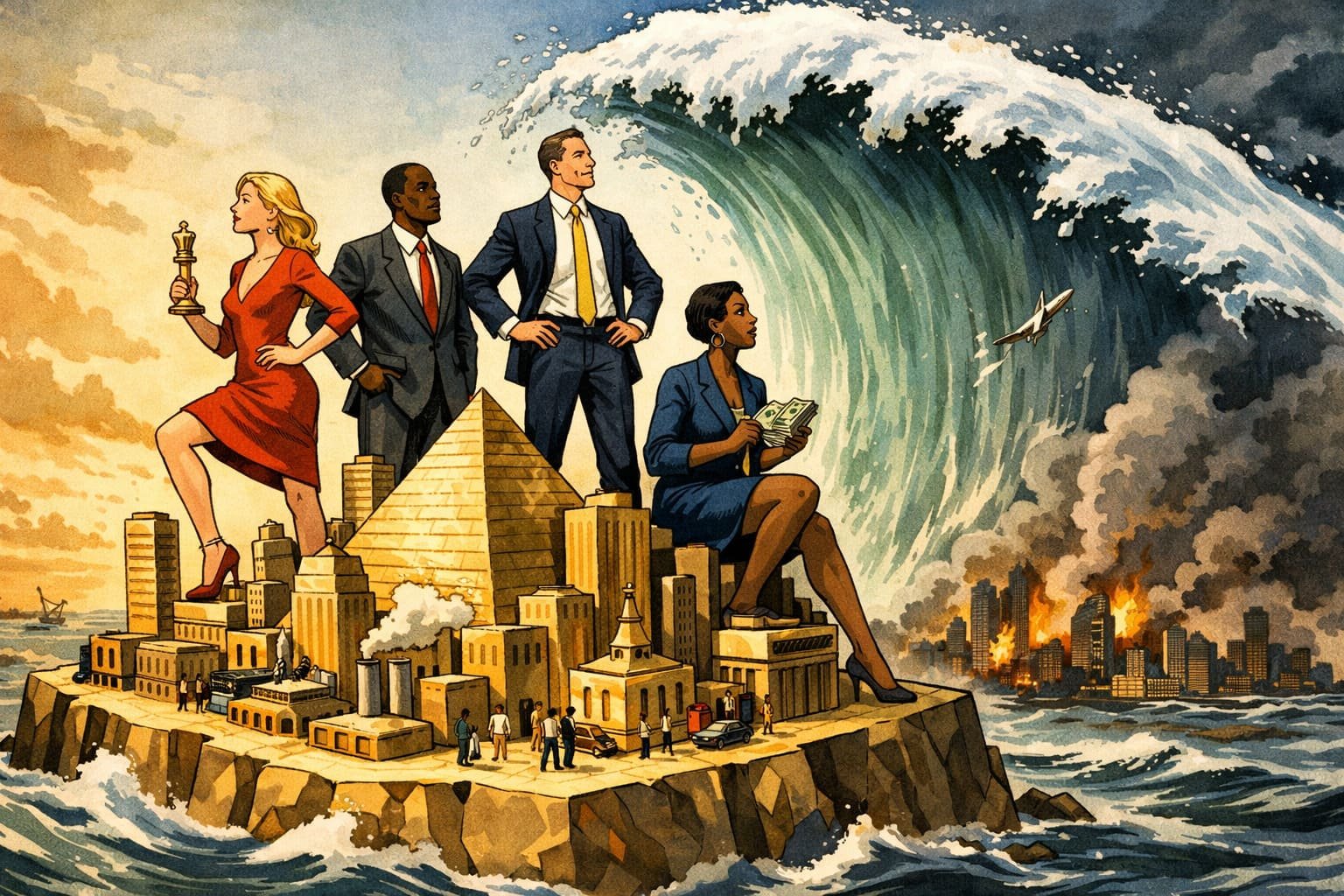
The boardroom was unusually quiet. Charts covered the walls, revenue projections stretched confidently across massive screens, and executives celebrated another record-breaking quarter. Every number pointed upward. Every presentation praised the company’s remarkable success. Then the newest analyst asked a question that seemed almost unfair. “If everything is working so well, why are our fastest-growing competitors doing business completely differently?” The celebration faded into thoughtful silence. History has never been kind to businesses that mistake today’s success for tomorrow’s security. Empires rarely collapse because they stop growing. They collapse because their business models stop evolving before the market does.
Every successful company operates through a business model, whether leaders consciously define it or not. A business model explains how value is created, delivered, and transformed into sustainable profit. It determines who the customers are, why they buy, how the organization earns revenue, and what makes competitors struggle to imitate its success. Products may change. Technologies certainly will. Markets never stop moving. Yet businesses with adaptable models continue finding new opportunities while rigid organizations slowly lose relevance despite impressive histories and loyal customers.
Many executives devote enormous energy to improving products while paying surprisingly little attention to improving the model supporting those products. Better marketing, larger sales teams, and additional features may temporarily strengthen performance, but they rarely protect a business from fundamental disruption. Markets change because customer behavior changes. The organizations dominating tomorrow are those willing to redesign how they create value before external pressure forces painful transformation. Innovation becomes most powerful when it challenges assumptions rather than simply polishing existing practices.
Entrepreneur Gabriel built a successful office furniture company serving corporate clients for nearly two decades. Revenue remained stable until hybrid work transformed how businesses purchased furniture. Orders gradually declined despite excellent craftsmanship and competitive pricing. Instead of reducing costs alone, Gabriel reimagined the company’s business model. He introduced subscription-based workspace solutions, flexible leasing, and customized home office packages for remote professionals. The products remained familiar, but the way customers accessed them changed dramatically. Growth returned because the business adapted its model before competitors fully recognized the opportunity.
Corporate history offers powerful examples of this principle. Netflix transformed itself from a DVD rental service into a global streaming platform long before physical media became obsolete. Likewise, Adobe reshaped its business by moving from one-time software purchases to subscription services, creating more predictable customer relationships and recurring revenue. Neither company succeeded because it protected yesterday’s model. Both thrived because leadership recognized that business models deserve continuous reinvention, even during periods of remarkable success.
Strong business models also create resilience during uncertainty. Organizations with diversified revenue streams, adaptable delivery methods, and deep customer relationships recover more quickly when markets shift unexpectedly. They are less dependent on one product, one customer segment, or one distribution channel. Flexibility becomes a competitive advantage because change feels like an opportunity instead of a threat. Businesses built on rigid assumptions often discover their weaknesses only after disruption has already reshaped the marketplace.
Leadership plays a decisive role in protecting the business model from becoming outdated. Visionary executives encourage experimentation before certainty exists. They invite constructive disagreement, study changing customer behavior, and question long-held assumptions without abandoning the organization’s core purpose. Employees feel empowered to suggest improvements because innovation becomes part of everyday thinking rather than an occasional strategic initiative. The strongest cultures continuously ask, “If we started this business today, would we build it exactly the same way?” That single question has rescued countless organizations from gradual decline.
As another quarter closes and another set of impressive financial reports reaches the boardroom table, the greatest threat often remains invisible. It is not the competitor everyone is watching. It is the outdated model quietly hiding beneath impressive results. The companies remembered for generations are rarely those that defended yesterday’s success most fiercely. They are the ones that reinvented themselves before the market demanded it. Empires are not built by resisting disruption. They are built by redesigning the future before anyone else realizes it has already begun.
