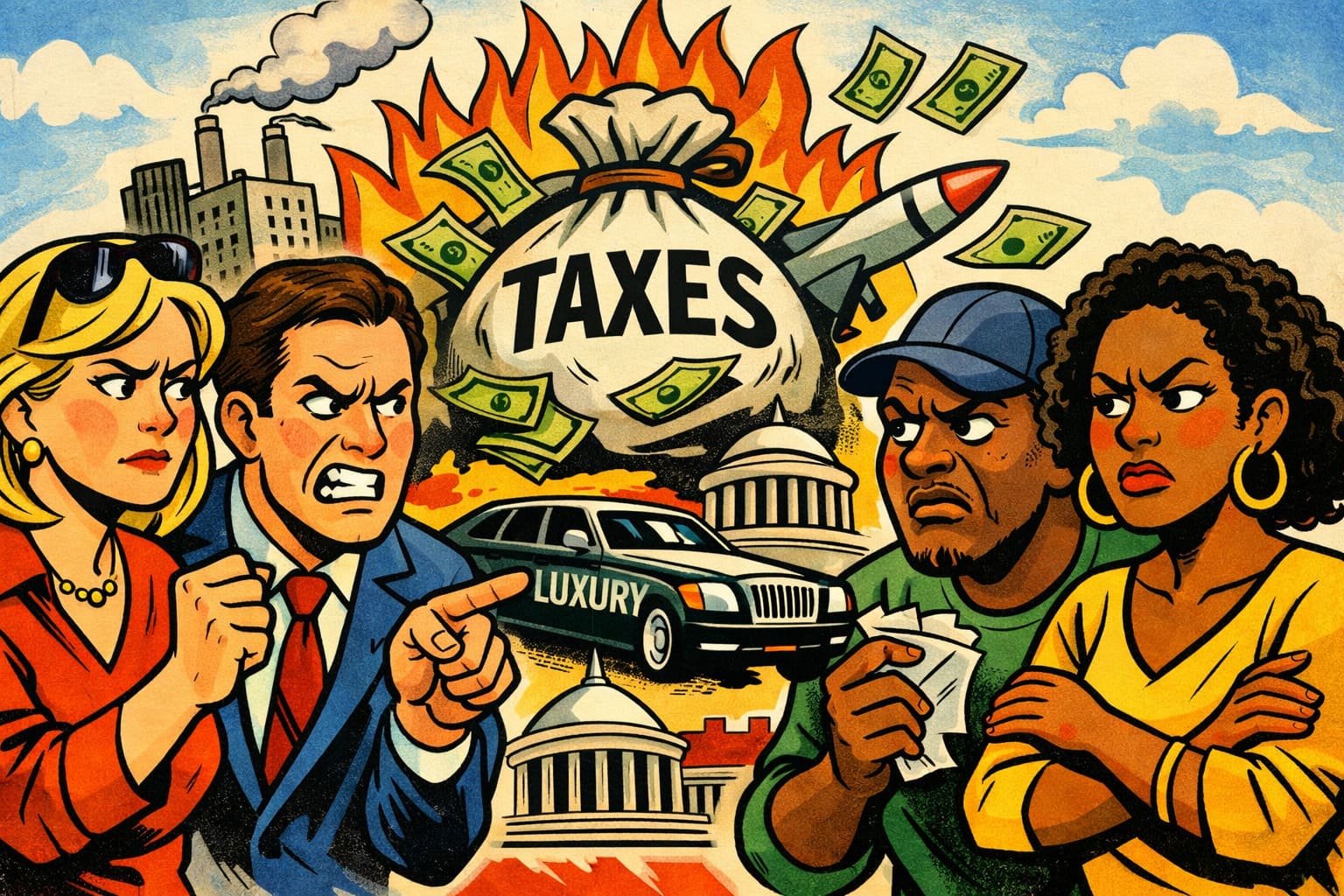
The tax bill rarely arrives like thunder. It arrives like a polite envelope, a payroll deduction, a property assessment, a sales receipt, a fuel charge, a school levy, a fee slipped into the monthly routine so quietly it almost feels civilized. That is how modern states prefer it. Yet the middle class has started to hear the full orchestra. It hears it at the grocery till, at the gas station, in mortgage payments, in rent, in childcare, in the stubborn arithmetic of a salary that looks respectable on paper and strangely exhausted by month’s end. Fiscal policy becomes personal the moment aspiration starts feeling punished.
That frustration is not simply about paying tax. Most working households understand that roads, schools, public safety, health systems, and pensions need money. The anger begins when taxation stops feeling like membership and starts feeling like extraction. A family can accept sacrifice when services work, when rules feel fair, when the burden looks shared. Resentment hardens when public waste becomes visible, when elite loopholes stay open, when inflation eats wages and the tax code pretends nothing happened. At that point the issue is no longer revenue. It becomes dignity, trust, and the feeling that effort is being quietly mugged.
The middle class sits in the worst political seat in the theater. It earns too much to attract constant sympathy and too little to shrug off policy mistakes. It gets told it is lucky, stable, solvent, and therefore available. Governments facing debt pressure or spending ambition often reach for this group because it is broad, organized enough to pay, and fragmented enough to struggle with revolt. High earners can restructure. The poor can trigger moral and political alarm. The middle carries the weight because it is assumed to endure. That assumption has aged badly.
A teacher in a commuter town may not call herself a victim of fiscal design, but the ledger tells a sharper story. Her wage rises slower than the cost of ordinary life. Tax thresholds freeze. Utility bills bite. School contributions multiply. A side hustle pulls in extra cash, only to drag a larger share into the official net. Nothing looks dramatic in isolation. Together it feels like a slow robbery committed by respectable institutions. The middle class does not explode because of one headline tax rise. It curdles because a hundred small grabs turn ambition into maintenance.
France offered one of the clearest warnings. The Yellow Vest protests were not merely about fuel taxes. They were about recognition. Many citizens heard climate policy in Paris and felt punishment in the provinces. When tax design ignores geography, class texture, and daily dependence on cars, policy loses its moral claim. A green levy in a wealthy city can feel like virtue. The same levy in a town built around long commutes can feel like contempt. Fiscal economists sometimes call that incidence. Voters call it being ignored by people who never stand in the same queue.
Britain’s experience with frozen income tax thresholds exposed another source of anger. Rates can remain untouched while the state quietly harvests more from inflation and nominal wage drift. This kind of hidden tightening is elegant in a treasury memo and poisonous in public life. It creates the impression that honesty has left the room. Citizens are told that taxes have not risen, even while more of their pay disappears. The middle class hates not only pain but also the suspicion that the pain is being sold back to it as prudence, reform, or technical necessity.
The problem becomes sharper when governments spend badly. Voters can stomach heavy burdens in places where public transport works, hospitals feel competent, schools are solid, and permits do not require spiritual endurance. They become combative where tax money seems to vanish into administrative fog, political vanity, or procurement theater. Nordic countries are often praised not because people adore handing over income, but because the bargain feels legible. In weaker states the opposite happens. Tax becomes a symbol of broken reciprocity. The issue is not the existence of the state. It is whether the state still behaves like a partner.
There is also a deep cultural insult hidden inside middle class tax anger. Many people were raised on a simple promise. Study hard, work steadily, buy carefully, save patiently, and life will widen. Taxes do not break that promise by themselves. Stagnant growth, inflated housing costs, costly education, and fragile public services do that. Taxation merely becomes the visible face of a broader disappointment. It is the government’s signature on a contract that no longer delivers upward movement. That is why the revolt feels emotional. The argument is not just about money. It is about a story of adulthood going sour.
A contrarian truth sits in the middle of the noise. The answer is not always lower taxes. Some states truly need more revenue. Aging societies cost more. Security costs more. Climate adaptation costs more. The real question is sharper and far less comfortable. What should be taxed, who should bear the burden, how transparent should that burden be, and what services must visibly improve in return? Lazy anti tax politics can be as dishonest as lazy pro tax politics. One pretends pain has no public purpose. The other pretends citizens owe obedience without evidence.
Smarter fiscal design starts with respect for how households actually live. Tax codes should stop punishing marriage, extra work, mobility, and saving. Consumption taxes should be balanced against the realities of energy and transport dependence. Property taxation should reflect service quality and local income texture, not just administrative appetite. Most of all, governments need to cut waste with the same moral drama they apply to revenue hunting. Nothing restores legitimacy faster than visible discipline at the top. Citizens notice when states ask for sacrifice after refusing extravagance. They also notice the reverse, and they do not forget.
The middle class revolt is often described as populist heat, as if it were a passing fever caused by misinformation and mood. That is too convenient. What is rising is a disciplined suspicion that modern fiscal states have become addicted to the solvency of people who still play by the rules. That suspicion grows each time a family does everything society asked and still feels cornered. Fiscal pressure can survive complaint. It cannot survive moral delegitimization. Once taxpayers decide the game is rigged, compliance becomes thinner, politics grows meaner, and reform becomes harder than arithmetic suggests.
Somewhere under all the spreadsheets stands a quiet household, not rich enough to escape, not poor enough to be protected, still trying to believe effort matters. It pays, waits, copes, adjusts, and watches officials describe that endurance as resilience. The word lands like a smirk. States that keep reaching into that pocket without repairing the bargain will learn a lesson every empire eventually learns: people can tolerate burden for a long time, but they revolt the moment sacrifice starts looking one sided. The real question is not whether the middle class is angry. It is how much longer patience can be taxed before belief itself files for exit.
