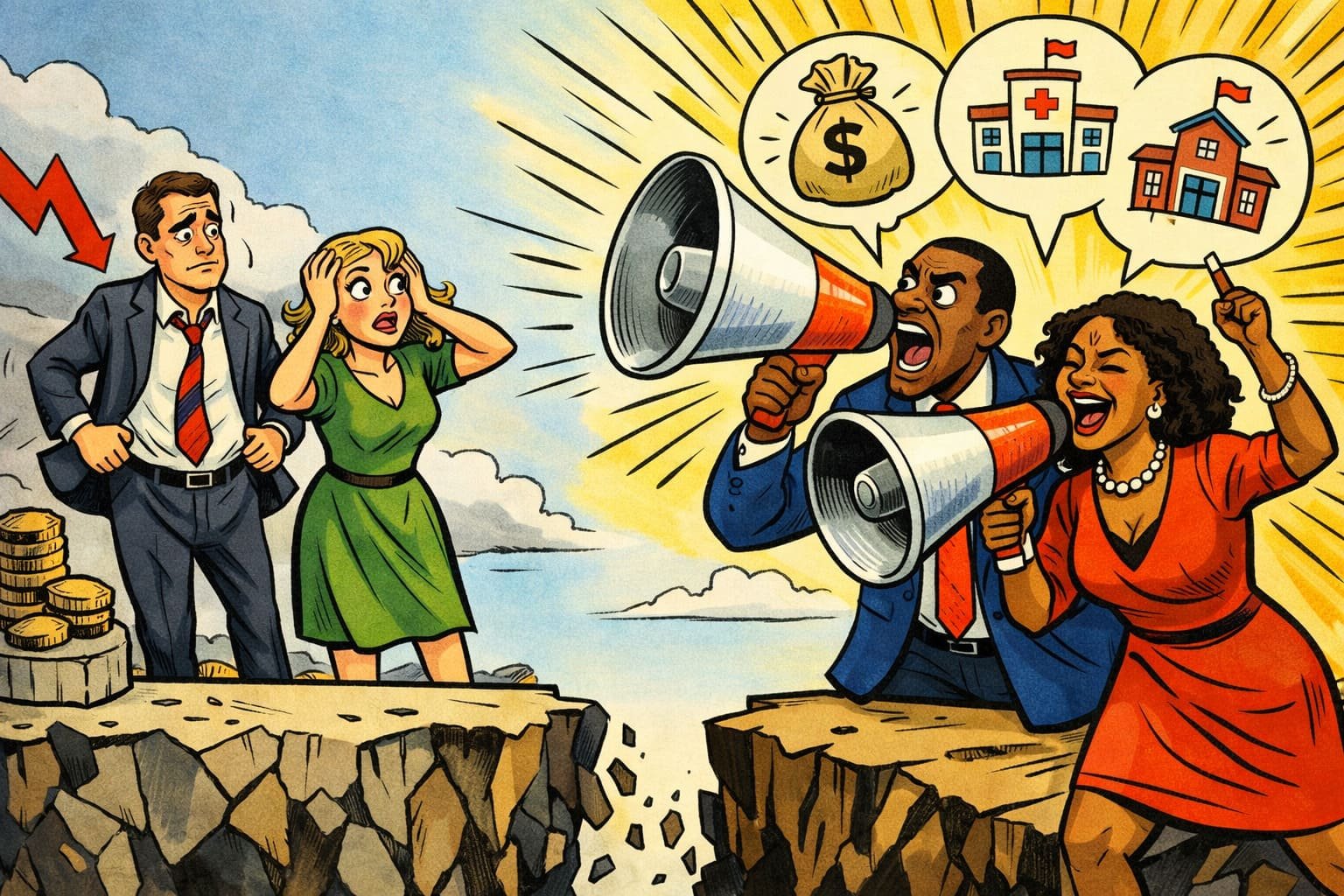
There is a moment in many governments when the budget starts to resemble a crowded elevator. Everyone is still trying to get in. Nobody wants to get out. Health demands more. Defense wants urgency. Teachers want fairness. Pensioners want dignity. Infrastructure needs repair. Climate adaptation knocks with muddy shoes. Interest costs wait in the corner like a silent passenger taking up more room each floor. Then politicians step up to the microphone and promise even more.
That is what a shrinking fiscal space feels like. Not abstract scarcity, but collision. The IMF’s classic definition still holds because it captures the real issue cleanly: fiscal space is the room a government has to spend on desired purposes without jeopardizing sustainability or stability. Once that room narrows, every new promise becomes more expensive politically and more dangerous financially. The problem is not lack of worthy causes. The problem is that worthiness does not cancel arithmetic.
Modern politics makes this harder because promises travel faster than constraints. A candidate can announce tuition support, expanded housing aid, new industrial subsidies, and lower taxes in a single speech. The crowd hears relief and ambition. Very few hear the silent competition among line items already baked into the state. Fiscal space does not vanish because leaders care too much. It vanishes because systems keep layering commitments without retiring old ones or raising enough dependable revenue to fund the whole pile.
Higher real interest rates sharpen this pressure. The IMF has recently noted that the normalization of monetary policy has reversed a decade of favorable financing conditions. That means yesterday’s debt habits can hurt more today even if the debt stock itself has not become suddenly exotic. Refinancing becomes heavier. Margins thin. The political fantasy that governments can simply grow their way out without hard prioritization starts looking less like optimism and more like karaoke.
A social minister in an aging democracy might stare at three memos before breakfast. One shows rising care needs. Another details weak infrastructure resilience after storms. The third projects growing debt service. None of these claims is frivolous. That is what makes the squeeze so cruel. Fiscal stress is often presented as a morality tale about waste. In reality, some of the hardest squeezes emerge because legitimate needs collide under tighter financing conditions. Good intentions can still bankrupt flexibility.
Shrinking fiscal space also changes policy quality. When governments feel boxed in, they reach for gimmicks. They delay maintenance because potholes complain less than bond markets. They use off-budget vehicles because official ledgers look embarrassing. They announce reform commissions when what they really need is a ranking of priorities. Scarcity does not always produce wisdom. Sometimes it produces theater with annexes.
The countries that navigate this best tend to do two things that sound unfashionable. They distinguish between permanent and temporary spending with ruthless clarity. They also protect room for future shocks. That means running surpluses or at least restraint in better years, not because restraint is morally beautiful, but because storms are never scheduled politely. Fiscal space is built before it is used. That is the part electorates rarely celebrate until they need it.
There is also a trust angle that many technocrats underestimate. Citizens can accept trade-offs when they believe the system is fair. They become furious when scarcity appears selective. People tolerate constrained budgets far better when procurement is clean, tax enforcement looks even-handed, and leaders are seen taking the same medicine they prescribe. Scarcity with hypocrisy is politically explosive. Scarcity with integrity can still command consent.
This is why fiscal space is not just an economic concept. It is a civic test. A government with little room but high trust can still act decisively. A government with moderate room and low trust may find every move contested. OECD work on transparency and public trust makes the connection plain. Openness about public money supports better outcomes and helps people believe sacrifice is not merely another word for being fooled.
A mayor in a flood-prone city knows the feeling intimately. Residents want safer streets, lower fees, better transit, and stronger emergency response. Insurance costs rise. borrowing gets harder. The city cannot postpone adaptation forever. It also cannot pretend infinite generosity. Every decision bruises someone. That does not mean leadership has failed. It means leadership has arrived. The age of easy consensus belongs to richer moments.
Political noise grows loudest when fiscal space grows tight because rhetoric becomes a substitute for room. Leaders who cannot expand reality often expand vocabulary. Transformation. Renewal. Security. Inclusion. Growth. Competitiveness. These words may describe real aspirations. They can also function like decorative curtains hung over a shrinking doorway. Citizens eventually notice the wall behind them.
In the end, a budget is a moral map drawn under pressure. When room narrows, the map becomes more revealing, not less. It shows what a society protects first, what it is willing to defer, and whether its leaders can tell the truth without anesthetic. Promises will always grow louder because hope is politically addictive. The harder, nobler task is quieter: deciding what can still be honored when space itself begins to disappear.
