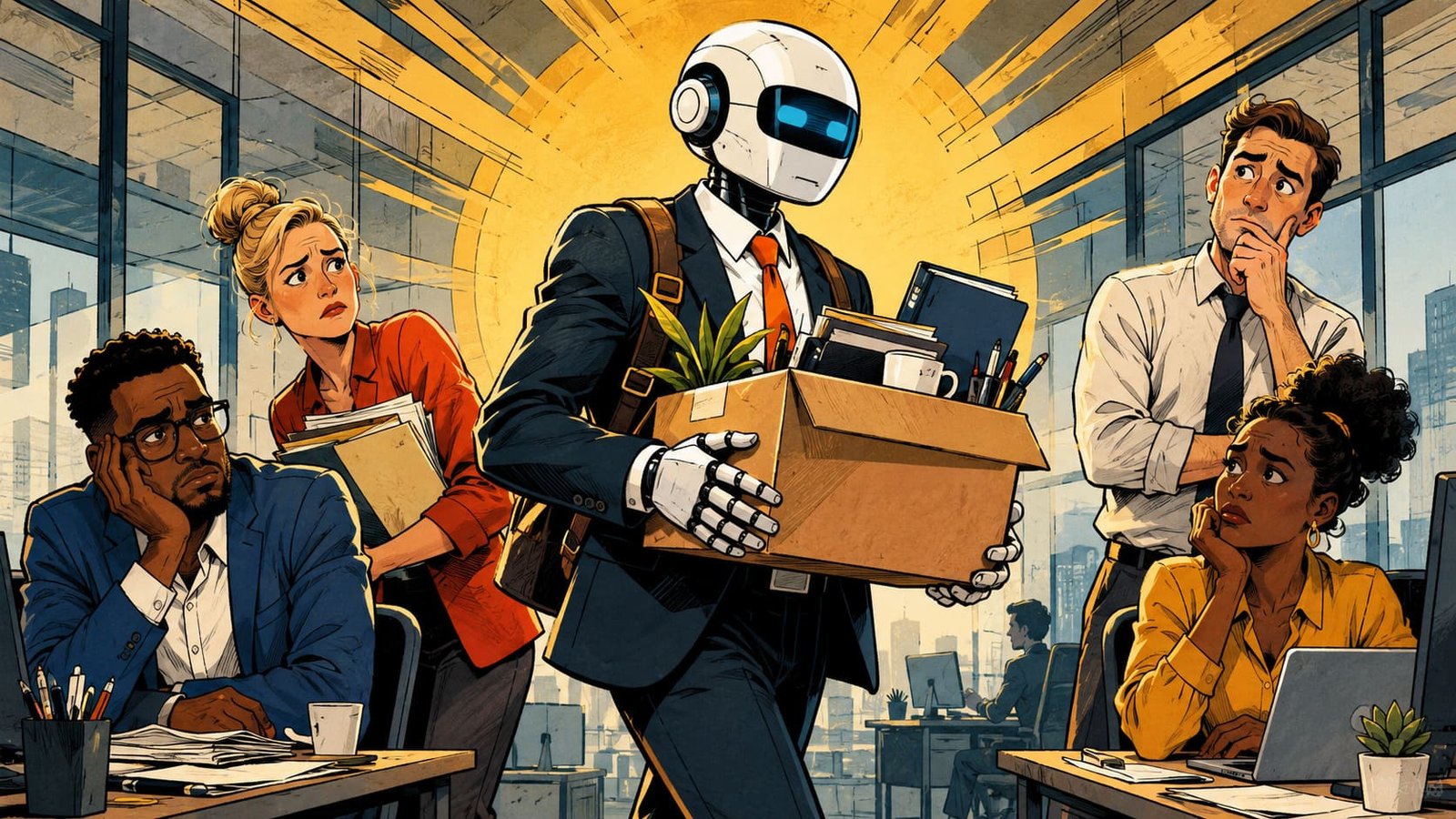
A digital assistant receives an instruction, opens several applications, compares documents, drafts a response, updates a record, and quietly moves to the next task. No keyboard rattles. No coffee goes cold beside a monitor. No employee has to remember which tab contained the crucial spreadsheet. AI agents are different from ordinary workplace software because they can act across a chain of tasks rather than simply wait for a human command at every step. That shift changes the question facing employers: not whether automation can help workers, but how much work can proceed without them.
For years, workplace automation targeted individual tasks. A spreadsheet calculated, software sorted, and a chatbot answered routine questions. Agents introduce a broader possibility because they can interpret instructions, use digital tools, make intermediate decisions, and continue toward an objective with less supervision. That creates enormous potential for productivity, but also a management problem that is easy to underestimate. When one system can perform dozens of connected tasks, a job built from those tasks can become smaller without anyone formally announcing that the job has disappeared.
A procurement manager named Idris notices this during a routine supplier review. An AI agent gathers quotations, compares contract terms, flags unusual price changes, drafts follow-up emails, and prepares a recommendation for approval. Idris is initially impressed, then uneasy. Much of his week has been built around coordinating exactly those activities. His value has not vanished, but its location has moved. Instead of spending hours collecting information, he must decide which supplier deserves trust, which risk matters, and when a seemingly efficient choice could create trouble later.
A marketing department encounters a similar shock when an agent begins handling campaign preparation. It can assemble audience research, draft variations, organize testing, summarize results, and prepare the next round without waiting for five separate instructions. A junior employee named Clara watches the workflow unfold and says, “That used to be my whole afternoon.” Her manager realizes the threat is not simply fewer tasks. Entry-level work itself may change because organizations often use routine assignments to teach judgment, context, and professional habits. Remove every small task, and companies may accidentally remove the training ground for future experts.
Leaders therefore need to redesign jobs before automation redesigns them accidentally. Agents should have clear boundaries, human approval points, access controls, reliable records, and defined accountability for consequential decisions. Employees need training that moves beyond tool operation toward supervision, verification, problem framing, exception handling, and judgment. The most dangerous organization may not be one that uses too much AI, but one that uses powerful agents without understanding where responsibility sits when an automated chain produces a costly mistake. Speed is seductive. Accountability is slower, but far more important.
An AI agent does not need a desk to change an organization. It only needs access to work that once occupied desks. That is why the coming disruption may feel less like a robot entering a factory and more like a tide entering an office, quietly reaching tasks that seemed too ordinary to automate until suddenly they are gone. Workers who build distinctive judgment, relationships, creativity, and domain expertise may find new leverage, while organizations that redesign roles thoughtfully can turn automation into augmentation. The real invasion is not machines taking jobs. It is machines forcing everyone to reconsider what a job was.
