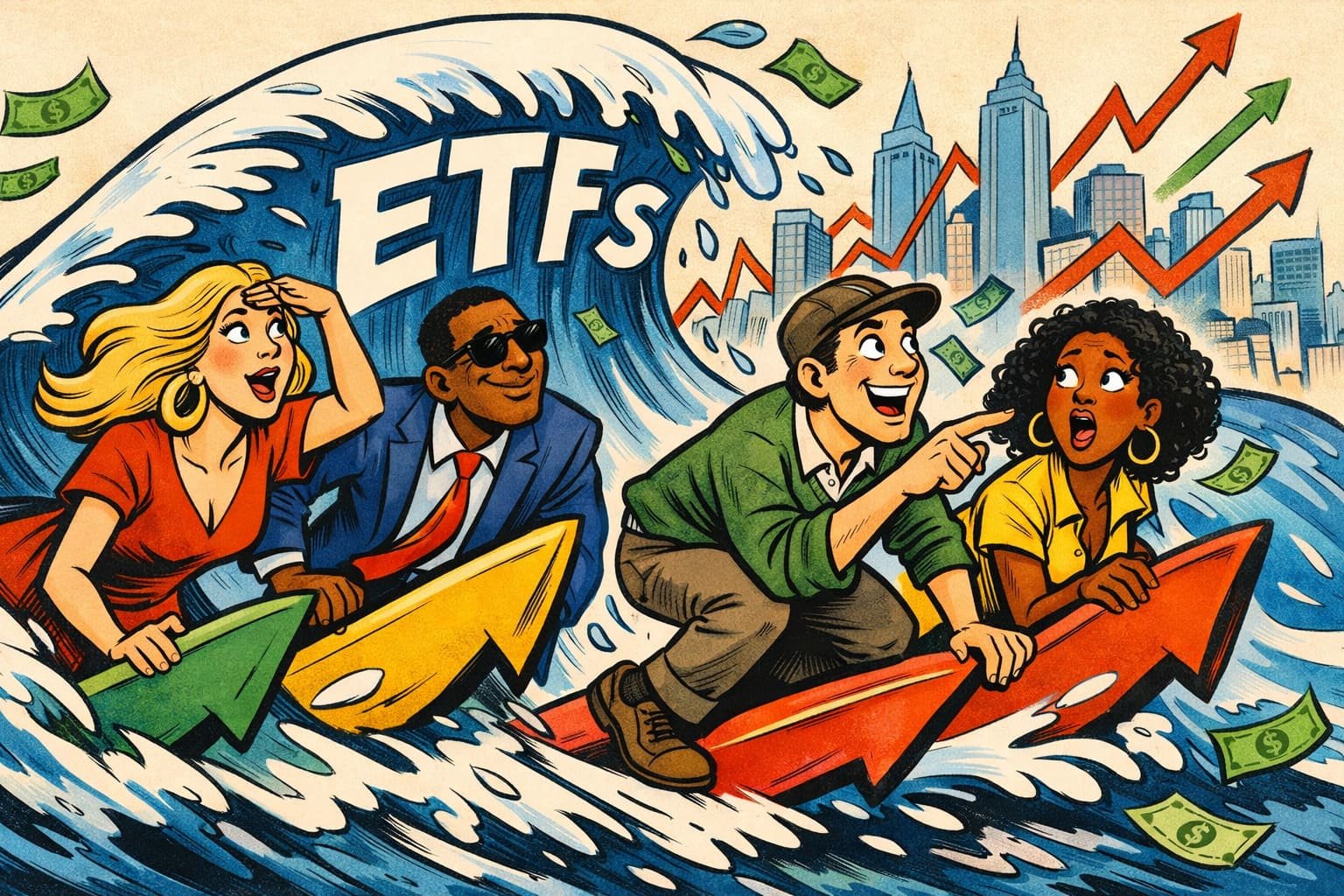
A trading floor can resemble a packed stadium moments before kickoff. Screens flash, coffee cools untouched, and nobody seems interested in asking why money keeps sprinting in the same direction. Every glance lands on another exchange-traded fund attracting fresh capital, almost as if invisible gravity has replaced judgment. That strange calm hides a louder story. Markets appear more diversified than ever, yet countless investors increasingly travel through identical financial highways, creating a quiet concentration that rarely makes headlines until confidence suddenly begins cracking.
Exchange-traded funds earned their popularity honestly. Lower costs, broad diversification, simple access, and transparent holdings solved frustrations that haunted generations of investors. Passive investing removed much of the emotional guesswork that fueled costly mistakes, allowing ordinary savers to participate in markets with remarkable efficiency. Vanguard transformed investing by making low-cost indexing mainstream, while BlackRock expanded exchange-traded products into nearly every imaginable asset class. Success invited imitation. Money flowed faster than critical thinking, and convenience slowly became a substitute for curiosity.
A portfolio manager named Farah once paused before approving another automatic allocation into broad equity funds. Her clients expected effortless growth because headlines celebrated passive investing almost daily. Instead of following habit, she examined underlying company weights and discovered that a surprisingly small collection of giant firms quietly dominated performance. Months later, market leadership shifted abruptly, exposing how diversification sometimes masks concentration. That lesson echoed through boardrooms where executives realized index inclusion could influence shareholder demand almost as much as business performance itself.
Passive investing also changes corporate behavior in subtle ways. Executives increasingly recognize that remaining inside influential indexes helps stabilize demand for company shares, encouraging stronger attention toward governance, disclosure, and predictable financial reporting. Yet another contradiction emerges. When ownership becomes dispersed across enormous asset managers, fewer investors actively challenge strategic decisions through detailed company research. Nobel laureate Eugene Fama argued that markets efficiently process available information, but efficient pricing still depends upon active participants willing to uncover information before everyone else follows.
Picture an orchestra where nearly every musician decides to follow recorded background music instead of listening closely to fellow performers. Harmony survives until unexpected improvisation enters the stage. Financial markets behave similarly. Active investors perform expensive research that helps establish fair prices, while passive investors benefit from those discoveries without carrying comparable costs. Economists call this a free-rider problem. Healthy markets require both approaches because one creates information while the other distributes capital efficiently across broad opportunities.
Curtains never fall dramatically inside finance. Tiny shifts arrive first, almost unnoticed, before reshaping expectations that once appeared permanent. Exchange-traded funds will almost certainly remain central pillars of modern investing because their advantages remain compelling, accessible, and enduring. Still, every remarkable innovation carries consequences that mature alongside success. Investors chasing simplicity should remember that effortless products can still conceal complicated risks. Ask yourself whether your portfolio follows genuine conviction, or merely joins a crowd moving because everyone else already has.
