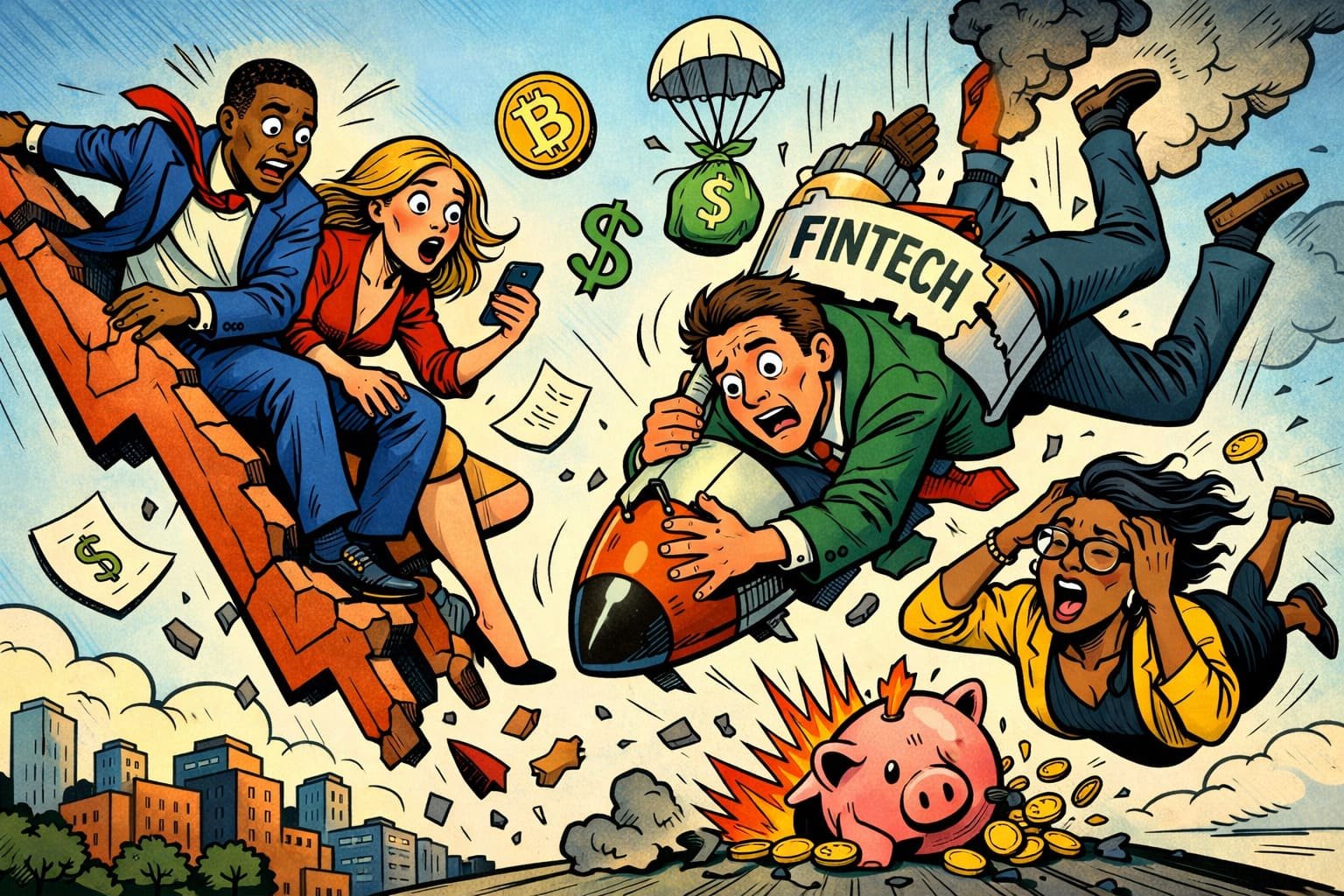
Crowds once gathered around glowing conference stages where founders promised to rebuild banking before lunchtime. Investors applauded, venture capital flowed with breathtaking speed, and every fresh funding round seemed to confirm that finance had finally escaped old rules. Excitement tasted almost permanent. Yet markets have a stubborn habit of asking difficult questions after celebrations fade, and those questions now define a new chapter for financial technology companies across the world.
Fintech never succeeded simply because technology looked impressive. Digital payments, online lending, embedded finance, and mobile investing solved real frustrations that traditional institutions had ignored for decades. Companies such as Stripe transformed online commerce by making payments nearly invisible, while Wise challenged expensive international transfers through simpler pricing and operational efficiency. Investors rewarded rapid customer growth for years. Today, stronger scrutiny surrounds profitability, sustainable cash flow, regulatory resilience, and disciplined capital allocation instead of user acquisition alone.
Maya founded a payroll software business serving independent contractors who rarely qualified for traditional banking services. Early growth attracted enthusiastic investors eager to fund expansion into neighboring markets. Then financing conditions tightened almost overnight, forcing every hiring decision onto a spreadsheet rather than a presentation slide. Revenue suddenly mattered more than ambition. Months later her business emerged leaner, serving fewer markets yet delivering stronger margins, proving that disciplined execution often survives where unchecked expansion quietly collapses.
History offers familiar reminders that financial innovation rarely replaces economic fundamentals. During previous technology booms, investors frequently confused rapid adoption with permanent competitive advantage. Many businesses expanded faster than their underlying economics could support. That pattern has returned. Public markets increasingly reward companies demonstrating operational discipline, predictable earnings, and responsible governance instead of endless customer subsidies. Harvard professor Clayton Christensen explained how disruption reshapes industries, yet enduring winners eventually master operational excellence after rewriting market expectations.
Curiously, many fintech executives now sound remarkably similar to bankers they once criticized. Conversations increasingly revolve around liquidity management, credit quality, compliance, operational resilience, and capital efficiency rather than exponential expansion. Irony lingers everywhere. JPMorgan Chase continues investing heavily in digital innovation while fintech firms strengthen risk controls once associated with traditional finance. Competition has not disappeared. Instead, both worlds are quietly borrowing strengths from one another, creating a financial ecosystem that prizes resilience over fashionable disruption.
Rain settles differently after fireworks disappear from the evening sky. Bright colors vanish first, leaving only steady reflections stretching across familiar streets where everyday decisions still shape tomorrow’s direction. Fintech has entered that quieter season. Success now belongs less to companies chasing headlines than to businesses capable of balancing innovation with disciplined financial stewardship, regulatory credibility, and lasting customer trust. Ask yourself which organizations are building excitement, and which are quietly building institutions that will still matter decades from now.
