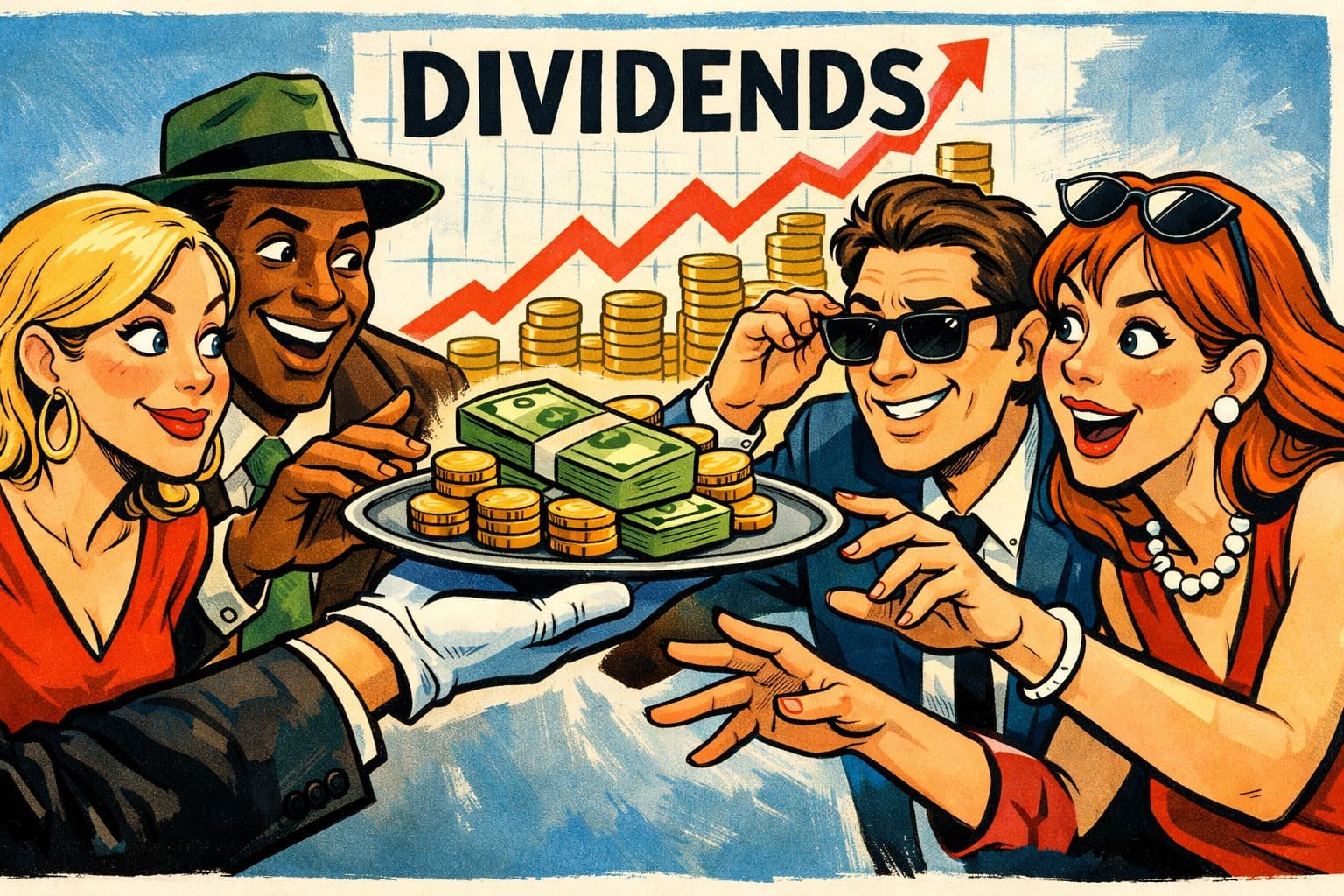
Curtains lifted inside an aging concert hall where applause arrived before anyone had taken the stage. That strange anticipation mirrors today’s financial markets. Investors who once chased dazzling growth stories now lean toward businesses that quietly return cash every quarter, finding comfort in predictable dividends rather than ambitious promises. Fashion has changed. Rising uncertainty, stubborn borrowing costs, and cautious economic expectations have transformed dependable income into one of the most attractive assets in modern investing, even when excitement seems to live elsewhere.
Dividend investing has never been merely about collecting periodic payments. It reflects confidence that a business generates enough consistent cash to reward shareholders while still funding operations and future growth. That balance is difficult to sustain. Companies distributing dividends without healthy earnings eventually face painful choices between maintaining investor trust and preserving financial flexibility. Accounting therefore becomes more revealing than marketing. Cash flow statements often expose a company’s true strength long before optimistic presentations or soaring share prices tell convincing stories.
Consumer giants such as Procter & Gamble and Coca-Cola have earned loyal investors because their businesses generate remarkably dependable cash across changing economic conditions. Their appeal extends beyond familiar brands. Investors value management teams that treat capital allocation with discipline, balancing reinvestment, acquisitions, debt reduction, and shareholder distributions over many years. A family-owned industrial supplier led by Elena followed a similar philosophy after resisting pressure to pursue risky expansion. Competitors chased rapid growth. Her steady dividend policy attracted patient investors who valued resilience above spectacular headlines.
Behavioral finance offers another explanation for this migration toward income-producing stocks. During uncertain periods, investors frequently place greater value on immediate and visible rewards than distant possibilities. A quarterly dividend becomes tangible proof that profits exist beyond accounting assumptions. Economist Benjamin Graham emphasized that investing ultimately depends upon weighing intrinsic value against market emotion. His observation still resonates because dividend-paying companies often attract shareholders seeking businesses rather than narratives, cash generation rather than fashionable speculation, and patience rather than constant excitement.
Critics sometimes dismiss dividend investing as unimaginative, arguing that companies should reinvest every available dollar into expansion. Reality proves more nuanced. Mature businesses often discover that disciplined capital returns create stronger long-term value than forcing unnecessary growth projects. Microsoft itself evolved into an important dividend payer after years of rapid expansion, demonstrating that rewarding shareholders need not signal declining ambition. Sometimes restraint becomes strategy. Markets occasionally confuse relentless activity with intelligent capital allocation, though history repeatedly separates the two.
Footsteps faded through polished marble as investors folded annual reports instead of chasing another breathless market rumor. Wealth has always carried an unusual contradiction because dramatic fortunes capture headlines while patient compounding quietly shapes lasting prosperity. Dividend investing rarely feels glamorous during moments of speculative excitement. Yet markets have an old habit of rewarding businesses that convert steady earnings into enduring trust. Perhaps real financial confidence begins when applause no longer depends on dazzling performances, but on promises fulfilled with remarkable consistency.
