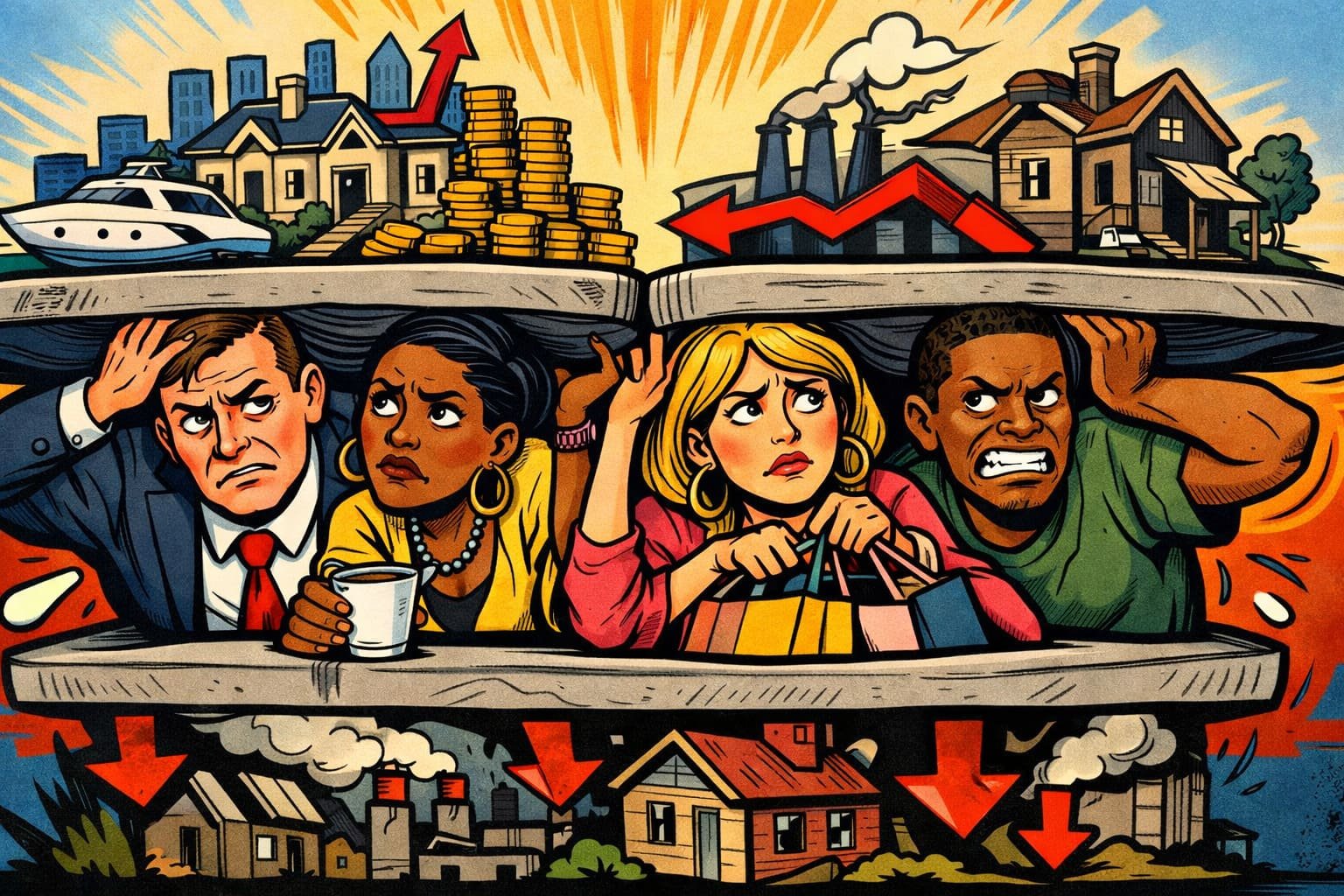
An escalator carried shoppers upward through a polished mall where every storefront still sparkled with confidence. Bags swung from tired hands, children chased bright displays, and cafés hummed with familiar conversations. Nothing looked broken. Yet almost every purchase carried an invisible negotiation happening inside someone’s mind. Modern prosperity has become strangely theatrical, presenting abundance on the surface while countless middle-class households quietly rewrite budgets, postpone dreams, and wonder why economic growth no longer feels like personal progress.
Economic expansion has traditionally promised rising living standards for ordinary families. Productivity increased, businesses invested, wages gradually followed, and each generation expected to enjoy greater financial security than the last. That relationship has weakened across many developed and emerging economies. Housing, education, healthcare, and childcare have consumed growing portions of household income, leaving less room for saving or discretionary spending. Growth still appears in national accounts, but many families experience it as a statistic rather than a lived reality.
Companies have adapted to this changing consumer landscape with remarkable precision. Costco continues attracting shoppers searching for value through bulk purchasing, while premium brands still flourish among wealthier households insulated from everyday financial pressure. Between those extremes lies an increasingly uncomfortable space where traditional middle-market businesses struggle to satisfy customers who simultaneously demand lower prices and higher quality. Retailers, restaurants, and consumer brands increasingly redesign products, pricing, and loyalty programs because the middle of the market no longer behaves as predictably as it once did.
Elena taught secondary school for nearly two decades and had always managed her finances with quiet discipline. She recently laughed while holding a vacation brochure, then folded it carefully into her handbag instead of booking the trip. Her family was earning more than several years earlier, yet rising housing costs, insurance premiums, and school expenses had quietly erased those gains. Friends assumed everything was going well because she never complained. Her spreadsheet told a different story every month.
Financial statements help explain this paradox. Businesses can report healthy earnings through efficiency improvements, pricing strategies, and global expansion even while many customers feel financially constrained. Gross domestic product may continue rising, yet median household purchasing power can stagnate once essential expenses absorb incremental income. Economists often debate productivity, inflation, and labor markets independently, although households experience them together at the kitchen table. Confidence depends less on headline growth than on whether ordinary families believe tomorrow will genuinely improve today’s financial position.
City lights reflected across apartment windows where countless families ended another ordinary evening balancing ambition against arithmetic. Middle-class life has never demanded luxury, only the reasonable belief that effort creates opportunity and careful planning builds security. That belief remains one of the strongest economic assets any society possesses. Once it begins to fade, growth can continue on paper while optimism quietly leaves the room. The most important measure of prosperity may never be how much an economy produces, but how many people still believe progress belongs to them.
