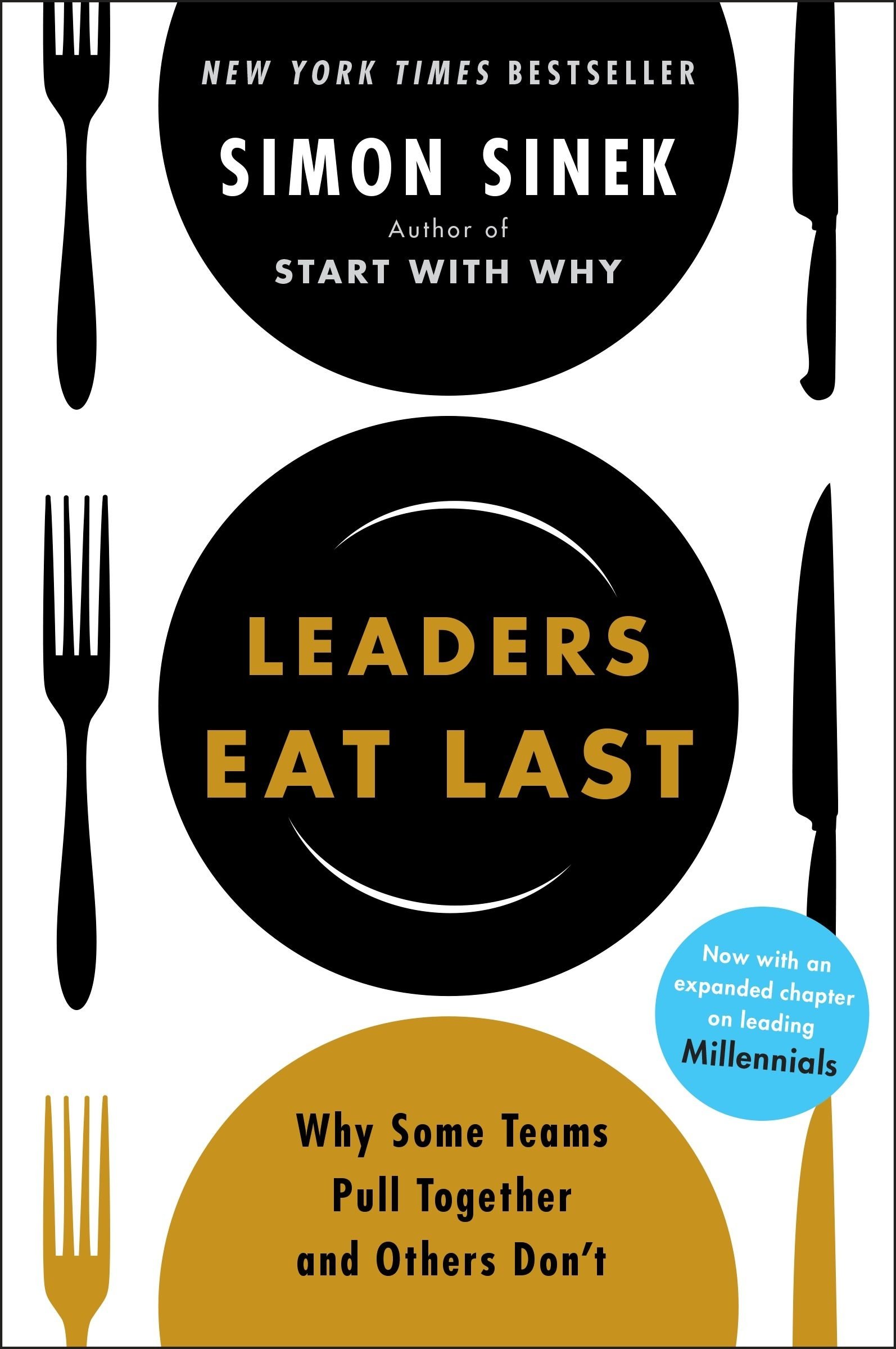
The fluorescent lights inside the office never truly turned off. Midnight simply made the exhaustion easier to hear. Keyboards clicked softly beneath corporate silence while junior employees refreshed inboxes with the nervous rhythm of people waiting for invisible verdicts. Somewhere upstairs, executives discussed “resource optimization” over catered dinners while entire departments quietly wondered who would survive the next restructuring wave. In Leaders Eat Last, Simon Sinek walks directly into that emotional fracture and delivers a devastatingly simple argument modern institutions desperately need to hear: human beings perform best when they feel safe, trusted, and protected by the people leading them.
The title itself carries enormous symbolic weight. Sinek draws inspiration from military culture, particularly among the United States Marine Corps, where senior leaders often allow younger soldiers to eat first. The ritual is not about food alone. It communicates responsibility. Protection. Sacrifice. Leadership, in this framework, is not dominance performed publicly. It is stewardship practiced consistently. The strongest leaders absorb pressure rather than exporting anxiety downward. That idea sounds noble until one compares it against much of modern corporate culture, where executives frequently protect shareholder optics while employees absorb emotional shrapnel from fear-driven decision-making.
Sinek’s central concept, the “Circle of Safety,” explains why some organizations develop extraordinary loyalty while others become emotionally predatory environments disguised as professional opportunity. When people feel psychologically secure, cooperation expands naturally. Creativity increases. Risk-taking becomes healthier. Teams share information instead of hoarding it defensively. But when fear dominates the atmosphere, survival instincts hijack behavior. Colleagues compete internally. Innovation shrinks. Politics intensify. Short-term thinking infects every meeting. The brilliance of the book lies in how biologically grounded these insights feel. Sinek repeatedly connects leadership culture to human evolutionary wiring. People thrive in tribes protecting one another. They deteriorate inside systems rewarding chronic vigilance.
A logistics manager named Farid Njoroge once worked for a multinational shipping company undergoing aggressive restructuring. Publicly, executives spoke constantly about “high-performance culture” while privately rewarding managers who cut staff most aggressively. Meetings became emotionally sterile. Employees stopped sharing ideas because visibility felt dangerous. One supervisor quietly warned Farid never to appear “too comfortable” because leadership equated stress with commitment. Eventually productivity collapsed despite longer working hours. Talented staff disappeared first. Years later Farid joined a smaller company where leaders regularly worked alongside frontline employees during operational crises instead of hiding behind conference-room strategy decks. The cultural difference felt almost physical. People collaborated willingly because fear no longer consumed all available emotional oxygen. Sinek’s philosophy lives inside that contrast.
The book becomes especially powerful when discussing modern loneliness inside professional life. Many organizations now optimize efficiency while neglecting emotional architecture completely. Workers become metrics before they remain human beings. Burnout gets rebranded as dedication. Emotional exhaustion becomes normalized language. Leaders Eat Last pushes back against that machinery fiercely. Sinek argues trust is not sentimental softness. It is strategic infrastructure. Teams functioning without fear outperform teams operating under intimidation because the human nervous system cannot sustain creativity and chronic anxiety simultaneously for long periods.
There is also something deeply revealing about Sinek’s treatment of dopamine-driven achievement culture. Modern institutions reward external metrics aggressively: bonuses, promotions, viral growth, quarterly wins, social validation. Yet endless pursuit of these rewards creates addictive organizational behavior. People chase stimulation instead of meaning. Leaders prioritize optics over stability. Entire industries become emotionally wired for short-term applause rather than long-term health. Sinek contrasts this with serotonin and oxytocin, chemicals tied to trust, belonging, and collective well-being. The biological framing gives the book unusual emotional force because readers begin realizing toxic workplaces are not merely unpleasant. They actively distort human behavior at a neurological level.
A creative producer named Valentina Moreau once joined a rapidly scaling media startup celebrated publicly for innovation and explosive growth. Inside the office, panic circulated beneath every polished presentation. Employees competed performatively for visibility while quietly fearing replacement. One senior executive routinely praised “family culture” moments before sending termination emails during dinner hours to avoid difficult conversations. Valentina later described the workplace as “a motivational seminar built on top of collective anxiety.” Eventually she moved to a smaller studio where leadership protected creative teams aggressively during financial downturns instead of sacrificing staff morale for temporary investor reassurance. The work improved almost immediately because emotional stability returned. Leaders Eat Last understands that atmosphere instinctively. Fear may generate compliance temporarily. It rarely generates greatness sustainably.
The book also quietly dismantles the mythology surrounding authoritarian leadership. Many societies still romanticize aggressive dominance as strength. Loud executives become magazine covers. Ruthless founders become cultural legends. Yet Sinek repeatedly demonstrates that fear-based leadership creates brittle organizations. Employees stop telling the truth upward. Mistakes remain hidden longer. Innovation narrows. Loyalty becomes transactional. Eventually institutions collapse under the weight of suppressed reality. Healthy leadership, by contrast, creates environments where people can admit problems early without feeling existentially threatened. That distinction determines whether organizations adapt or decay.
A hospital administrator named Miriam Solanke once inherited a department suffering catastrophic staff turnover after years of punitive management. Nurses avoided supervisors. Junior doctors feared reporting procedural concerns openly. Patients sensed the emotional tension immediately. Instead of launching another motivational initiative, Miriam focused entirely on rebuilding trust. She held listening sessions without punishment. She protected whistleblowers publicly. She eliminated humiliating management rituals normalizing fear. Within a year collaboration improved dramatically and medical errors dropped. Miriam later reflected that leadership often means “absorbing fear so other people can think clearly.” That sentence could summarize Sinek’s entire worldview.
Late tonight another exhausted employee still sits beneath office light debating whether honesty inside tomorrow’s meeting will damage their survival chances. Somewhere else, a team leader quietly shields younger staff from institutional pressure because protecting people matters more than personal optics. Coffee cools beside unfinished spreadsheets. Elevators hum softly through towers filled with invisible emotional weather. That is where Leaders Eat Last leaves its deepest mark. The book reveals leadership is not truly measured by authority, charisma, or public celebration. It is measured by what happens to human beings in your presence. Do they become smaller, quieter, more afraid? Or do they finally feel safe enough to think, create, trust, and breathe fully without preparing constantly for attack? Entire civilizations rise or collapse according to how leaders answer that question.
Editorial Disclaimer: Whether a book is a work of fiction, a memoir, or inspired by real events, the ideas, actions, decisions, and behaviors discussed within are not intended to be encouraged, replicated, or endorsed in real-world situations. This review is published solely for educational, analytical, literary, and entertainment purposes, with the aim of examining the book’s themes, storytelling, characters, philosophies, and broader cultural or business insights. Any ethical or unethical viewpoints, practices, or conduct presented in the book do not necessarily reflect the views, values, or endorsements of ESYRITE.
