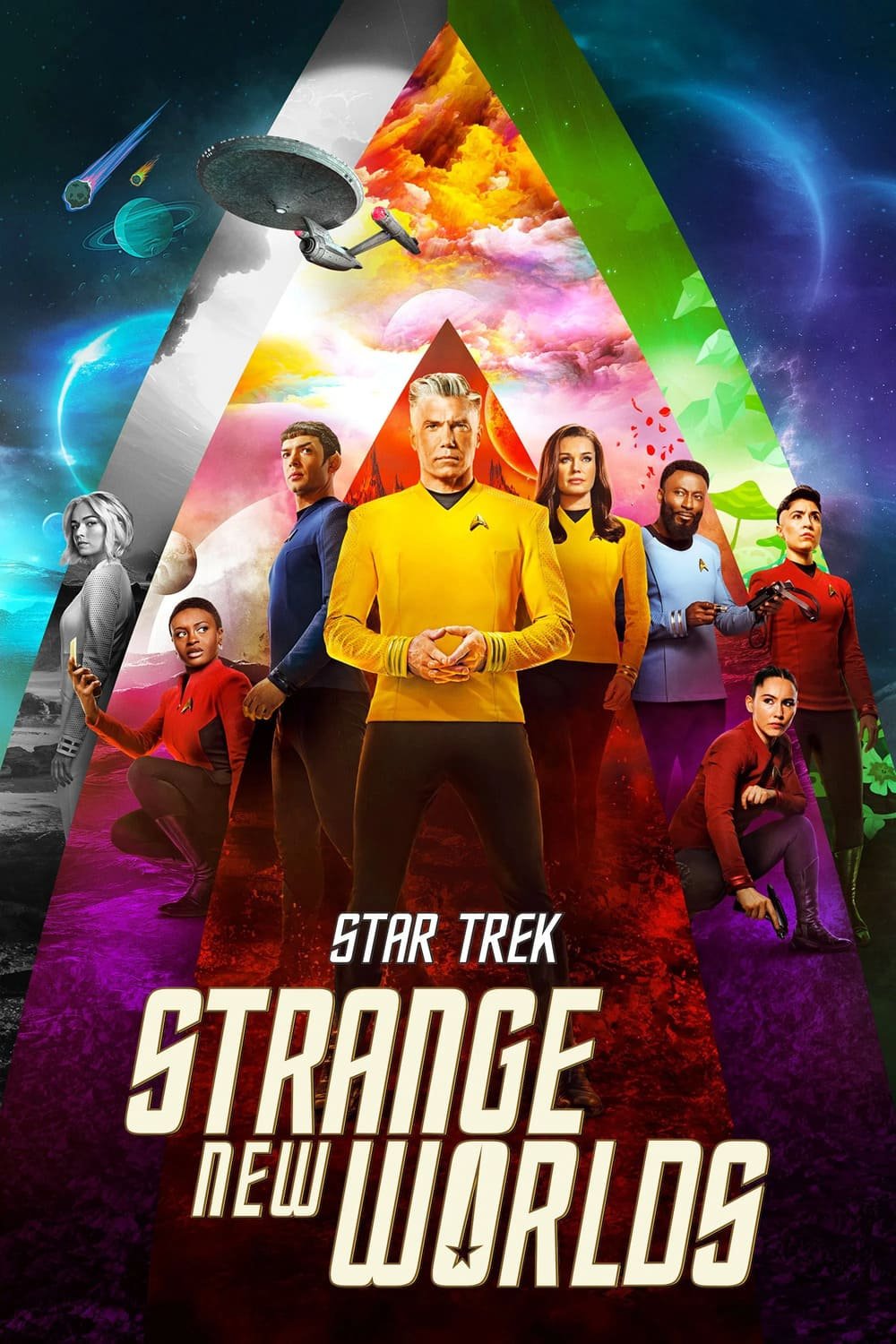
A silent panic hangs over modern culture like steam trapped beneath the floorboards of an expensive hotel lobby. Everyone talks about innovation while secretly begging for emotional rescue. Boardrooms worship disruption. Politicians market apocalypse with the grin of carnival magicians. Streaming television has become the confession booth of exhausted civilizations, and somewhere inside that strange machinery, Star Trek: Strange New Worlds arrived carrying something almost suspicious in today’s entertainment economy: optimism with teeth. The series does not drift through space like a lazy fantasy about lasers and aliens. It studies leadership the way a surgeon studies scar tissue. Every corridor aboard the Enterprise feels less like a spaceship and more like a pressure chamber where ethics, ambition, fear, loyalty, and identity are forced to collide under fluorescent light. That tension gives the series its electricity. The future in this world is beautiful, but beauty here always comes with a bill waiting beneath the tablecloth.
Captain Christopher Pike operates with the exhausted grace of a man carrying tomorrow’s funeral in his pocket. That detail changes the emotional architecture of the show. Most television leaders behave like motivational posters in expensive jackets. Pike behaves like someone who understands that authority is often lonely, morally expensive work. His leadership style rejects the modern cult of performative genius. He listens. He hesitates. He doubts himself in public. In another era of television, that restraint might have looked weak. Today it feels almost rebellious. There is a moment when the crew debates intervention in a developing society spiraling toward self-destruction, and the conversation lands with the weight of real geopolitics. Silicon Valley talks constantly about “moving fast and breaking things.” This series quietly asks a more dangerous question: what if the people who move fast are usually the least qualified to redesign civilization?
The brilliance of the show lives inside its understanding of systems. Every episode behaves like a social laboratory disguised as entertainment. Cultures collapse because incentives become corrupted. Institutions rot because leaders prioritize emotional comfort over truth. Entire planets drift toward catastrophe because groups lose the ability to distinguish wisdom from spectacle. That feels painfully contemporary. During the rise of social media empires, countless executives believed engagement alone could sustain healthy societies. Then came misinformation spirals, digital tribalism, algorithmic rage, and a generation emotionally exhausted by infinite performance. Strange New Worlds mirrors that modern fatigue through science fiction without becoming preachy. It trusts the audience enough to notice the parallels alone. The result feels sharper than most prestige dramas desperately waving their political metaphors like neon signs outside casinos.
A small story buried within the series reveals its deeper emotional intelligence. A junior officer freezes during a crisis simulation after watching a fellow crew member nearly die. No melodramatic soundtrack arrives to rescue the moment. No inspirational speech storms through the room like a corporate LinkedIn post wearing human skin. Instead, the fear lingers. The embarrassment lingers longer. That detail matters because modern professional culture often treats emotional suppression as competence. Mara, a logistics manager at a biomedical startup in Nairobi, once described a similar feeling after a product recall threatened her company’s reputation. Meetings continued. Slack notifications multiplied. Investors demanded calm. Nobody acknowledged the private terror soaking every conversation. She later admitted the silence felt heavier than the crisis itself. Strange New Worlds understands that hidden emotional weather better than most workplace dramas pretending to analyze leadership.
The visual atmosphere of the show deserves attention because it communicates philosophy without speaking directly. The Enterprise glows with warm colors, polished surfaces, and elegant restraint. That aesthetic choice sounds trivial until compared with contemporary dystopian storytelling. Modern entertainment often assumes intelligence must look miserable. Darkness has become shorthand for seriousness. This series refuses that bargain. It argues that sophistication and hope can occupy the same room. Even the sound design carries emotional meaning. Doors hiss open softly. Consoles pulse like restrained heartbeats. Conversations breathe. Watching the show late at night feels strangely intimate, almost like overhearing thoughtful strangers debating morality in a quiet train carriage while rain taps against the windows. The experience becomes less about spectacle and more about emotional calibration.
There is also something deeply subversive about the crew dynamic itself. The show rejects the fantasy of the lone genius entrepreneur saving civilization through charisma alone. Progress aboard the Enterprise emerges through collaboration, contradiction, and mutual dependence. Spock’s logic collides with emotional instinct. La’an’s trauma sharpens her caution. Uhura transforms uncertainty into curiosity rather than insecurity. In an economy obsessed with personal branding, the series quietly restores respect for collective intelligence. A venture capitalist from Singapore once joked during a podcast interview that startup founders increasingly behave like Marvel characters auditioning for immortality. That line lands differently after watching this show. Strange New Worlds keeps reminding viewers that civilizations survive not because heroes dominate rooms, but because communities learn how to think together under pressure.
The series becomes even more fascinating when viewed through the lens of cultural hunger. Audiences are exhausted by cynicism disguised as sophistication. Endless antiheroes eventually create emotional numbness. Somewhere between economic instability, digital loneliness, and institutional distrust, people started craving narratives that still believed decency could matter without sounding childish. This show stepped directly into that psychological opening. It offers competence without arrogance. Intelligence without cruelty. Strength without emotional illiteracy. Even its humor feels strategically humane. A conversation in the mess hall can suddenly become more revealing than an entire season of louder prestige television. There is confidence in that restraint. The writers understand something many executives miss: audiences rarely remember the noisiest stories. They remember the stories that recognize their private exhaustion without mocking it.
Near the emotional center of the series sits a quiet philosophical warning. Every society eventually becomes tempted by certainty. Certainty sells well. Certainty wins elections. Certainty builds cults around founders wearing black turtlenecks and speaking in TED Talk rhythms. Yet Star Trek: Strange New Worlds insists that humility may be civilization’s most underrated survival technology. The Enterprise drifts through galaxies carrying advanced weapons, scientific brilliance, and diplomatic authority, but its greatest asset remains the willingness to question itself before judging others. That lesson reaches beyond science fiction. It reaches into boardrooms, governments, relationships, and exhausted modern minds searching for orientation inside noisy systems built to monetize distraction. Somewhere out there, beneath artificial stars and glowing control panels, the series whispers an uncomfortable truth: the future rarely collapses because humanity lacks intelligence, it collapses because humanity mistakes confidence for wisdom. And perhaps that is the real frontier still waiting to be explored.
Editorial Disclaimer: Whether a TV Show is rooted in fiction or inspired by real events, the actions, decisions, and behaviors portrayed within are not intended to be encouraged, replicated, or endorsed in real-world settings. This review exists solely to analyze the storytelling, characters, themes, and business dynamics presented in the TV Show for educational, analytical, and entertainment purposes. Any ethical or unethical conduct depicted in the TV Show does not reflect the views, values, or endorsements of ESYRITE.
