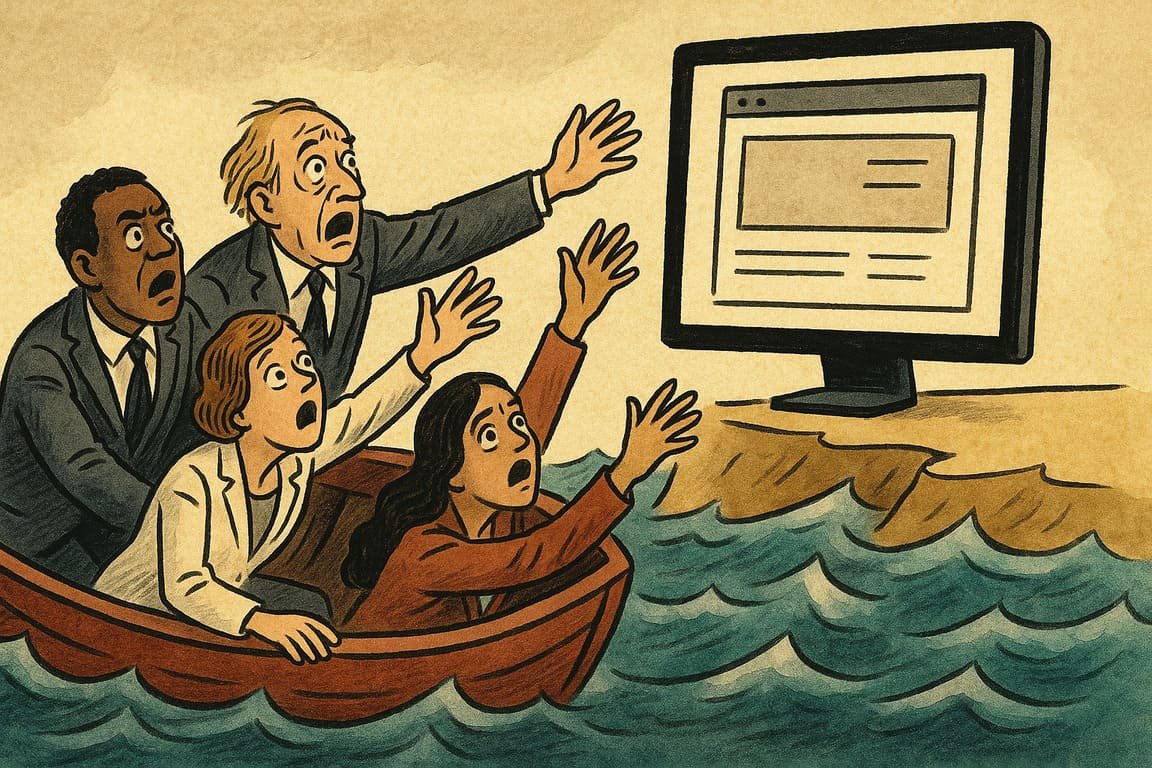
Morning sunlight spilled across a busy street where shop windows sparkled with promise, yet one storefront remained strangely invisible. Customers walked past without hesitation because nothing announced its existence beyond a fading sign above the entrance. Across town, another business welcomed visitors long before they crossed the doorway because its website had already earned their confidence. Modern commerce rarely begins at a cash register anymore. It begins with a search, a question, and a few silent seconds that determine whether curiosity becomes trust.
Many owners still believe social media pages can replace a professional website, but that assumption creates a fragile foundation. Platforms change algorithms, accounts disappear, and audiences shift without warning. A website, by contrast, becomes a business’s digital headquarters where branding, customer experience, products, and reputation remain under direct control. Digital transformation is not about collecting online channels. It is about building an owned ecosystem that grows alongside the organization instead of depending entirely on someone else’s platform.
Maya opened a small interior design studio with little money for advertising. Instead of chasing every new social platform, she invested in a simple website showcasing projects, testimonials, and an easy consultation form. Within months, referrals became easier because clients had a trusted destination to share. Meanwhile, another local firm relied only on social media until an unexpected account suspension erased years of audience building overnight. Visibility vanished almost instantly, reminding everyone that borrowed digital space always carries hidden risk.
Successful companies understand this distinction well. Airbnb, Shopify, and countless growing brands treat their websites as operational centers rather than digital brochures. Customers discover products, learn company values, receive support, and complete transactions through experiences carefully designed around trust and simplicity. Digital innovation succeeds when technology removes friction instead of creating distractions. Every page, form, and interaction quietly communicates whether an organization values clarity, professionalism, and long-term relationships or merely follows online trends.
A website also becomes an extraordinary learning system. Visitor behavior reveals what attracts attention, where confusion appears, and which services inspire genuine interest. Those insights guide product development, marketing strategy, customer support, and future investment decisions far better than guesswork alone. Business leaders often celebrate intuition, yet sustainable growth usually belongs to organizations that combine instinct with meaningful digital evidence gathered through thoughtful website analytics and continuous improvement.
Evening settles over every marketplace, but businesses with a strong digital presence continue welcoming visitors across different cities, time zones, and moments of curiosity. Their doors never truly close because trust keeps working quietly while everyone else sleeps. Organizations that ignore this reality slowly surrender opportunities they never even knew existed. Before planning another marketing campaign, consider a deeper question: if customers searched for confidence today, would your website give them every reason to stay?
