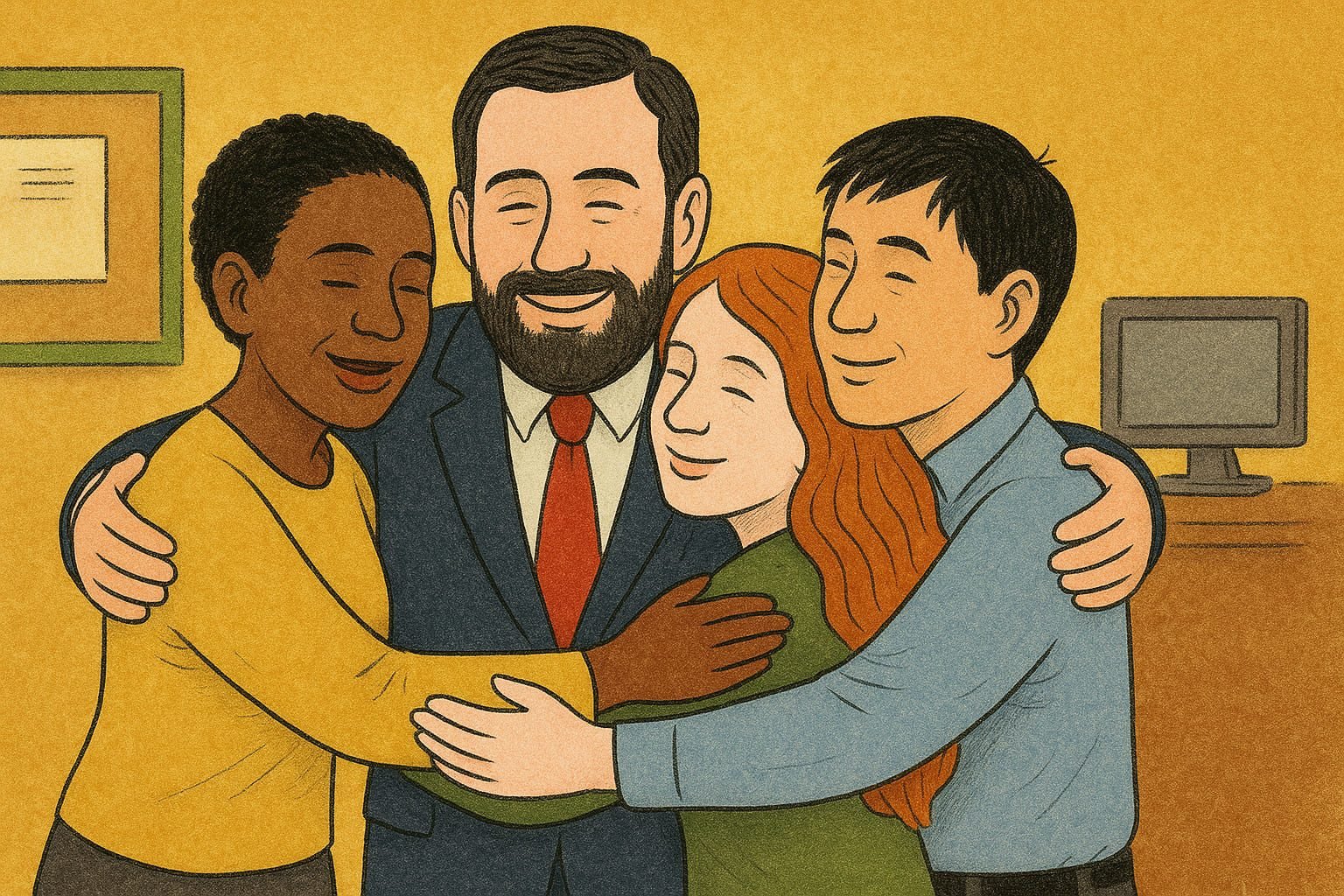
The smell of burnt coffee clings to the midnight air as a single lamp flickers above an abandoned boardroom table, its glossy surface littered with sticky notes, faded memos, and the remains of a half-eaten sandwich. Behind the frosted glass, shadows gather: a silent congregation of the hopeful, the broken, and the fiercely ambitious. Each chair, recently filled with laughter, argument, and nervous glances, still echoes with the pulse of unseen alliances and bitter feuds. Out in the corridor, the ghost of last quarter’s layoffs whispers warnings to those left behind, reminding them that survival here is about more than just numbers or performance metrics. Inside these walls, the invisible glue that holds careers together isn’t just salary or titles—it’s the tribal energy that turns strangers into allies and rivals into a community with shared scars.
Somewhere in this cinematic scene, beneath the corporate armor and perfectly ironed suits, a deeper longing pulses: the need to matter, to be known, to find shelter from the storm of constant change. The air buzzes with a kind of spiritual static, as if the real battle in the workplace has nothing to do with KPIs but everything to do with the ancient, magnetic pull of belonging. Boardrooms and open spaces are less about work than about the tribes we build, the friendships we gamble, and the fragile sense of meaning that blooms in the cracks of everyday chaos. There is no app for this: it’s the subtle, electric handshake beneath every quarterly report, the eye contact in the elevator, the knowing smile when deadlines threaten to drown the soul.
Management books rarely capture this electricity. Instead, the best stories—the ones that keep people coming back after layoffs, after failures, after humiliating Friday standups—are about teams that became tribes. In every office, legends circulate about the designer who saved the product launch at 3 a.m., the finance intern who brokered peace during a leadership war, or the manager who shielded her team from upper management’s axe. These stories are currency. They buy loyalty, spark envy, and sometimes, quietly save lives. As the digital age erases boundaries, the real borders are drawn by rituals, inside jokes, and the comforting knowledge that, here, you belong.
Underneath the surface, a paradox: technology promises freedom, but it breeds a hunger for the primal comfort of tribe. Even in the virtual noise of remote work, Slack channels become campfires where the brave and the weary swap stories, seek advice, and plot rebellion. The tribe at work is the real north star. It explains why people stay at companies long after the money stops making sense and why, even in the face of exhaustion, someone always volunteers to fix what the system breaks. You can fake passion for a while, but you can’t fake the sense of being woven into something bigger than yourself.
The tribe isn’t just a buzzword. It’s the secret ingredient that transforms work from transaction to meaning, from task to legacy. Without it, organizations collapse into soulless machines—efficient, maybe, but empty. With it, they rise into movements, cults, families, or revolutions. In the end, the only thing that makes work worth waking up for isn’t a mission statement or a bonus. It’s the tribe—the human force that alchemizes labor into a story worth telling.
Quick Notes
- Belonging Is the Currency: The real value of any workplace lies in the quality of human bonds. Forget perks or paychecks—meaning comes from feeling seen, respected, and needed.
- Stories Build the Tribe: Small acts of heroism—like covering for a teammate or saving a botched pitch—echo for years. These tales create the lore that makes people want to belong.
- FOMO Fuels Loyalty: When you sense you’re missing out on something deeper than just work, you chase the energy. Tribes create a magnetic pull, making even the toughest days feel less lonely.
- Culture Eats Strategy (and Lunch): Team rituals, inside jokes, and shared scars will always outlast corporate plans. The people who matter most shape the rules.
- Meaning Is Contagious: If even one person believes the tribe matters, that belief spreads. Real culture changes when belonging becomes infectious and even the skeptics want in.
The Pulse of the Tribe: Why Work Without Belonging Is Just Survival
Scan any busy office and the first thing you’ll notice isn’t the technology or even the policies—it’s the quiet hum of connection that crackles between people. Walk past a marketing huddle, and you’ll hear inside jokes flying faster than project deadlines. On the far side, a rookie stares at the wall, wondering how to decode this new world. In moments of crisis, the tightest teams don’t just survive—they double down, binding together like a soccer squad fighting for the cup, every setback a new battle scar.
There’s a reason why companies pour energy into happy hours and team-building games, even if everyone secretly groans at the trust falls. The real magic happens not at forced fun events but in stolen moments: a late-night pizza run after a botched product release, a spontaneous dance-off at a holiday party, or an anonymous coffee left on a tired colleague’s desk. What starts as ritual becomes routine, and soon the tribe takes on a life of its own—an organism fed by laughter, protected by loyalty, and ruled by its own unwritten code.
Fictional CEO Maya Tran once recounted how her software startup almost imploded after a disastrous launch. It wasn’t the investors who saved the day but a ragtag group of developers who camped out for three straight nights, their bond forged in caffeine and defeat. “The code was garbage,” Maya admitted, “but our tribe? Unbreakable.” Years later, those same developers formed the core of a new, wildly successful spinoff—proof that the power of a tight-knit tribe can outlast even the worst quarter.
Culture theorists often miss the point: it isn’t just about ping-pong tables or inspirational posters. It’s about the signals people send when nobody is watching. Does a new hire get invited to lunch, or are they left to eat alone? Are mistakes met with blame or curiosity? Does someone step up when a colleague falters, or do they step aside? These micro-decisions shape belonging, and belonging, in turn, shapes meaning.
Philosopher Simon Hume described it best in his treatise on modern tribes: “What is a tribe but the place you return to when the world turns cold?” In every industry, whether finance, tech, or fashion, the tribes who thrive are those who look after each other, not just because it’s nice—but because survival demands it. That pulse, the quiet thrum of shared humanity, is the difference between work that feeds your soul and work that eats you alive.
The Unspoken Rituals: How Teams Become Tribes (and Why Most Fail)
Some leaders chase culture with the desperation of reality show contestants, plastering walls with slogans and scheduling endless “alignment” meetings. Yet, the strongest teams are rarely engineered from above. Instead, they emerge in the wild—unexpected, messy, and fiercely loyal. The secret ingredient is ritual: the habits, quirks, and shared language that signal, “You belong here, even if you mess up.”
Consider the case of Joe Franklin, a mid-level manager at a logistics firm. After a merger threatened to split his crew, he started “Failure Fridays,” where teammates shared stories of near-disasters over coffee and donuts. What began as a joke soon became the team’s emotional glue. New hires were inducted with tales of botched deliveries and last-minute saves. Mistakes lost their sting, and trust soared. “People don’t just want to be valued,” Joe explained. “They want to be forgiven.” When turnover elsewhere spiked, Joe’s team barely budged.
These rituals look different everywhere. Sometimes, it’s a goofy Slack emoji that signals you’re in the loop. Other times, it’s a sacred lunchtime walk or a “no email after 7 p.m.” rule. What matters is the sense of inclusion. When people know the code, they stop pretending. That freedom powers risk-taking, creativity, and a stubborn sense of hope, even when things fall apart.
Failure is the crucible where most tribes are truly forged. The best teams collect scars the way artists collect brushes. Every botched pitch or failed launch becomes a story that strengthens the group’s sense of “us against the world.” Contrast this with toxic cultures, where blame and shame fracture teams into frightened individuals, and you’ll see why some organizations seem to regenerate after setbacks while others simply dissolve.
The research backs it up: belonging is the strongest predictor of engagement, retention, and even innovation. Yet, most companies treat it like an afterthought. The world’s most successful organizations—from Pixar’s creative braintrust to Patagonia’s activist squads—invest not just in talent but in the rituals that make every member feel essential. Ritual isn’t just window dressing. It’s survival strategy.
In the end, the unspoken rituals are what separate a true tribe from a collection of lonely commuters. When belonging is more than a slogan, the impossible becomes merely difficult—and the team becomes unstoppable.
The FOMO Factor: Why Everyone Wants In (But Not Everyone Gets It)
Across every industry, there’s an invisible velvet rope: the elusive sense of “in-ness” that turns ordinary teams into legendary tribes. When you’re inside, work feels like play, and even failures sting less. When you’re outside, every meeting is a cold reminder that meaning lives somewhere else. FOMO—Fear of Missing Out—isn’t just a social media phenomenon. It’s the engine that powers workplace tribes.
Digital marketing manager Lila Okoye tells the story of her first campaign team, where a running joke about “Tuesday night taco reviews” became a cult-like ritual. At first, Lila felt excluded, but one night, an unexpected invitation changed everything. Suddenly, she was “in.” Her confidence skyrocketed, and her ideas found traction. “It wasn’t the tacos,” Lila laughed. “It was knowing I mattered.”
The dark side? Tribal belonging can also exclude. Cliques, gatekeeping, and subtle signals can turn tribes toxic, creating stress and silent exits. Smart leaders know the difference between tribes that uplift and those that turn predatory. Healthy tribes use FOMO to draw people in, while broken ones weaponize it, making others feel small or unworthy.
A wild paradox unfolds: the more exclusive a tribe, the more outsiders want to join. But the strongest tribes aren’t built on snobbery—they’re built on generosity. True belonging is measured by how widely the circle grows, not how tightly it closes. The best managers become gate-openers, not gatekeepers.
Pop culture is obsessed with the power of tribes. From the “Avengers” to “Stranger Things,” the most beloved teams aren’t perfect—they’re flawed, quirky, and fiercely loyal. Viewers crave that sense of belonging almost as much as the characters themselves. The office, with all its mundane frustrations and small victories, offers a real-world version of this cinematic dream.
If you’ve ever watched a colleague’s inside joke become the team’s new catchphrase, or seen a project group transform into a Friday night dinner crew, you’ve witnessed the power of workplace FOMO. It’s the spark that turns “just a job” into a life-defining chapter.
The Culture Equation: Why Belonging Beats Everything (Even Pay)
Across industries, conventional wisdom claims that pay, perks, or a fancy title keep people invested. Peel back the layers, and you’ll see the real currency is belonging. When you feel part of a work tribe, the grind of daily deadlines transforms into shared adventure. The highs are sweeter, the lows less crushing, and the journey, somehow, never feels lonely.
Case in point: the legendary turnaround of eco-apparel brand Green Stitch. After losing half its staff to a rival, founder Kiran Patel faced ruin. Instead of throwing money at the problem, she brought her remaining crew together and asked one question: “Why are you still here?” The stories that emerged—of friendships, inside jokes, and wild late-night brainstorms—became the backbone of a new company manifesto. The result? The tribe not only survived, it thrived, with former employees returning just to be part of the movement again.
For teams, belonging creates an emotional safety net. When trust is high, creativity flourishes. People dare to pitch absurd ideas, challenge the status quo, and admit mistakes without fear of ridicule. Companies like Netflix and IDEO have built empires on this culture, refusing to tolerate toxic stars no matter how talented, because they understand one truth: even the best talent can’t outwork a broken tribe.
Yet, there’s a brutal honesty to tribes. Not everyone fits. Some teams are a mosaic of weirdness that gels, while others never click, no matter the incentives. That’s the messy human part: real belonging can’t be forced. It can only be invited, noticed, and nurtured through daily acts of inclusion.
The culture equation is deceptively simple: where there’s tribe, there’s meaning. Where meaning thrives, performance soars. The world’s best workplaces aren’t perfect—they’re deeply, unapologetically human. That’s what keeps people coming back, long after the paycheck clears.
The Contagion of Meaning: When Work Becomes a Movement
There comes a tipping point in every tribe’s life when the energy spills over from the group and infects the entire organization. The vibe becomes contagious. Even the cynics can’t help but get swept up. The Monday morning blues turn into anticipation, the Sunday scaries fade away, and ordinary tasks suddenly shimmer with significance.
Take the story of architect Jamie Sinclair, who, after a brutal round of budget cuts, watched her skeleton crew unite around the simple joy of building something lasting. Late nights, shared playlists, and a running bet on who would break the coffee maker first became lifelines in the chaos. That spirit was noticed. Soon, teams across departments were copying their rituals, their slang, and even their playlists. Within months, the company’s culture report named Jamie’s team as the year’s most influential “work tribe.” What started as survival became a movement.
Belonging doesn’t just create better work—it creates better people. Members of a strong tribe learn empathy, patience, and courage. They see each other not just as colleagues but as fellow travelers on the strange road of modern work. This energy radiates outward, attracting talent, inspiring innovation, and building legacy.
When meaning becomes contagious, it outlives leaders, products, and even business models. The world’s most iconic companies—think Ben & Jerry’s, Zappos, or Pixar—are defined less by what they make than by the tribes who made them. Their stories become folklore. Their failures become lessons, not scars.
The final paradox is this: you can’t bottle meaning or sell it as a benefit. You have to build it, moment by moment, story by story, until the work tribe becomes a legend in its own right.
The Unbreakable Thread: Why Your Tribe Is Everything
Even after the lights go out and the office empties, a trace remains: laughter caught in the carpet, fingerprints smudged across the conference room glass, an unfinished game of tic-tac-toe on the break room whiteboard. The story of the work tribe lingers long after the last email is sent, haunting the empty space with memories of wild risk, quiet care, and the kind of belonging that can’t be written in a handbook.
In the city’s heart, an old elevator rattles upward, carrying three strangers who, hours ago, fought over strategy and pride. The ride is silent at first, but someone cracks a joke, and a new story begins. For a moment, the boundaries between roles blur, replaced by the electricity of being part of something bigger. That’s the magic—fleeting, fragile, yet unbreakable.
Somewhere in a quiet corner, a former intern now leads a meeting, repeating the secret phrase she once overheard at her first team lunch. The room erupts with knowing laughter. A legacy of connection, passed like a torch. Each small ritual, every shared look or whispered encouragement, weaves a tapestry of meaning that spans years, sometimes lifetimes.
The world will always demand performance, efficiency, and sacrifice, but what it can never replicate is the raw power of belonging. That power is silent yet seismic, turning everyday moments into mythology. It turns jobs into journeys and colleagues into companions whose stories shape the soul of the place.
You stand at the edge of this world, a heartbeat away from either blending into the gray or risking it all to belong. The only question that remains: will you find your tribe, or spend your days searching for a meaning you never dared to claim?