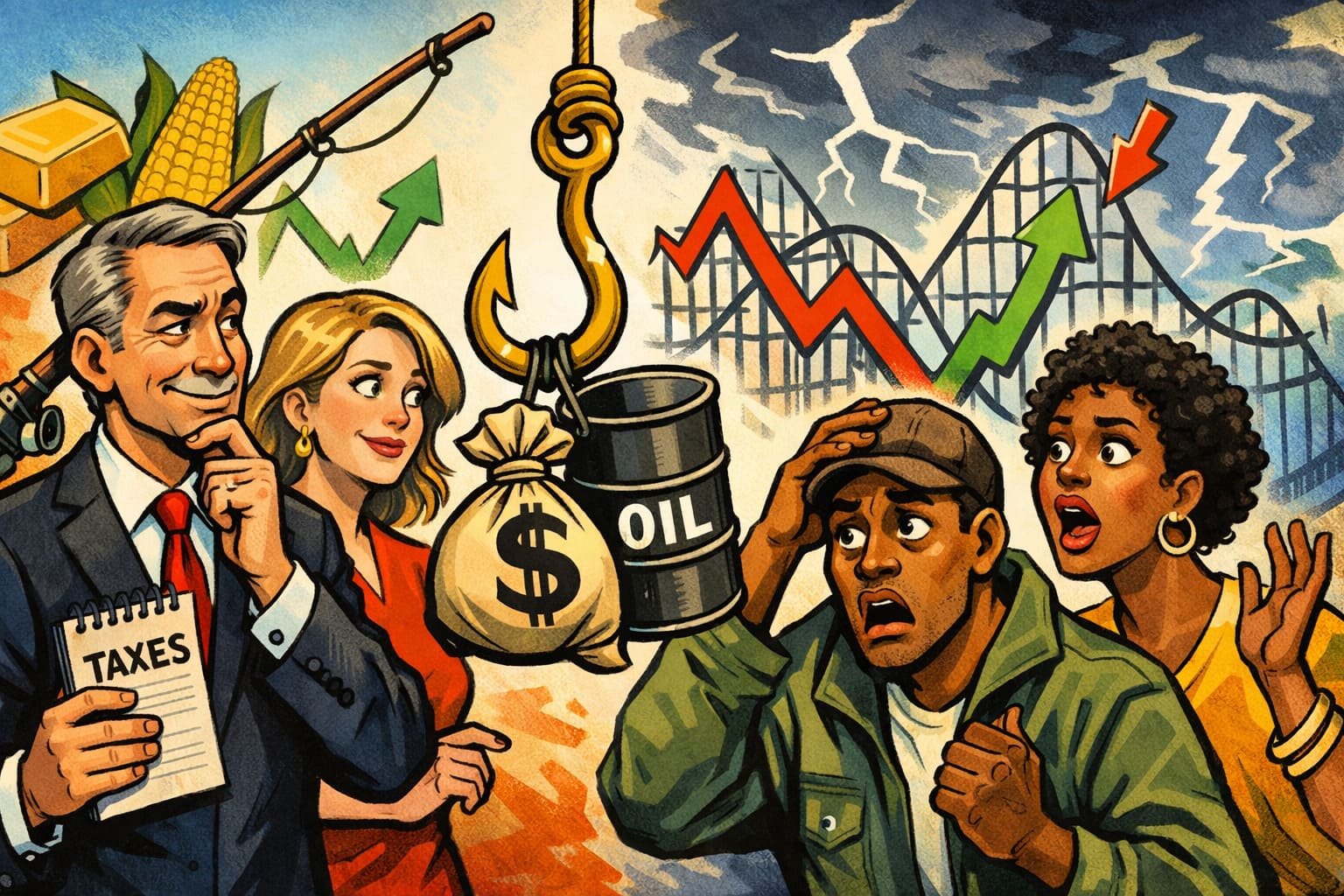
Resource wealth has a way of making governments feel taller than they are. A strong commodity cycle arrives, revenues swell, and suddenly ministers speak with the confidence of people who believe geology has endorsed their ideology. Oil, copper, gas, lithium, coal, cocoa, rare earths, pick a treasure and a country will eventually be tempted to treat it as both windfall and worldview. That is where commodity taxes become politically irresistible and fiscally dangerous.
The temptation is easy to understand. Commodity sectors can appear as giant, visible pools of money in a world where ordinary tax collection is messy, unpopular, and administratively hard. Why squeeze millions of households and small firms when one booming extractive industry seems to offer a cleaner answer. Windfall taxes, royalty changes, export levies, and special assessments arrive wrapped in fairness. The language sounds righteous because part of it is. Nations should capture value from natural wealth. Trouble begins when volatility writes the policy.
The World Bank has emphasized that commodity-exporting economies often face more procyclical and volatile fiscal patterns than others. That finding matters because it explains why revenue surges can mislead governments into spending as if high prices were a constitutional right. Commodity tax policy built in euphoria tends to age badly once the cycle turns. A state that writes permanent commitments against temporary booms becomes less sovereign, not more.
There is a reason Norway remains the example every resource-rich state claims to admire. Its oil and gas revenues were not simply inhaled into the annual budget. The Government Pension Fund Global was built precisely to shield the economy from the ups and downs of oil revenue and to preserve wealth for current and future generations. That is not flashy politics. It is fiscal adulthood. It says the resource belongs to the nation, not to the government of the month.
Commodity taxation becomes toxic when it is driven by mood rather than framework. When prices soar, leaders raise rates, announce social packages, and celebrate a new era. When prices slump, the same leaders cut desperately, borrow awkwardly, or plead with producers for fresh investment. Companies complain about unpredictability. Citizens feel whiplash. Investors learn that the tax code is basically a weather vane with a parliament attached.
A mining town offers the human version of this story. The local hotels fill up, wages climb, and restaurants serve exhausted workers late into the night. The town council upgrades roads, builds a new hall, expands payroll, and assumes the rush will hold. Two years later, prices cool. shifts are cut. Suppliers fold. The council still has the salaries, maintenance costs, and debt. Resource booms are famous for promising liberation and delivering budgeting lessons in steel-toe boots.
The smart question is not whether to tax commodity windfalls. Of course states should seek fair capture. The smart question is how to do it without turning the budget into a mood ring. Stable rules, savings mechanisms, transparent formulas, and conservative spending assumptions matter more than dramatic headlines. A government can be assertive and predictable at the same time. In fact, predictability is one of the few forms of assertiveness that survives price collapse.
This is also where fairness becomes complicated. Citizens often see extractive sectors as obvious places to hunt revenue, and often with good reason. The World Bank has argued that many countries still capture only a fraction of the revenue they could potentially collect from natural resources. That is a real problem. Yet squeezing the sector without building durable institutions can still leave a country richer in rhetoric than in resilience.
Commodity taxes tempt politicians because they promise a pain-free state. Somebody else appears to be paying. A rig. A mine. A multinational. A shipping chain. The truth is less tidy. Volatile sectors pass through shocks to jobs, currencies, local economies, and future investment. Designing resource taxation is not just about justice. It is about timing, credibility, and the ability to resist intoxication when the cycle turns generous.
A serious fiscal culture treats windfalls as visitors, not family members. It greets them politely, saves a large share, uses some for long-term assets, and refuses to let a temporary price spike rewrite the permanent structure of the state. That discipline feels frustrating during boom years, especially when social needs are visible and voters are impatient. Yet impatience is exactly what commodity volatility punishes most severely.
In every commodity economy, there comes a season when ministers are told they are sitting on treasure. They may be. Treasure is not the same as stability. Wealth under the ground can fund a nation or distort it. The difference lies in whether policy bends around price spikes or stands above them. The hardest test arrives during abundance, not scarcity. That is when fiscal character is easiest to fake and most dangerous to lose.
The richest resource a government can possess is not oil, copper, or gas. It is restraint in the presence of them. Once that is gone, every commodity cycle starts writing the national script, and the script always includes the same twist: the money looked permanent right up until it vanished.
