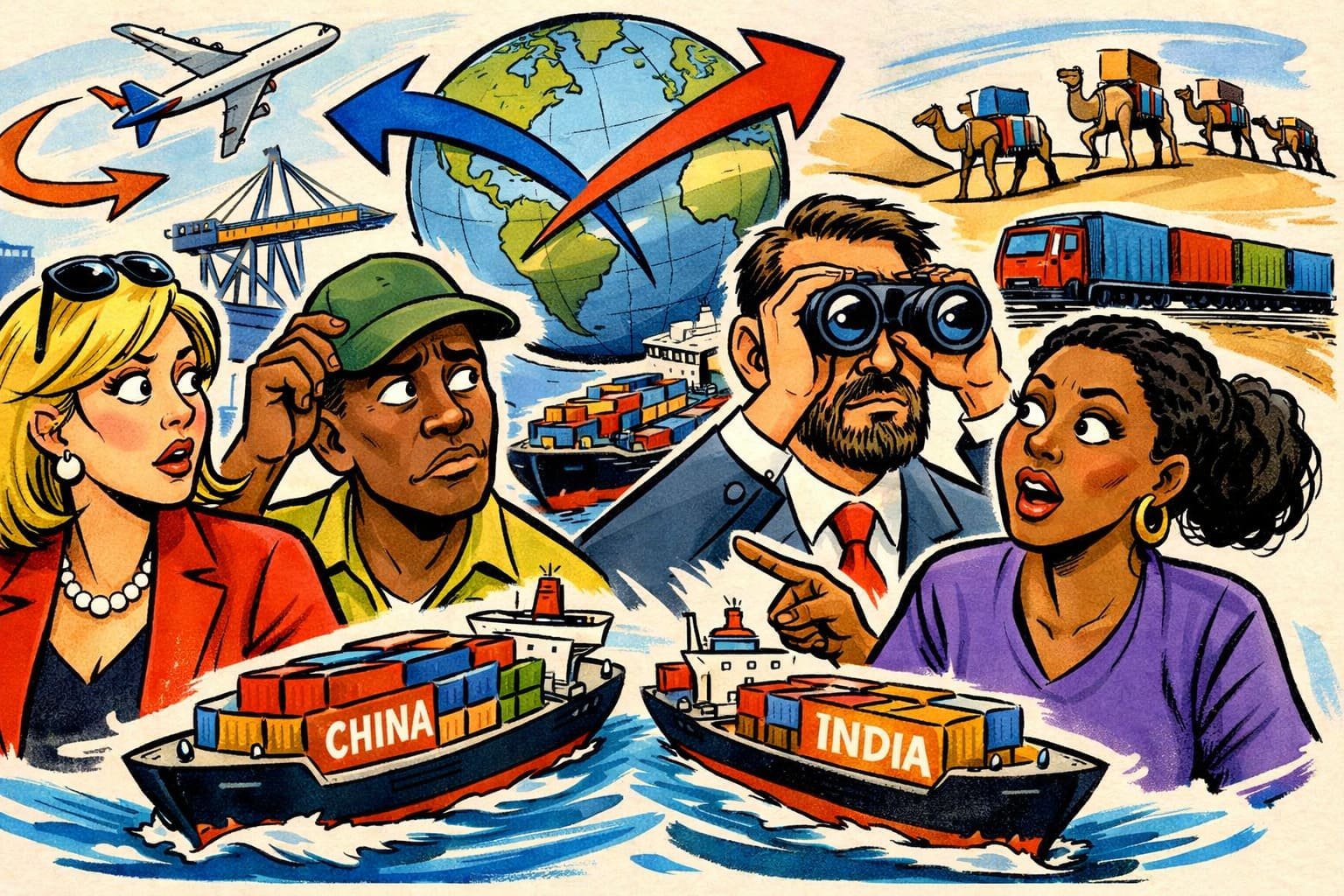
Harbor cranes still rise above the horizon like familiar landmarks, yet the cargo beneath them tells a different story. Containers once destined for predictable ports now travel longer, stranger paths through unfamiliar countries before reaching store shelves. Global trade has not stopped. It has simply changed direction. Every rerouted shipment reflects a larger economic adjustment where geopolitics, finance, corporate strategy, and national security increasingly influence where products are made, assembled, financed, and delivered.
Supply chains were once designed around efficiency above everything else. Businesses concentrated manufacturing where labor, transportation, and production costs were lowest, trusting that open trade would continue uninterrupted. Recent geopolitical tensions, pandemics, export restrictions, and regional conflicts challenged that assumption. Companies now balance efficiency against resilience. A factory producing goods slightly more expensively in a politically stable location may deliver greater long-term financial value than a cheaper operation exposed to repeated disruptions and unpredictable border policies.
Chief financial officers increasingly evaluate supply chains through the language of risk rather than simple cost reduction. Capital investment decisions now include geopolitical exposure, supplier concentration, logistics flexibility, and inventory resilience alongside traditional financial metrics. Apple expanded manufacturing capacity in India while maintaining significant production elsewhere, reducing dependence on a single geography. Samsung similarly diversified production across several countries, strengthening operational flexibility without abandoning global manufacturing altogether. Diversification has become a balance-sheet strategy rather than merely an operational preference.
Nadia directed procurement for a growing medical equipment manufacturer supplying hospitals across multiple regions. One overseas supplier unexpectedly suspended deliveries following new export restrictions, threatening production schedules and customer commitments. Rather than waiting for political conditions to improve, she qualified secondary suppliers in different countries and invested in stronger inventory forecasting systems. Profit margins narrowed temporarily, yet customer confidence remained intact because deliveries continued without interruption. Financial resilience emerged from preparation instead of prediction.
Economists increasingly describe this transformation as a shift from globalization toward selective globalization rather than outright deglobalization. International trade continues expanding across many sectors, yet businesses are distributing production across wider networks instead of concentrating operations within single regions. Investors reward organizations capable of absorbing unexpected disruptions without damaging earnings consistency. Accountants likewise reassess inventory policies, working capital requirements, and long-term asset allocations because resilient supply chains often require larger financial commitments than lean operating models once demanded.
Night settles across interconnected ports where ships continue crossing oceans despite changing maps and shifting alliances. Every container moving toward another coastline carries more than manufactured goods. It carries strategic choices about resilience, trust, and the evolving architecture of global commerce. Trade routes rarely disappear forever. They adapt to new realities shaped by economics, diplomacy, and human ambition. Tomorrow’s strongest businesses will not belong solely to those moving products fastest, but to those prepared for the world to change course again.
