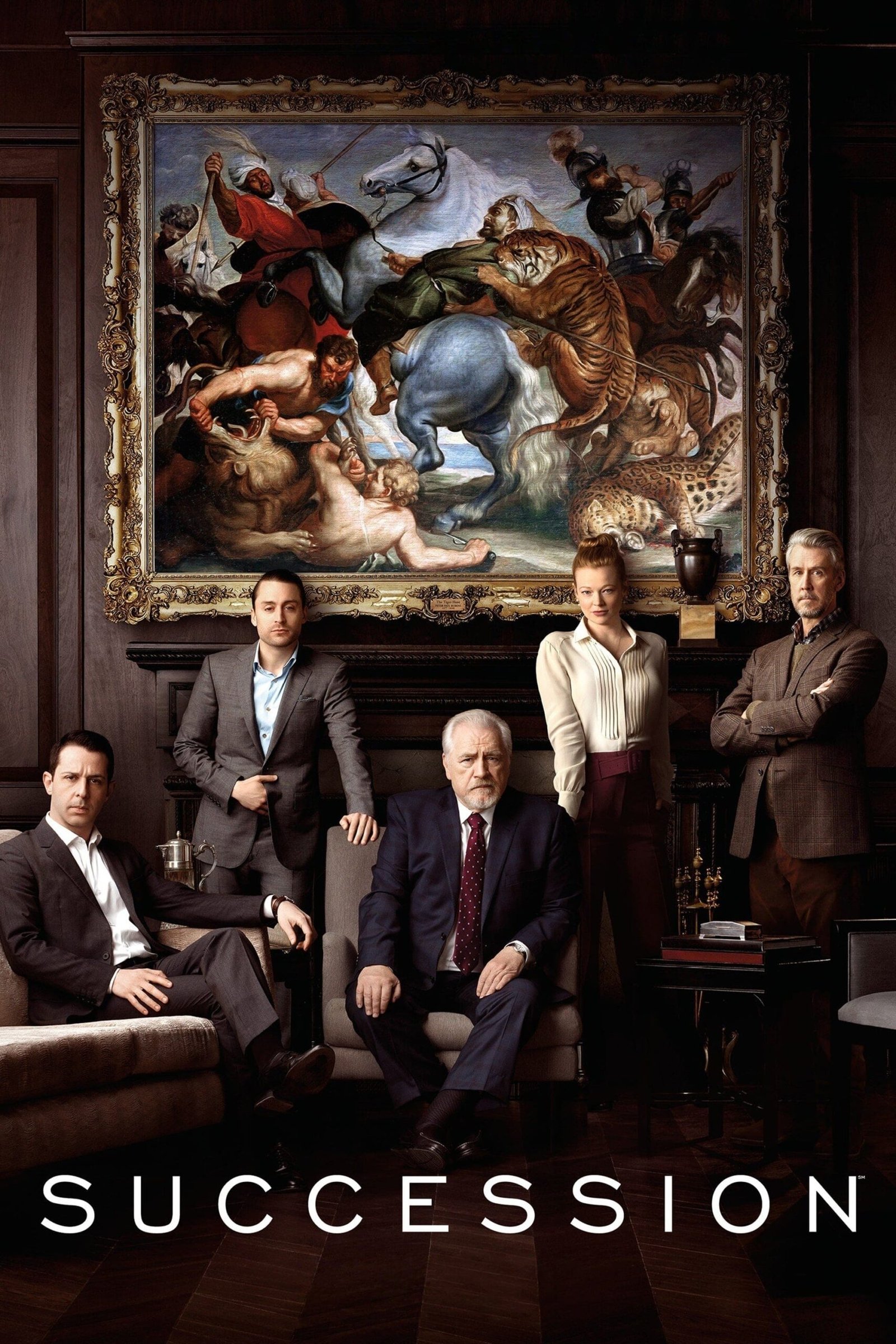
Welcome to the warped wonderland of “Succession,” the show that snatches the glossy façade off the world’s richest families and asks, “What if your inheritance was also your curse?” Picture this: a media dynasty so powerful that every headline you read might as well be scribbled by one of their tormented children. At the center, Logan Roy, a titan whose icy gaze has toppled rivals and terrified his offspring in equal measure. The series begins not with a gentle stroll but with a heart attack, a failed birthday bash, and whispers of a succession that feels more like a blood sport than a business transition.
There’s a magnetic darkness to the world of the Roys. Every room is thick with unspoken grudges, razor-sharp banter, and a family loyalty that feels as fleeting as last night’s market gains. What elevates “Succession” from typical boardroom drama to a global phenomenon isn’t just the sharp-tongued wit or Shakespearean power struggles, but its audacious honesty about privilege, ambition, and the deep fractures beneath pristine surfaces. Watching the Roys maneuver is like rubbernecking a slow-motion car crash: devastating, fascinating, and somehow, impossible to look away from.
The Roy siblings: Kendall, Shiv, Roman, and Connor; aren’t just fighting for the throne. They’re clawing for scraps of their father’s approval, desperate to rewrite the family story before it buries them alive. As business deals spiral and betrayals breed overnight, viewers see reflections of their own ambitions and anxieties in this hyperbolic mirror. The stakes may be billions, but the wounds are heartbreakingly human.
From its satirical jabs at legacy media to its chillingly relevant insights into how wealth warps values, “Succession” isn’t a fairytale for the rich; it’s a cautionary tale for anyone who’s ever dreamed too big or loved too hard. Its cultural impact goes well beyond entertainment, offering life lessons wrapped in dark comedy, soul-crushing failures, and rare moments of hard-won connection.
If you’re ready to witness a world where every compliment is a chess move, every boardroom a battlefield, and every family dinner a ticking time bomb, buckle up. “Succession” is not just a show, but a masterclass in how power, when paired with family, can be as poisonous as it is addictive. Let’s pull back the velvet curtain and see what lessons the Roys are really serving.

Quick Notes
- Power corrupts even the closest bonds; family love is no match for boardroom ambition.
- Every character’s fatal flaw is weaponized by rivals: no one is safe, not even the king.
- The series brilliantly skewers the modern media landscape and its influence on truth.
- Behind every business move lies a personal vendetta: emotions always bleed into strategy.
- Satire, suspense, and gut-punch emotional moments make “Succession” more than just a business drama.
Inside the Roy Lion’s Den
Logan Roy, the patriarch of Waystar Royco, stands as an unyielding force in a media world gasping for relevance. His decision to cling to power past his prime sets the stage for chaos, leaving his children scrambling for scraps of certainty. Kendall, the most obvious heir, is a tempest in a suit: bold, broken, and constantly shadowboxing his own demons. Shiv, razor-sharp and politically savvy, walks the tightrope between family loyalty and self-preservation, her every move shadowed by the Roy legacy she pretends to despise.
Roman, irreverent and unpredictable, cracks jokes that mask deep insecurities; his bravado a thin veil over years of emotional bruising. Connor, the oddball eldest, floats through the chaos convinced the world owes him the presidency. Watching these siblings vie for their father’s affection is like a high-stakes poker game, with each bluff threatening to topple not just the family but the entire empire.
Boardrooms become battlegrounds as the Roys fend off rivals, whistleblowers, and their own worst instincts. When the family’s empire is threatened by scandal, takeover attempts, and endless PR nightmares, alliances shift with the wind. One episode might end with Kendall pledging loyalty, only for the next to show him brandishing a metaphorical dagger. The media machine they control doesn’t just shape narratives for the world; it warps their own sense of truth, love, and justice.
But it isn’t all cold calculation and corporate warfare. “Succession” is laced with biting humor, heartbreaking vulnerabilities, and moments of human frailty. The show skillfully dissects the psychological toll of legacy, revealing how even billionaires can feel unworthy, unloved, and unseen. The boardroom deals are thrilling, but the real drama is internal: the endless, silent war between wanting to be loved and needing to win.
Each season raises the stakes; scandals multiply, enemies close in, and the Roys must choose between sticking together or burning everything for one more shot at the crown. Through all the chaos, Logan’s withering authority is both anchor and anvil: his presence both binds and breaks his family. The show’s genius lies in its refusal to give easy answers; every victory is laced with regret, every loss tinged with relief.
Blood, Betrayal, and Boardrooms: Lessons and Insights
Power has a price, and “Succession” counts every penny. Logan Roy’s ruthless empire serves as a case study in how unchecked ambition can tear families apart and warp personal identity. Real-life corporate giants; from the Murdochs to the Redstones have faced eerily similar internal feuds, proving that dynastic battles aren’t just television fantasy but a recurring theme among the ultra-wealthy. Yet, the lessons here aren’t exclusive to billionaires.
Ambition, when left untethered, can eat its own tail. Kendall’s rise and fall, peppered with moments of heartbreaking vulnerability, reveal how the hunger for power often masks deeper wounds. Many viewers will see echoes of their own family tensions in the Roys’ drama; whether it’s fighting for a parent’s approval, navigating sibling rivalry, or feeling the crushing weight of legacy. Success, the show reminds us, is rarely about money alone; it’s about meaning, validation, and the stories we tell ourselves about our worth.
Another hard truth emerges in the show’s relentless focus on trust or the lack of it. Deals are made with a handshake, only to be undone with a sly glance or a whispered aside. Shiv’s political machinations and Roman’s irreverent plotting drive home how quickly loyalty can be traded for leverage. In real-world boardrooms, trust is a commodity more fragile than stock prices. The Roys’ betrayals echo the backstabbing seen in companies brought down by infighting, like the dramatic fallouts at Uber and WeWork.
At its core, “Succession” is also a satire about privilege. The Roys inhabit a world where consequences are negotiable, apologies are optional, and pain is papered over with luxury. The show’s humor slices through the pretensions of the elite, poking fun at how out of touch the rich can be. Yet, the Roys are never cartoon villains; their pain and longing make them achingly real. This complexity is what gives the series its staying power; it’s a mirror to anyone who’s ever felt both entitled and unworthy, both powerful and powerless.
Finally, the show is a meditation on the cost of silence. So much is left unsaid within the Roy family that secrets become currency, and vulnerability feels like suicide. Yet, it’s in the rare moments of honesty; Kendall’s breakdown, Shiv’s confessions, Roman’s desperate jokes that we glimpse what’s truly at stake: the possibility of genuine connection. In a world obsessed with image, “Succession” suggests that real power comes from confronting hard truths, not hiding from them.
The Price of the Crown and the Pain Beneath the Power
“Succession” pulls you in with its glossy settings and sharp one-liners, but it’s the emotional gut punches that linger long after the credits roll. Watching the Roys, you feel the weight of every betrayal, the sting of every snub, the hollow victory in every boardroom battle. There’s a strange comfort in knowing that even the rich and ruthless can’t escape the chaos of family, the longing for love, or the fear of failure.
The show’s brilliance is in its nuance; every character is both villain and victim, every triumph laced with tragedy. It doesn’t just entertain, it provokes: sparking debates about whether power corrupts or simply reveals. By exposing the soft underbelly of corporate royalty, “Succession” raises questions that haunt viewers long after the final scene: What are we really fighting for? Who are we, without the applause and the titles? Where does ambition end, and addiction begin?
Real-world parallels are impossible to ignore. From the Murdoch family’s media dynasty to the messy inheritance wars of the Redstone empire, history is littered with families undone by their own success. In fact, consulting case studies from Harvard and Deloitte reveal that over 70% of family businesses fail to transition successfully to the next generation often for the very reasons dramatized in “Succession.” Ego, poor communication, and unresolved trauma kill more empires than competition ever could.
But for all its cynicism, “Succession” is not a hopeless tale. Buried beneath the caustic jokes and corporate carnage is a plea for vulnerability, for finding worth outside of boardroom victories. The show’s most human moments; a father’s rare admission of weakness, a daughter’s whispered apology, a son’s failed confession shine brightest against the darkness. They’re reminders that even in the lion’s den, empathy can survive.
In the end, “Succession” is less a guidebook for power than a warning about what it takes and what it costs. For every reader chasing their own empire, the Roys offer both inspiration and caution. The riches and applause are never enough to heal what’s broken, but the struggle for meaning, connection, and redemption is a fight worth watching. The series closes with the world’s oldest lesson: in the game of succession, the greatest prize may not be the crown, but the courage to walk away from it.
Disclaimer
It’s also critical to remember that whether the TV Show is either a work of fiction or a real-life depiction, it must be emphasized that the actions depicted within are not encouraged in reality and shouldn’t be imitated. The review aims to analyze the storytelling, characters, and business decisions portrayed in the TV Show solely for educational and entertainment purposes. Any ethical & unethical practices highlighted in the TV Show are not endorsed by the Esyrite publication.
Why scroll… When you can rocket into Adventure?
Ready to ditch the boring side of Life? Blast off with ESYRITE, a Premier Management Journal & Professional Services Haus—where every click is an adventure and every experience is enchanting. The ESYRITE Journal fuels your curiosity to another dimension. Need life upgrades? ESYRITE Services are basically superpowers in disguise. Crave epic sagas? ESYRITE Stories are so wild, your grandkids will meme them. Want star power? ESYRITE Promoted turns your brand cosmic among the stars. Tired of surface-level noise? ESYRITE Insights delivers mind-bending ideas, and galactic-level clarity straight to your inbox. Cruise the galaxy with the ESYRITE Store —a treasure chest for interstellar dreamers. Join now and let curiosity guide your course.
