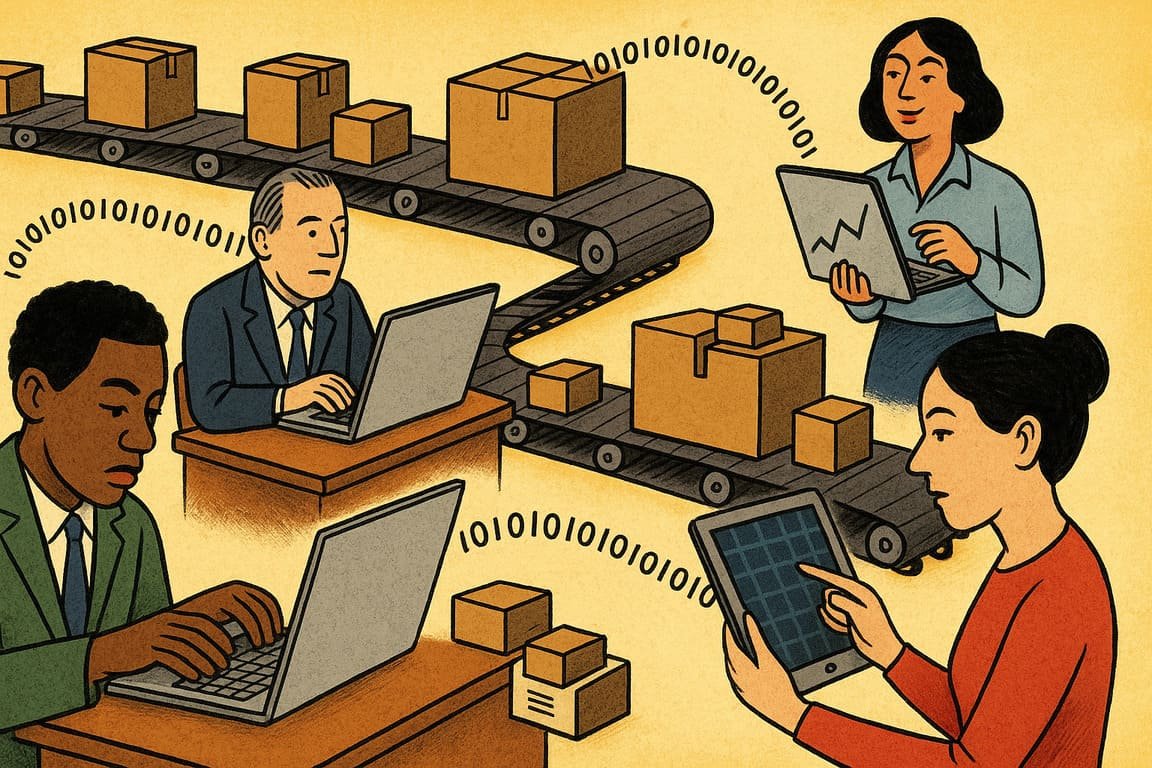
On a rainy highway, headlights flicker past rows of trucks, each one a moving link in the world’s most critical, invisible chain. In a bustling port, cranes swing containers onto ships with the rhythm of a city’s heartbeat, their movements logged and tracked by silent digital guardians. Across continents, phones buzz with real-time alerts—a late shipment here, a customs snag there—problems that once hid behind paperwork now flash bright on digital dashboards. Modern supply chains are no longer built on faith and phone calls. They run on digitization, where information flows as fast as goods and every small decision has the power to ripple profit or pain across the globe.
If you run a business, you know the headaches of supply and demand. The right item, in the right place, at the right time can make or break a month. Before digitization, supply chain managers leaned on spreadsheets, hunches, and luck. Orders vanished, delays multiplied, and customers were left wondering where their promise went. The arrival of smart logistics flipped the game. Now, even a small distributor in Nairobi or a midsize apparel brand in Milan can compete with the giants—because visibility has become the great equalizer.
One vivid example comes from a family-owned furniture company in São Paulo. Plagued by late deliveries and lost inventory, they invested in a cloud-based tracking system. The results were almost immediate: delays were caught before they snowballed, and warehouse staff spent more time shipping than searching. Profits climbed, not from working harder, but from seeing farther and acting faster. Every digital connection closed a gap, turning chaos into choreography.
Efficiency is not just about speed, but about trust. When suppliers, buyers, and shippers see the same numbers, games disappear. Relationships deepen. A Dutch floriculture exporter, once famous for shipping roses that wilted before arrival, now shares live temperature and location data with clients. Instead of arguing over who to blame, they fix problems in real time. The difference? Digitization brings everyone into the same room, no matter how far apart they are.
Profitability follows. At a logistics startup in Manila, machine learning tools flagged subtle patterns—routes where trucks always idled, times when shipments were most likely to face customs delays. The team could adjust schedules on the fly, saving both time and money. Over months, the margin gains added up, turning a risky operation into a resilient, profitable enterprise. It is not the flashy technology that matters, but the way it is used to ask smarter questions.
The impact is personal, too. Warehouse workers once drowned in paperwork now manage inventory with a tap. Drivers get live traffic updates and optimized routes, reducing stress and road time. Even small business owners feel the change: what once felt like blindfolded guessing now feels like guided flight. The dignity and pride of delivering on a promise grows with every scan and update.
Of course, the journey is not without bumps. Integrating old and new systems requires patience and grit. An American electronics distributor learned this the hard way when its legacy database crashed mid-upgrade. The setback was painful, but the company turned it into a masterclass in resilience, enlisting its youngest IT staff to co-lead the rebuild. The result was a stronger, more flexible system—and a team that trusted itself to solve the next crisis.
Transparency, once feared as a loss of control, becomes a competitive weapon. Customers and partners flock to businesses that share status openly. In the UK, a fashion retailer built customer loyalty not with discounts, but with a real-time order tracker that texted updates from factory to doorstep. Complaints dropped, repeat sales soared, and the customer service team finally caught their breath.
Skeptics still argue that digital supply chains can be brittle or too dependent on outside platforms. But the truth is, flexibility wins. A South African agricultural co-op survived a global logistics disruption by instantly switching suppliers and rerouting inventory, all thanks to a nimble dashboard built for adaptation, not perfection. The ability to pivot on a dime separates survivors from those who vanish when things get tough.
Digitization does not erase risk. It turns it into something visible and manageable. With every new tool, every fresh connection, businesses gain a little more control—and a little more accountability. The ultimate payoff is not just profit or efficiency, but peace of mind.
At dawn, the rain stops. Delivery trucks roll out beneath a brightening sky, guided by invisible hands and watchful eyes. No one sees the data pulses lighting up the air, but every driver feels the difference: less waiting, fewer surprises, more wins. In this world, profit and promise are chained together, pulled forward by those willing to digitize. And for everyone who still clings to the old way, a single question remains: will you adapt to the rhythm, or be left waiting in the storm?
Partnered. Provocative. Worth Your Scroll.
This is a Promoted Post by ESYRITE—yes, it’s paid, but never filtered. Our voice stays raw, real, and razor-sharp. We team up with bold ideas, game-changers, and stories that spark something real. If it’s here, it earned its place—no fluff, just impact. We don’t just promote—we provoke. Stay sharp. Dive deeper.
