Steel cables trembled above a rehabilitation center where a young climber took cautious steps across a suspended training bridge, guided by robotic supports that responded before balance disappeared. Every movement looked almost ordinary until therapists quietly revealed that walking had once seemed impossible. Hope had acquired circuitry. Modern technology is no longer focused solely on extending human capability through external tools. Increasingly, it seeks to repair bodies, restore lost function, and even reshape the boundaries between limitation and possibility.
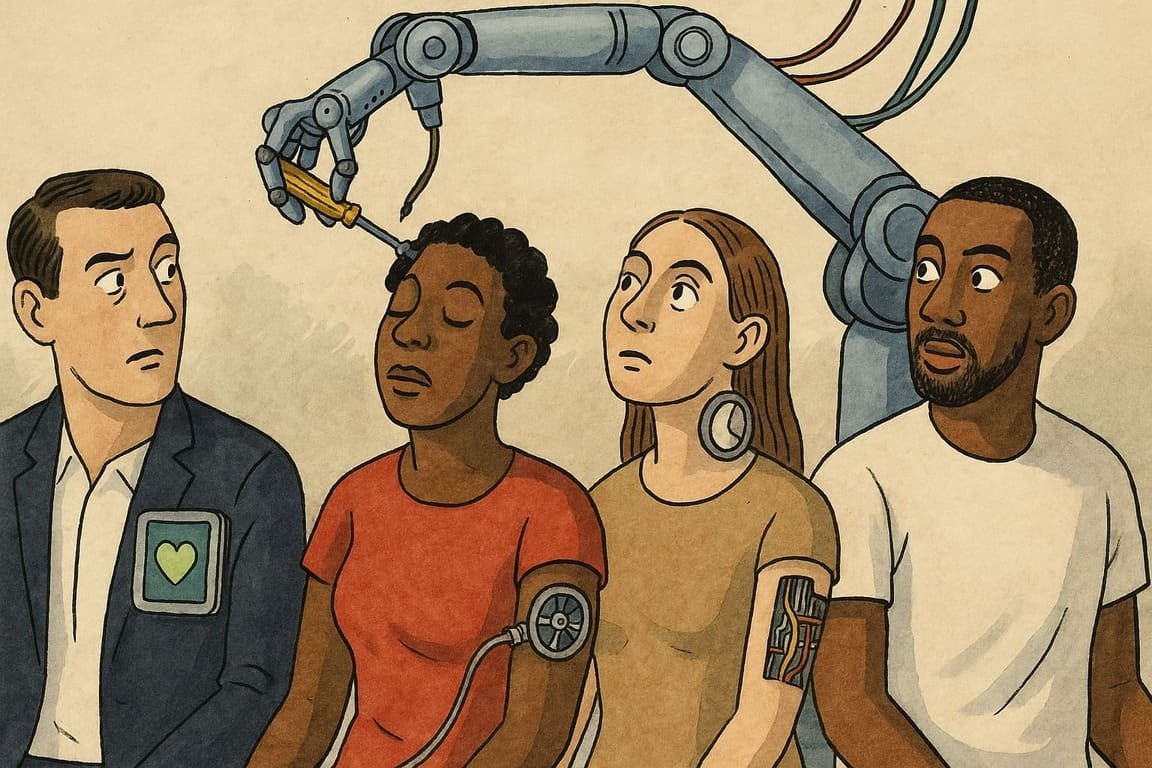
For centuries, innovation mostly expanded what people could accomplish with machines outside themselves. Glasses sharpened vision, engines multiplied strength, and computers accelerated thought. Today’s advances move closer to the body itself. Artificial limbs respond to muscle signals, cochlear implants restore aspects of hearing, retinal technologies pursue renewed sight, and brain computer interfaces promise communication for individuals once trapped by severe paralysis. Enhancement and restoration now exist along the same technological continuum, forcing society to rethink what ability truly means.
Neuralink has advanced research into brain computer interfaces designed to help people communicate and interact with digital devices through neural signals. Össur has developed sophisticated prosthetic technologies that enable users to perform remarkably natural movements during daily life and athletic activity. These organizations illustrate a profound shift. Technology increasingly succeeds not because it replaces human capability, but because it reconnects people with capacities illness, injury, or circumstance once interrupted.
Mirela spent months learning to trust a prosthetic hand after losing her own in an industrial accident. One quiet afternoon she tied her daughter’s shoelaces without assistance, then paused in disbelief before smiling through tears that surprised everyone watching. Across another city, retired musician Elias received a cochlear implant after years of progressive hearing loss. His grandson whispered a joke during dinner, and laughter returned before words could fully explain what had changed.
Progress deserves celebration, but enthusiasm should never outrun thoughtful reflection. Advanced enhancement raises difficult questions about affordability, fairness, identity, and access. If transformative technologies remain available only to those with extraordinary resources, innovation risks widening inequality rather than reducing human suffering. Responsible development therefore depends as much upon ethical leadership, public policy, and inclusive design as scientific brilliance. Lasting breakthroughs improve humanity collectively instead of creating separate futures for different communities.
Snow gathered quietly along the edge of a mountain path where determined footprints continued beyond places earlier travelers had turned back. Every mark represented persistence more than perfection. Human progress has always been measured less by flawless invention than by the willingness to help one another overcome impossible moments. Technology reaches its highest purpose when it restores dignity before it displays sophistication. The greatest upgrade may never be stronger machines, but a stronger commitment to ensuring no one is left behind.
