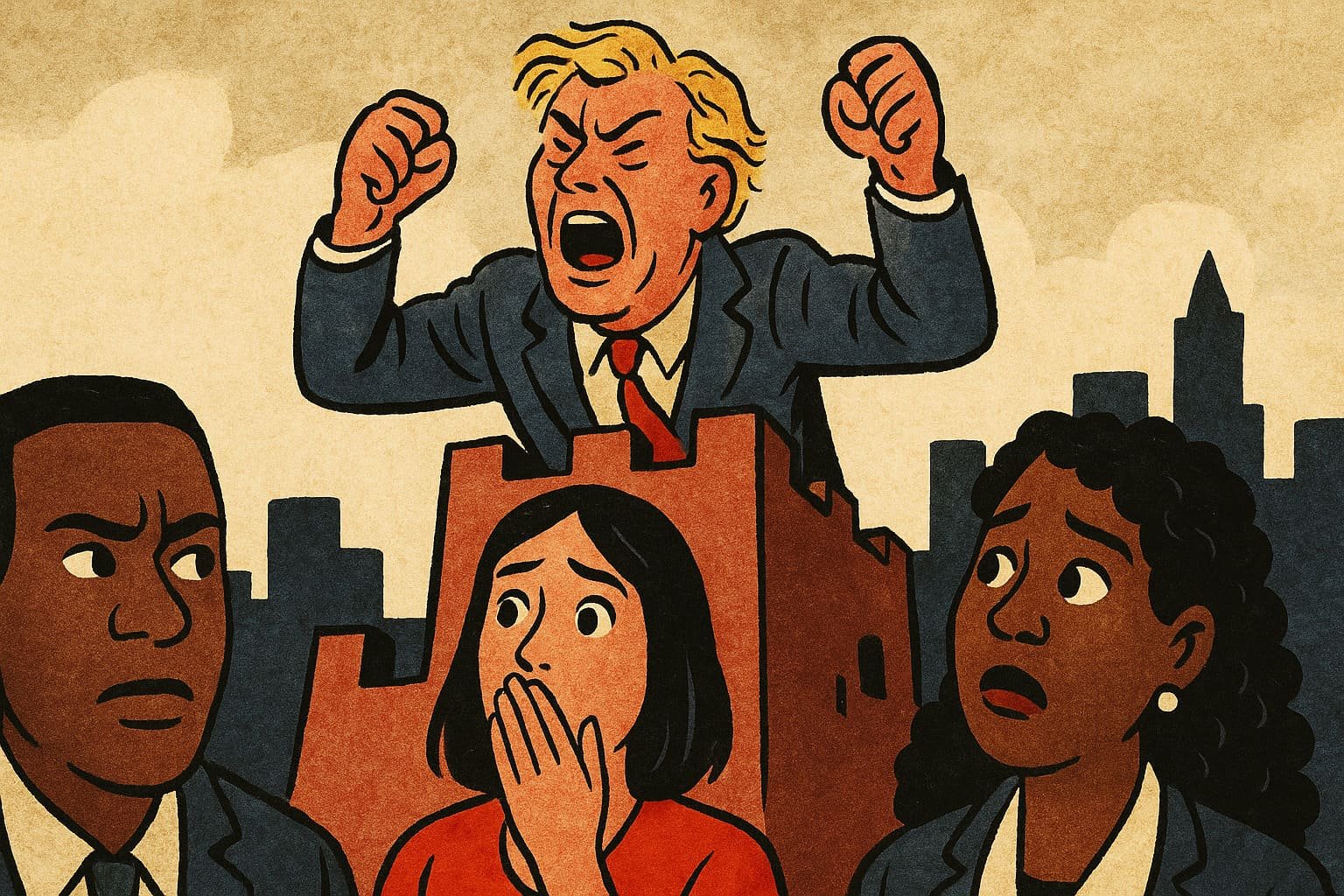
Cameras roll. A mahogany table stretches under fluorescent lights, casting cold reflections over faces trained to reveal nothing but strength. Suits and heels, espresso and anxiety, all blend in a silent ballet of dominance, hope, and rivalry. Outside, the city glows with LED ambitions, each window a dream humming with secrets. Yet, the real power doesn’t pulse behind spreadsheets or glint in boardroom jewelry. The empire is built when a leader’s face, usually as unreadable as a bank vault, suddenly fractures; just for a moment and every eye catches a hint of rage, terror, or hope so honest that it stings.
This is where the story begins, where a handshake slips and sweat betrays the cost of pretending. “Brutal emotion builds empires,” whispers every fortune lost or won behind a locked office door. In the age of artificial calm and digital bravado, what if the edge belongs to those who bleed openly, refusing to lacquer their wounds with motivational quotes? Boardrooms are not temples to logic; they are arenas where fear, love, rage, and longing do the heavy lifting. Tesla’s rise isn’t just rocket science; it’s Elon Musk breaking down in public, cracking jokes as tears well up. Consider Satya Nadella’s voice cracking when he described empathy as the secret ingredient at Microsoft’s reboot. These moments, unfiltered and messy, don’t show weakness; they signal something rare: the leader has skin in the game. To understand this power, you must be willing to watch the mask slip, and see what really happens when emotion isn’t weakness, but the engine behind every billion-dollar vision. Welcome to the arena where the brave let the world see them sweat and build the future while everyone else is still hiding.
Quick Notes
- Masks Off, Empires On: The myth of the ice-cold CEO melts away as leaders who show fierce emotion are the ones rewriting the rules. People don’t follow robots; they follow those who dare to shatter the old, stoic playbook and put their hearts, fears, and angers on the table, even if it stings.
- Rage, Risk, Repeat: The secret recipe for outlasting rivals isn’t tucked in annual reports, but erupts in raw, unguarded moments; a leader slamming the desk, laughing too loud, or mourning a colossal mistake. Empires expand not in calm, but in storms of emotion.
- Empathy: The Business Superpower: Forget the “soft skills” cliché. Teams scale mountains for bosses who cry in the trenches or confess failure on Slack. Nadella, Oprah, even Steve Jobs; these leaders weaponized emotion, turning empathy into productivity that can’t be measured in KPIs.
- Contrarian Courage, Viral Culture: Safe is slow death. Leaders who risk public humiliation, throw chairs, or hug competitors get ridiculed, then imitated. Businesses grow cults, not just customers, when they turn emotion into movement; see Patagonia, Netflix, or even the raw chaos at Uber’s early days.
- Your Empire, Your Echo: You can build a business on spreadsheets, but you build a legend on moments when people gasp, laugh, or cry with you. The world forgets perfect managers, but never the leader whose brutal honesty made everyone feel alive; even for a second.
The Age of the Broken Poker Face
Walls of glass and chrome once protected the myth that CEOs are born with nerves of steel and hearts of stone. These days, that myth is shattering, pixel by pixel, on live streams and viral tweets. When the founder of a fintech startup lost his father hours before his company’s IPO, he showed up with red eyes and told the story; earning more loyalty in that speech than from all the quarterly wins before it. Employees whispered about the shock, then leaned in. Investors didn’t run; they doubled down, sensing the risk was real, but so was the resolve.
Modern empires, like Netflix or SpaceX, aren’t built on bulletproof egos. They rise from teams who see their leaders cry, rage, and hope out loud. When Reed Hastings confessed to “messing up” the Qwikster fiasco, customers roasted him, but stayed. This was no focus-grouped apology; it was a man fighting for the survival of an idea. Employees at Shopify recall Tobias Lütke’s rare flashes of anger not as failures, but as proof he cared enough to demand better. These leaders ditch the poker face not by accident, but as a strategy to force loyalty out of chaos.
Emotional transparency isn’t a luxury for startups; it’s an accelerant. When emotion runs wild in the boardroom, the team senses they’re living for something bigger than next Friday’s paycheck. Take Airbnb’s Brian Chesky, who once slept in a van with employees during their roughest patch. His vulnerability turned a collapsing dream into a tribe willing to break rules for him. While old-school managers still worship control, new-school leaders trade in outbursts and open wounds.
Corporate folklore clings to the fantasy of unbreakable leaders. Yet, if you scratch beneath the annual reports, you’ll find panic attacks, desperate phone calls, and moments of euphoria that would make a therapist rich. Twitter exploded when Jeff Bezos, king of logistics, welled up during a space launch speech. The message was clear: perfection is out, humanity is in. You follow someone who bleeds, not a marble statue.
Culture doesn’t change because of slogans, but because of spectacle. The world pauses when a titan’s voice wavers, then echoes that honesty down the org chart. Leaders who admit fear, rage, or heartbreak create teams who build empires out of messiness, not metrics. The poker face is obsolete. Welcome to the golden age of leaders who risk everything by risking their hearts.
Rage and Empathy—The Two Engines of Modern Leadership
Step onto any startup floor and you can taste the adrenaline; cold coffee, burnt ambition, and the metallic tang of fear. But it’s not data or dashboards that rally teams at midnight. It’s the founder’s tears, the manager’s barked laugh, or the customer service lead’s voice cracking with frustration. Real authority is built not with spreadsheets, but with messy, public emotion. The story of Laura, an operations manager at a tech unicorn, illustrates this: one night, after a brutal server outage, she didn’t deliver a pep talk. She snapped at her team, then apologized; tears and all. The next day, the crew doubled their efforts, not from fear, but because they’d seen she cared enough to break.
Leaders who dare to show anger when it matters send shockwaves through the status quo. It’s not the tantrums that make a mark, but the raw honesty behind them. When Satya Nadella remade Microsoft, he told thousands of engineers that “empathy is the new black”; not in a memo, but in a trembling speech after hearing employees’ personal struggles. The result wasn’t compliance, but a surge of innovation and loyalty. Rage, when grounded in care, clears the fog of corporate politeness and makes room for real progress.
Empathy isn’t just a mood enhancer; it’s the unspoken contract behind the world’s most resilient businesses. Oprah Winfrey’s empire runs on the currency of emotion. When she hugged audience members or cried on camera, the brand transcended television and became a movement. Teams who work for leaders like this go the extra mile, skipping weekends not out of obligation, but belief. It’s not a soft skill; it’s rocket fuel for culture.
Emotional risk-taking isn’t for the faint of heart, but it separates memorable leaders from anonymous managers. Consider Andy Grove at Intel, who once shattered a glass in a strategy meeting to snap his team out of analysis paralysis. They weren’t inspired by fear, but by the clarity of his frustration. The company turned around, and the myth of Grove’s temper became a call to action, not a cautionary tale. The greatest leaders are remembered for moments that pulse with feeling, not for flawless spreadsheets.
Emotion, handled right, cuts through the noise of modern business life. In a world awash with jargon, compliance, and AI-generated emails, it’s the heat of a leader’s voice or the salt of a tear that makes people remember why they joined in the first place. Empires thrive not because people avoid conflict, but because leaders let rage and empathy take the wheel at the exact moment when silence would have been easier.
The Power of Public Meltdowns—And Why You Need One
Outrage can be an art form. Few things create loyalty or fear like a leader who explodes when the stakes are highest. But here’s the twist: the meltdown isn’t about dominance; it’s about connection. People remember when Tim, a sales director at a consumer brand, ripped up the month’s sales report in front of his team after missing targets. The shock wore off, replaced by something deeper: everyone knew he wasn’t angry at them, but at mediocrity. By the next quarter, the team’s numbers soared. Meltdowns, when sincere, set new boundaries for what matters.
Public displays of frustration make leaders unforgettable, but only when they risk ridicule. Oprah once stormed off stage mid-interview because a guest lied to her audience. The backlash was immediate, but the respect lasted longer. She became a standard-bearer for truth in an industry allergic to it. In the hands of the unprepared, a meltdown is career suicide. But for those who know what they stand for, it becomes a badge of honor.
There’s no algorithm for deciding when to let emotion fly. But history rewards those who use public vulnerability as a rallying cry. At Pixar, Ed Catmull let animators see him panic when “Toy Story 2” nearly failed. Rather than hide the disaster, he invited the team to watch him wrestle with doubt and frustration. The film was saved, and Pixar’s culture became legendary for its openness. Meltdowns are risky, but the reward is loyalty that survives the next crisis.
Companies become cults when they turn crisis into ritual. The infamous story of Travis Kalanick at Uber, yelling in the war room after regulatory attacks, became a legend. Employees saw his fury not as random, but as proof the mission mattered. Uber’s wild early days were as much about adrenaline as they were about code. A public meltdown, if honest, is remembered as a leader’s willingness to burn with the team, not apart from them.
Brutal emotion doesn’t always look heroic. Sometimes it’s ugly, awkward, or embarrassing. But in a world terrified of looking foolish, those who dare to melt down in front of their people invite a radical kind of trust. The company remembers, the industry watches, and history quietly reconfigures who we call “great.” It’s not the perfect mask, but the broken one, that crowns an empire.
Why Safe Leaders Fail, and Wild Ones Win
Follow the rules, blend in, play nice. The classic playbook is packed with platitudes designed to keep you safe and stuck. Yet, every empire shaking the business world today was born out of a leader’s decision to risk embarrassment, outrage, or heartbreak. Consider Patagonia, where Yvon Chouinard openly denounced his own industry’s impact, challenging both staff and competitors to do better. He didn’t just disrupt the market; he changed the conversation forever. Safe leaders are forgotten. Wild ones shape history.
Culture worships calm, but history is written in chaos. When Netflix decided to let go of its DVD business, Reed Hastings didn’t deliver a script. He spoke plainly about fear and uncertainty, turning a potential PR disaster into an inflection point. The backlash was fierce, but the future he described pulled the company into streaming stardom. Playing it safe is a shortcut to irrelevance. Playing with emotion, on the other hand, is the only way to set the world on fire.
Contrarian leaders aren’t reckless; they’re calculated risk-takers who understand that emotion, wielded properly, is a competitive advantage. When Mary Barra took over at General Motors, she faced a wave of recall scandals. Instead of stonewalling, she apologized publicly and met with grieving families. This act of brutal candor won over a battered workforce and salvaged GM’s reputation. The move looked risky, but it was a masterclass in emotional strategy.
Disruption isn’t a tech trick; it’s a psychological gambit. Leaders who open themselves up; publicly mourning failure, celebrating weirdness, or raging against complacency; create a culture immune to stagnation. The classic example: Steve Jobs storming out of meetings when designers missed the mark, then returning with a wild new idea that changed the company’s course. The world doesn’t remember those who played by the rules. It worships those who wrote their own.
Wild leaders inspire copycats, but never true competition. Anyone can replicate your product, but no one can duplicate the gut-punch of a raw confession or a rallying cry delivered with trembling hands. Businesses that outlive their founders do so not because of airtight systems, but because of moments when someone dared to be brutally, beautifully human. Safety is comfortable. Empires are built on risk, emotion, and the courage to lose face for a higher cause.
Building a Legend—Turning Brutal Emotion into Lasting Impact
Legends aren’t born from clean hands or easy victories. They rise from scars, confessions, and emotional wounds turned into weapons. Consider the lesser-known story of Kiran, a founder who watched her family’s restaurant burn during a riot. She didn’t hide her heartbreak; she posted a tearful video promising to rebuild, and within hours, strangers across the city sent donations and offers to help. The new restaurant wasn’t just a comeback; it became a city-wide symbol of resilience, with customers who felt part of the saga. Raw emotion didn’t just save her business. It made her a legend.
The best leaders don’t just manage; they magnetize. At Shopify, employees still talk about the night Tobias Lütke admitted he was terrified the company would fail. That single confession turned passive employees into co-owners of the mission. They took bigger risks, worked smarter, and protected the culture like family. Brutal honesty created a tribe, not a workforce. No amount of perks or bonuses could have done the same.
Stories of emotion-driven success spread like wildfire, inspiring competitors to drop their guards and follow suit. When Patagonia’s Chouinard made environmental activism the heart of his brand, competitors scrambled to catch up. The ripple effects transformed not just the outdoor industry, but global business ethics. Emotion, weaponized for good, is contagious. It sets standards others feel compelled to chase.
Not every gamble pays off, but the memory of bold emotion endures far longer than safe decisions. At Pixar, employees fondly recall Ed Catmull’s voice shaking with uncertainty during tough times. These memories outlast any single product launch. They become the DNA of a company’s culture, whispered to new hires like an initiation rite. Businesses become legends not because they avoid pain, but because they let pain and hope shape every chapter.
Building a legend isn’t about grand gestures or viral videos. It’s about daily choices: the moment a leader refuses to hide, the instant a manager trades the script for the truth, the second a founder lets tears fall in front of the team. These moments, brutal and real, are the bricks that last when every spreadsheet fades. People follow emotion, not perfection. Empires outlive founders because someone, once, decided to build with their heart, not just their head.
Empires Are Built in the Dark
As twilight pools on the windowsill, the last employee’s footsteps echo down empty hallways and the building breathes a different air. There, in the hush that follows the day’s chaos, the mask comes off. Leaders are not remembered for their polished speeches, but for the cracks in their armor; the trembling voice before layoffs, the wild hope at a launch, the silent tears after loss. Empires aren’t carved out of confidence; they are welded together by the raw, untidy truths leaders let the world see when they have nothing left to lose.
Every boardroom story that survives the years isn’t about perfect strategy or airtight execution. It’s about the night a CEO called an all-hands at midnight, voice fraying at the edges, and a hundred souls felt less alone. The power of empire doesn’t hide behind spreadsheets or clatter in the echo chamber of press releases. It pulses in the awkward silence after an outburst, in the laughter that follows a disaster, in the shiver of fear before a bet-the-company risk. The scars left by these moments become the fingerprints of leadership. Every great business, every culture that survives, is haunted by the ghosts of leaders who let themselves be seen; terrified, enraged, elated, and unfinished.
At the end of every myth is a confession: the world is changed not by flawless planners, but by those willing to break down and rebuild in front of everyone. Legends are written in the space where power and vulnerability meet. The ones who build empires know that every laugh, every tear, every scream leaves an imprint that outlasts their own shadow.
So here’s the secret every leader tries to hide until the very end: you don’t build empires from stone, glass, or capital. You build them from the moments when you dare to show what lives beneath your own skin. The world will remember not what you said, but how you made them feel when the mask finally cracked.
Are you willing to build with your own heart or will you spend a lifetime polishing the mask while history passes you by?
