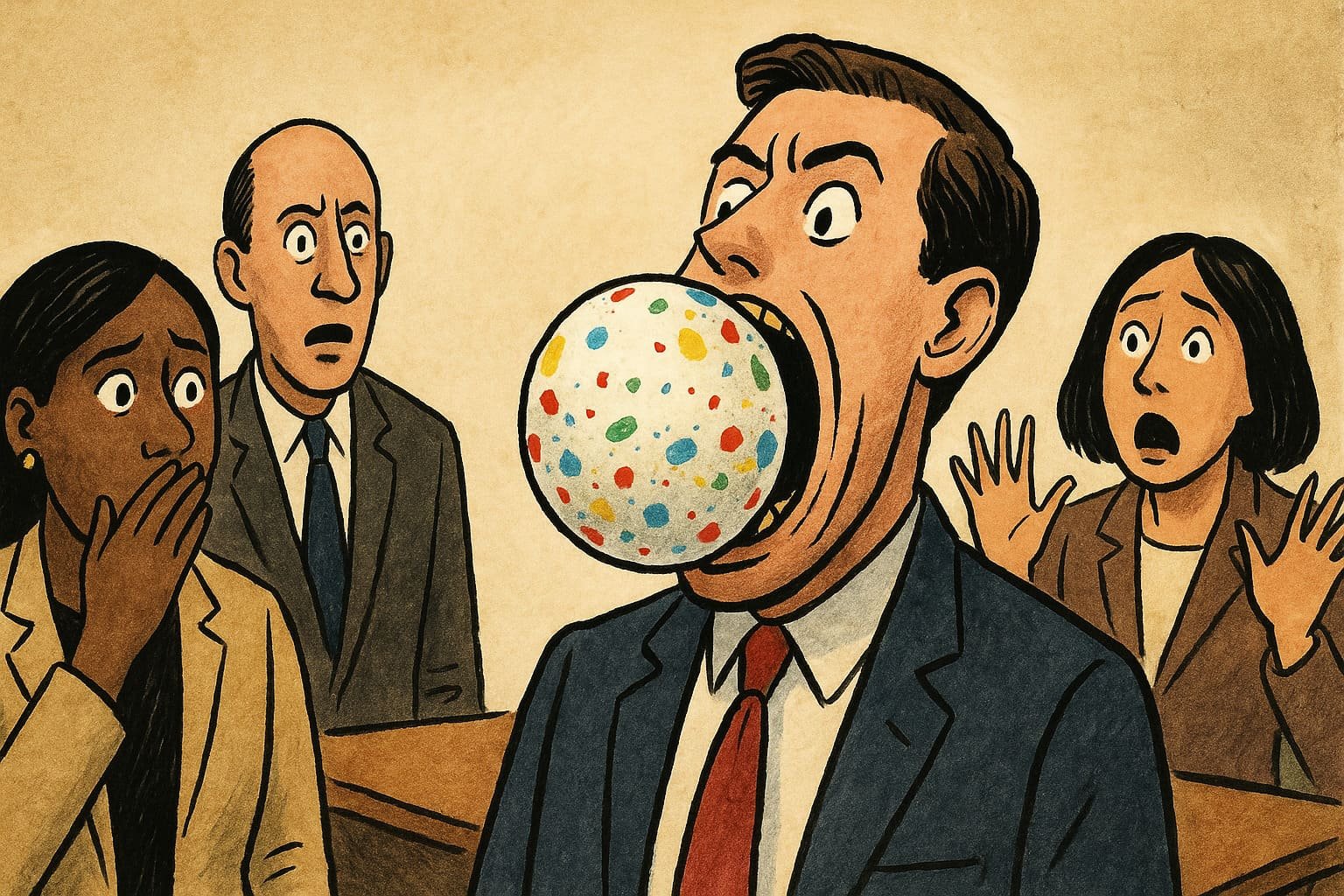
There’s a reason the world’s most powerful leaders, wealthiest entrepreneurs, and most magnetic influencers all seem to have one invisible superpower: elite-level communication. Not just talking. Not just presenting. But crafting words that move people, stir emotions, and change minds like magic. If you can’t communicate powerfully, you’re stuck explaining yourself instead of leading. But if you can master it, doors open, deals close, your voice becomes a weapon and a wand.
We’re not talking about memorizing tips or mimicking TED Talks. We’re talking about rewiring how you think, speak, and connect. Professional communication isn’t a skill; it’s an identity. It’s the difference between sending another ignored Slack message and speaking words that start revolutions. The secrets we’re about to unpack will change everything. These are not the bland communication hacks recycled by social media gurus. These are real, lived principles; the ones that can make or break boardrooms, brands, and careers. Ready? Let’s blow the lid off every jaw-dropping secret they never taught you in school.
Quick Notes
- Power Begins With Perception: Great communication starts before you speak. It’s built on trust, credibility, and the ability to influence without trying too hard. The moment people “feel” you, they listen.
- Empathy is Your X-Factor: Emotional precision not robotic logic is what elevates your words. Deep listening, validation, and vulnerability turn everyday talk into transformational dialogue.
- Messaging Is Muscle Memory: Clarity and structure don’t come from charisma. They come from knowing how to frame ideas using story, simplicity, and rhythm that land with force.
- Silence Sells, Noise Distracts: Knowing what not to say, when to pause, and how to hold tension is more persuasive than pouring words. Presence trumps performance.
- You’re Always Broadcasting: Every email, emoji, breath, or glance tells a story. The question is are you aware of the story you’re telling? Mastery means taking control of every signal you send.
Perception Is Your Platform: Speak Before You Say a Word
Imagine walking into a room and people lean in; not because of what you said, but because of how you entered. That’s not charisma; it’s intentional communication. Professionals who master communication understand the power of their presence before their pitch. They build trust with tone, posture, and intentionality that speak volumes without needing volume. Like Maya Angelou famously said, people remember how you made them feel, not what you said.
Elon Musk, often accused of being awkward on stage, still commands rooms because of one subtle but powerful thing; congruence. His tone, body language, and words align. That alignment, not perfection, breeds influence. The same is true for leaders like Satya Nadella, whose humble clarity builds emotional authority that outshines any loud bravado. When your perception matches your purpose, your communication becomes unshakable.
Too many professionals focus on “what to say” and miss “how you show up.” Your non-verbal cues are already crafting a story in people’s minds before your mouth opens. Commanding communicators rehearse tone, eye contact, pacing, and even pauses with precision. They understand that people “feel” their message before they ever hear it.
Take Steve Jobs, whose silence was as legendary as his speeches. He didn’t fill space with noise; he filled it with intent. One iconic moment: the pause he took before revealing the first iPhone. That brief silence wasn’t hesitation. It was theater. And the crowd lost their minds. Mastery begins when you stop trying to impress and start becoming unforgettable.
Your words will never land if your presence isn’t grounded. Confidence isn’t puffing up; it’s calming down. It’s showing up centered, aligned, and connected. Think less about proving your point and more about owning your presence. The best communicators don’t speak louder; they speak from somewhere deeper.
Empathy Outweighs Eloquence: Connect Before You Convince
Real communication isn’t a monologue; it’s a mirror. People don’t want to be dazzled; they want to be understood. The most powerful words are often not the smartest, but the most human. Brene Brown built an empire not on complex theory but raw vulnerability. Her TED talk on shame resonated globally not because it was clever, but because it was real.
That’s the secret: empathy makes you magnetic. The moment someone feels heard, they open up like a book. This isn’t just about emotional intelligence; it’s about emotional safety. The communicators who win aren’t the ones with the best ideas; they’re the ones who make others feel safe enough to share theirs.
Chris Voss, a former FBI hostage negotiator, teaches that even in the most tense standoffs, repeating someone’s last words can disarm rage. Why? Because validation is power. When people feel seen, they lower their guard. If that’s true in hostage crises, imagine what it can do in your next team meeting or pitch.
Words without empathy feel like noise. But words layered with emotional intelligence become medicine. Oprah Winfrey doesn’t interrupt. She leans in, nods, listens, and when she finally speaks; it lands like thunder wrapped in velvet. That’s not a talent. That’s a skill anyone can develop with conscious practice.
Don’t chase applause. Chase resonance. Great communicators speak to people’s lives, not their egos. They ask questions that melt armor. They say things that make people pause; not because it’s witty, but because it’s true. Every conversation is a mirror. Reflect back what matters, and you’ll own the room.
Structure Over Style: The Science Behind Magnetic Messaging
Style gets attention, but structure keeps it. You can have the most charming delivery in the world, but if your ideas are scattered, people won’t remember a thing. The best communicators know how to shape ideas like a sculptor shapes marble; carefully, deliberately, powerfully.
Every unforgettable message has a skeleton. Consider the “Rule of Three.” Think: life, liberty, and the pursuit of happiness. Or: stop, drop, and roll. There’s neuroscience behind it. Our brains retain triads better. Great communicators don’t ramble; they architect their message to hit, hook, and hold attention.
Barack Obama mastered the use of structured repetition. His famous “Yes We Can” speech was not an accident; it was a rhetorical masterclass. His phrases were stacked like bricks, creating emotional momentum. His cadence wasn’t flair; it was engineering. When you learn the rhythm of messaging, you become impossible to ignore.
This is where storytelling enters the equation. A story isn’t a distraction; it’s a Trojan horse for truth. When Airbnb’s Brian Chesky talks about sleeping on strangers’ floors to build the company, he’s not just sharing a memory; he’s anchoring belief. When you wrap your point in a story, it enters the listener’s memory through emotion, not logic.
Think of your communication like building a bridge. If the pillars (structure) aren’t in place, it doesn’t matter how pretty the cables (style) look; it’s not going to hold weight. Don’t confuse charm for clarity. Don’t swap style for substance. Speak in stories. Land your logic. Drive your message home with structure people can follow and remember.
Silence Is a Strategy: The Art of Saying Less, Better
Most people think powerful communication is about saying more. The pros know it’s about saying less and making it count. In a world addicted to noise, silence is disruptive. It creates space, tension, and gravitas. Master communicators use silence not as absence but as punctuation.
Think of Taylor Swift during award speeches. She doesn’t ramble. She paces her words with dramatic timing, making even brief sentences feel weighty. Or Michelle Obama whose pauses between points allowed each message to breathe. Silence, when used intentionally, makes every word feel earned.
There’s another layer: restraint. High-level communicators know when not to respond. Not every insult deserves a comeback. Not every opinion needs correction. Warren Buffett famously said, “You can’t make a good deal with a bad person.” And he says it once. Clearly. Then lets it sit. That’s power.
Pauses allow listeners to digest and connect. If you’re always talking, people have no room to feel. Silence is the space where meaning lives. If you’re pitching an idea, one well-placed pause can amplify the impact more than a hundred extra words.
The ability to wield silence is not about being stoic; it’s about being strategic. When used with precision, it commands attention. It forces people to lean in. And when you finally speak again your words echo louder. The most persuasive sentence may be the one you don’t say.
Every Signal Counts: Your Brand Lives Between the Lines
Communication doesn’t start when you open your mouth. It’s happening all the time; through your tone, your email style, your eye contact, your Slack emojis, your presence in meetings, even your reaction to critique. Every signal you send is a headline about who you are.
Take Serena Williams. Her calm demeanor under pressure says more than any interview. Or look at Apple’s minimal emails; clean, intentional, and clear. It’s not just design. It’s communication strategy. Your communication is your brand. And your brand is your promise, whether you realize it or not.
This is where most professionals mess up. They compartmentalize communication into “presentations” or “meetings,” forgetting that they’re always on stage. If your text messages sound frantic, your energy disorganized, or your visuals chaotic; that’s the narrative you’re sending, silently.
One overlooked signal? Responsiveness. Ariana Huffington once said that how quickly and thoughtfully someone replies is a reflection of their respect. The delay between a message and a response communicates just as much as the response itself. That’s why clarity, consistency, and courtesy matter in every single interaction.
If communication is currency, then every signal you send is a deposit or a withdrawal. You’re either building trust or depleting it. Your task is to align your signals with your message and your mission. People don’t just listen to your words. They absorb your presence. Make sure it’s telling the story you actually want told.
Speak So Well They Can’t Forget You
If you’ve made it here, you already know this truth: communication is everything. It decides whether your ideas catch fire or fade away. Whether people follow you or forget you. Whether you lead with noise or land with resonance. Every word you say or don’t say is shaping the reality around you.
This isn’t about perfect grammar or eloquent vocabulary. It’s about being unforgettable. It’s about owning the room not with bravado, but with presence. It’s about saying less, meaning more, and connecting deeper. Your words are weapons. Use them with wisdom. Your message matters but how you deliver it decides if it survives.
So the next time you’re about to speak, ask yourself: Am I just filling air or am I building impact? Are people just hearing me or are they feeling me? Because in the end, it’s not about being the loudest. It’s about being the clearest. And when you master that you don’t just communicate. You change everything.
Now, reflect on this: Are your words just noise or are they becoming a legacy?
Why scroll… When you can rocket into Adventure?
Ready to ditch the boring side of Life? Blast off with ESYRITE, a Premier Management Journal & Professional Services Haus—where every click is an adventure and every experience is enchanting. The ESYRITE Journal fuels your curiosity to another dimension. Need life upgrades? ESYRITE Services are basically superpowers in disguise. Crave epic sagas? ESYRITE Stories are so wild, your grandkids will meme them. Want star power? ESYRITE Promoted turns your brand cosmic among the stars. Cruise the galaxy with the ESYRITE Store —a treasure chest for intergalactic dreamers. Dare to enter ESYRITE.COM and step into a universe like no other. Ready to blast off?
