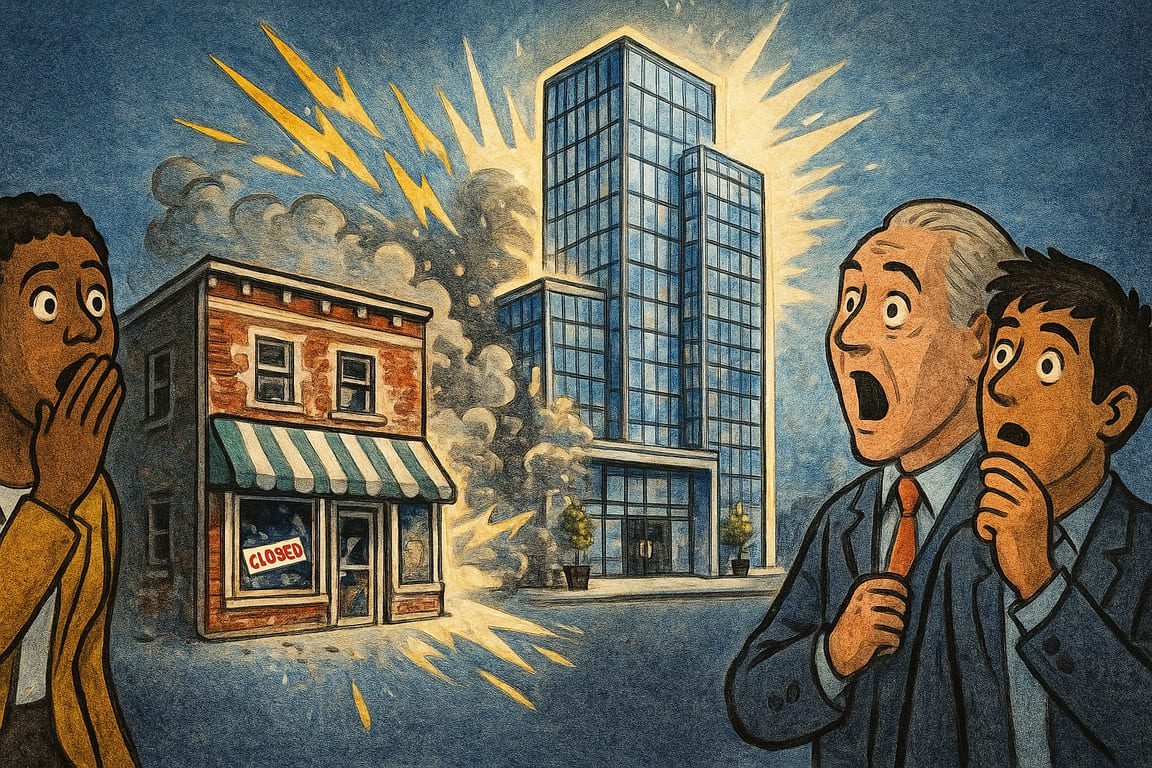
Under the glare of unforgiving fluorescent lights, the city’s old financial district breathed an uneasy silence. Buried between marble columns and flickering security cameras, executives rehearsed their talking points, hoping no one would notice the cracks forming beneath their polished facades. A janitor’s radio, tuned to a late-night jazz station, whispered in the background, carrying rumors of layoffs and unexpected windfalls. Somewhere above it all, a weary founder stared out at the wet streets, haunted by the knowledge that today’s titan can become tomorrow’s trivia question. Transformation, after all, rarely sends an invitation. It erupts, unstoppable, right where everyone feels safest.
You sense the threat and the promise every time you scan a headline or catch a whispered rumor. Maybe your company just changed hands overnight, or your favorite coffee shop now runs on mobile orders instead of barista banter. The shock isn’t just in the technology, but in the velocity of change. What looks stable is already halfway to being obsolete. Think of how Blackberry’s QWERTY keyboards once ruled boardrooms—then disappeared, seemingly overnight. For every Amazon or Apple, there’s a Kodak or Blockbuster. The map keeps shifting. No one gets a permanent seat at the top.
Consider the turnaround of Lego, which stumbled into the millennium drowning in red ink and irrelevance. You’ve seen the movie and bought the sets, but the real story is messier. Facing bankruptcy, Lego ditched expensive theme parks, slashed unpopular product lines, and did something radical: they asked kids and adult fans what they actually wanted. They then invited these customers into their design process. The shift worked. Sales surged, and a brand many had written off found new life. Transformation doesn’t wait for strategy decks—it’s an act of survival, fueled by honesty and the humility to listen.
Look around your own workplace and you’ll spot the same forces. When the pandemic blindsided the world, restaurants pivoted to contactless menus and curbside pickup in weeks, not years. Gym chains like Planet Fitness streamed live classes and loaned out equipment to keep members active at home. These pivots didn’t just keep the lights on; they sparked unexpected growth. The lesson: change doesn’t care about your schedule. The real winners stay flexible, moving at the speed of the storm.
Sometimes the biggest shocks come from the smallest players. Patagonia, a company already known for activism, stunned the industry when it gave away its profits to fight climate change. It wasn’t a PR stunt. The move inspired a wave of corporate soul-searching. Executives at rival firms scrambled to explain why their companies couldn’t—or wouldn’t—do the same. The ripple effect was real. Boardrooms across America debated purpose versus profit with fresh urgency. When one company flips the script, it forces everyone else to rethink what’s possible.
You can feel the ground shifting beneath your own feet, too. Maybe you’ve watched an underdog like Zoom rise from obscurity to become a household verb, while legacy giants struggled to keep up. Maybe you’ve seen a friend leave a secure job to launch a bakery that now ships pastries across continents. These aren’t fairy tales. They’re reminders that transformation isn’t reserved for the chosen few. Anyone with grit, timing, and a willingness to rethink everything can turn disaster into breakthrough.
For every success story, there’s a cautionary tale. Remember Nokia’s reign over mobile phones? They dismissed touchscreens as a passing fad, only to be outflanked by Apple’s relentless experimentation. The lesson is sharp: arrogance is the enemy of transformation. The moment you believe you’re safe, you’ve already started slipping. That’s why the best leaders stay restless, questioning their assumptions and scanning the horizon for threats and opportunities others can’t see.
Every industry hides these shockers in plain sight. In Detroit, Ford saved itself by betting big on pickup trucks when rivals chased smaller cars. The move looked risky, even reckless. Instead, it kept the company alive through economic turbulence. In France, Michelin, once just a tire maker, transformed itself by launching the world’s most respected restaurant guide—a marketing move so audacious that it reshaped both travel and dining. Sometimes, the road out of crisis isn’t a straight line but a wild detour.
You probably know someone who pulled off their own pivot. Take Maya, a graphic designer in Singapore, who lost her job in a downturn but found new demand teaching digital art to remote students. She built a community from scratch and now earns more than she did at her old firm. Transformation isn’t about luck—it’s about paying attention, acting fast, and trusting that chaos hides opportunities nobody else wants to see.
The secret to real transformation is the willingness to let go. Companies that cling to their “core” often miss out on the next act. Netflix, once a DVD mail-order service, risked everything to bet on streaming. The gamble paid off and transformed not only their business but also how the world watches stories. The lesson echoes for every organization and every individual: let go, or get left behind.
You are the hero in your own transformation story, whether you realize it or not. Every shocking turnaround, every overnight success, every improbable comeback started with a moment of discomfort and a refusal to accept the status quo. The only thing stopping you is the belief that change is for someone else. It’s not. The ground is shifting for you, too. The only question is: will you move with it, or let it move without you?
Midnight settles in the city’s bones. In an abandoned breakroom, a forgotten trophy gathers dust, a monument to battles won and lost. Down the corridor, a light flickers over a whiteboard where new ideas wait their turn. The janitor hums along with the jazz, quietly bearing witness to the comings and goings of dreams. Above it all, the founder gazes at the skyline, no longer afraid of what comes next. They know that real legends are forged in chaos, not comfort.
Nothing lasts. Not fear, not failure, not even success. The bravest learn to ride the tremors, trusting that every aftershock can reveal gold beneath the rubble. And you—sitting on the edge of your next big change—hold the map.
So, what is your comfort zone really costing you?
