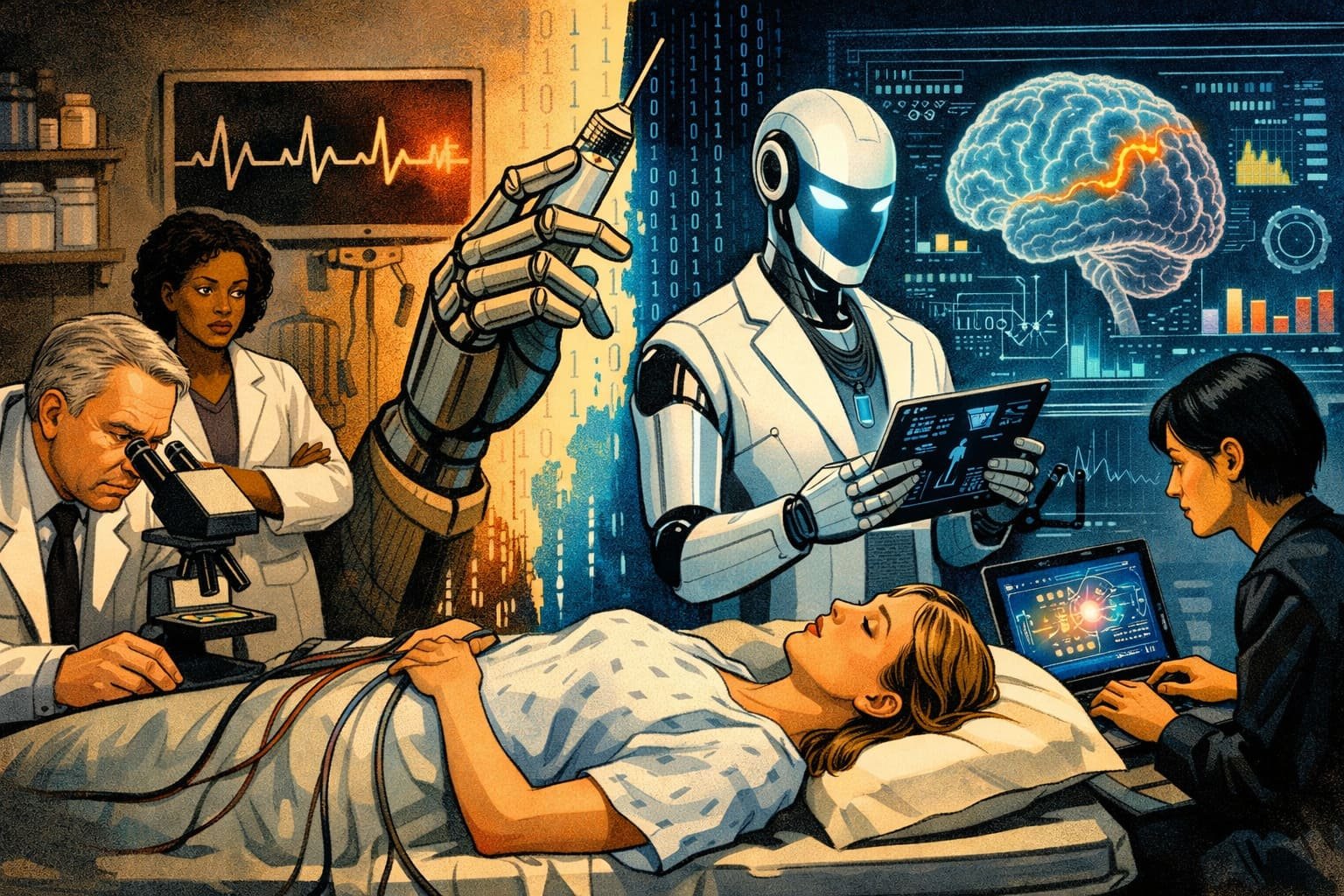
The waiting room feels strangely calm, yet something invisible has already entered before the first patient speaks. A silent algorithm sifts through symptoms, scans, and histories with the patience of a tireless observer, turning fragments into patterns that even seasoned clinicians might overlook. Medicine once relied almost entirely on intuition sharpened by years beside hospital beds. That certainty is fading, replaced by a partnership where technology no longer assists quietly but increasingly shapes decisions that influence every heartbeat, prescription, diagnosis, and expectation.
Healthcare has entered an era where digital transformation reaches far beyond electronic records or faster appointments. Artificial intelligence, predictive analytics, connected medical devices, and cloud platforms now form living systems that continuously learn from millions of clinical experiences. The promise is remarkable, yet the questions grow louder. When algorithms recommend treatments, who carries responsibility if outcomes disappoint? Technology expands human capability, but every innovation also demands stronger governance, transparency, and trust before patients embrace machines that increasingly stand beside physicians during life’s most vulnerable moments.
Mayo Clinic has demonstrated how artificial intelligence can help specialists detect subtle disease patterns within medical images that would otherwise require longer analysis. DeepMind’s work on protein prediction revealed how computational systems can accelerate biological discovery, opening possibilities for faster drug development and scientific research. Consider Lena, who managed a regional healthcare network struggling with delayed diagnoses across rural communities. After introducing intelligent triage software, clinicians recovered valuable consultation time, patients reached specialists sooner, and conversations gradually shifted from administrative frustration toward compassionate care that technology had quietly protected instead.
Digital innovation succeeds only when healthcare systems operate as connected ecosystems rather than isolated technologies chasing fashionable headlines. A hospital may purchase advanced artificial intelligence, yet fragmented databases, incompatible software, and inconsistent governance quickly erode expected value. Marcus experienced this lesson while leading technology integration across several independent clinics after a merger. Once every department shared standardized information through interoperable platforms, emergency teams coordinated faster, administrative duplication declined, and patients noticed smoother experiences without ever seeing the complex digital architecture supporting every interaction behind familiar reception desks.
The deeper transformation extends beyond hospitals into wearable devices, remote monitoring, digital therapeutics, and personalized prevention strategies that continuously reshape healthcare delivery. Instead of reacting after illness appears, technology increasingly predicts emerging risks before visible symptoms interrupt everyday life. That shift changes incentives across insurers, pharmaceutical companies, governments, and technology firms, encouraging investment in prevention rather than treatment alone. The greatest competitive advantage will belong to organizations that combine reliable data, ethical leadership, adaptable technology systems, and genuine empathy into one resilient model of continuous healthcare improvement.
Some revolutions arrive with roaring engines, while others appear as quiet conversations inside examination rooms where confidence slowly changes shape. Medicine is not losing its humanity because algorithms exist. It risks losing innocence because certainty no longer belongs exclusively to human judgment, demanding humility from innovators, clinicians, executives, and policymakers alike. The future will belong to those willing to design technology that strengthens compassion instead of replacing it, because every remarkable algorithm ultimately succeeds only when it earns a patient’s trust.
