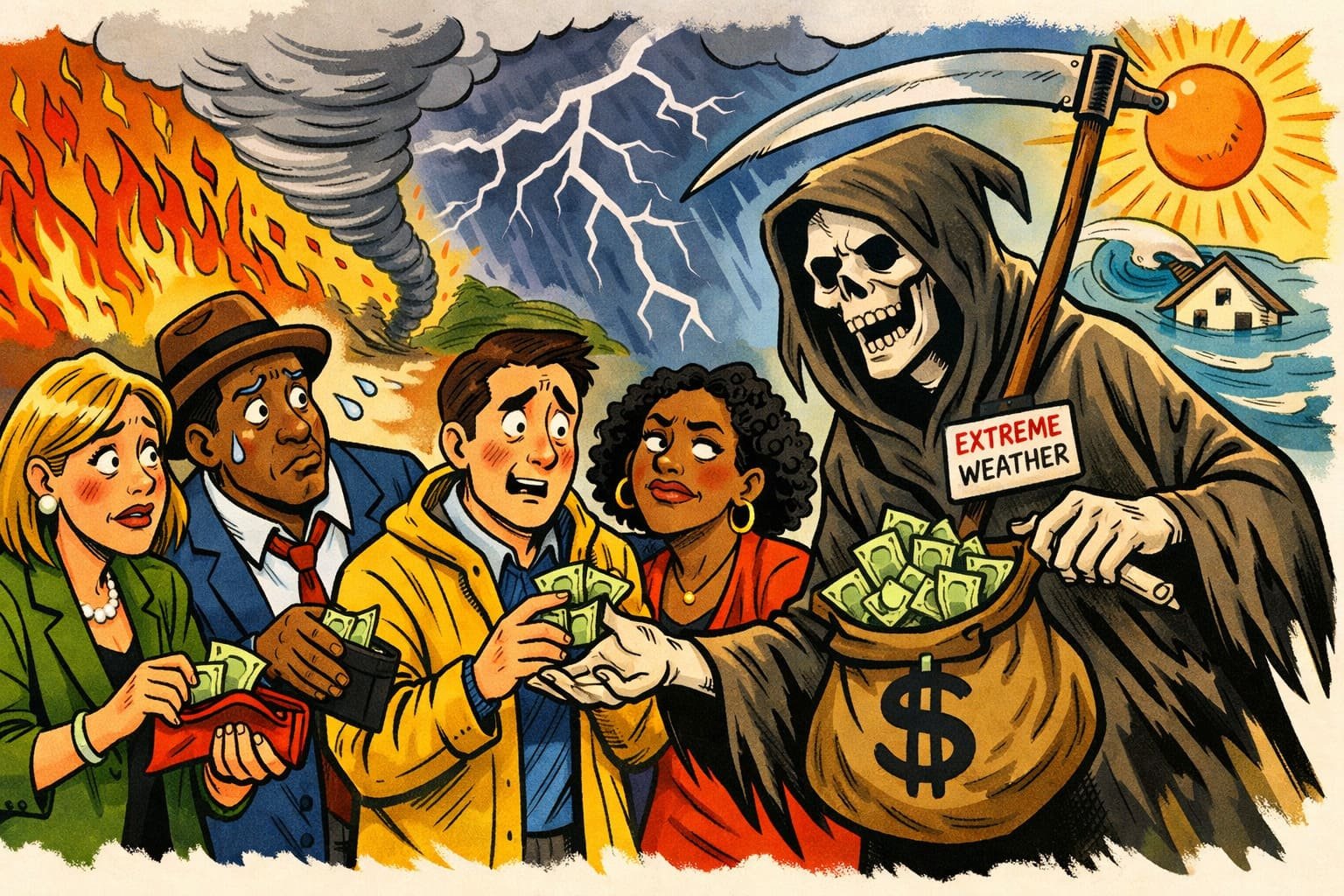
Smoke drifted across a once-busy shipping terminal while cranes stood perfectly still, waiting for storms that refused to obey schedules or forecasts. Insurance assessors walked slowly between damaged warehouses, notebooks replacing optimism with arithmetic. Every flooded road, scorched field, and delayed cargo container carried a price tag that would eventually arrive somewhere unexpected. Rarely at the disaster itself. More often, it appeared months later inside grocery bills, insurance premiums, mortgage payments, and national budgets.
Climate change is often discussed as an environmental challenge, yet businesses increasingly experience it as a financial one. Every disruption creates ripple effects across supply chains, production schedules, commodity markets, and consumer prices. Economists call these external costs because damage extends beyond the immediate event. Companies must replace equipment, reroute shipments, renegotiate contracts, and absorb higher financing costs. Consumers ultimately shoulder much of that burden through rising prices, even when they live far from the original disaster.
Munich Re and Swiss Re have repeatedly highlighted how severe weather is reshaping insurance markets as claims become larger and less predictable. Premiums climb because insurers must protect their own balance sheets against mounting risk. Olivia owned a family bakery that relied on steady wheat deliveries from regional suppliers. After repeated harvest disruptions, flour prices became impossible to predict, forcing difficult conversations with loyal customers who questioned every increase despite understanding the circumstances. Financial pressure arrived disguised as an ordinary loaf of bread.
Accounting departments increasingly classify climate risk alongside traditional financial risks because extreme weather affects assets, liabilities, cash flow, and long-term investment planning. Manufacturing plants require stronger resilience. Banks reassess lending decisions in vulnerable regions. Investors demand greater disclosure regarding environmental exposure before allocating capital. Unilever has spoken openly about climate impacts across agricultural supply chains, illustrating how even globally diversified businesses cannot easily escape disruptions affecting raw materials, transportation networks, and consumer purchasing power.
Government finances face similar challenges. Rebuilding damaged infrastructure demands public spending while tax revenues often weaken after economic disruption. That combination stretches national budgets and increases borrowing needs. Mayor Rafael watched his coastal community rebuild roads after repeated flooding, only to see repair costs rise each year. Local businesses reopened with determination, yet insurers reduced coverage, lenders became cautious, and investors hesitated before financing new developments. Recovery remained possible, but every rebuilding effort became more expensive than the last.
Waves continued striking the shoreline long after television cameras packed away, leaving accountants, homeowners, investors, and policymakers to calculate costs that headlines rarely measured. Climate economics is not merely about weather. It is about pricing uncertainty into every financial decision, from household budgets to trillion-dollar investment portfolios. Markets can absorb occasional shocks, but repeated disruption quietly rewrites economic expectations for everyone. The next climate bill may not arrive with rain, but with the receipt already sitting in your wallet.
