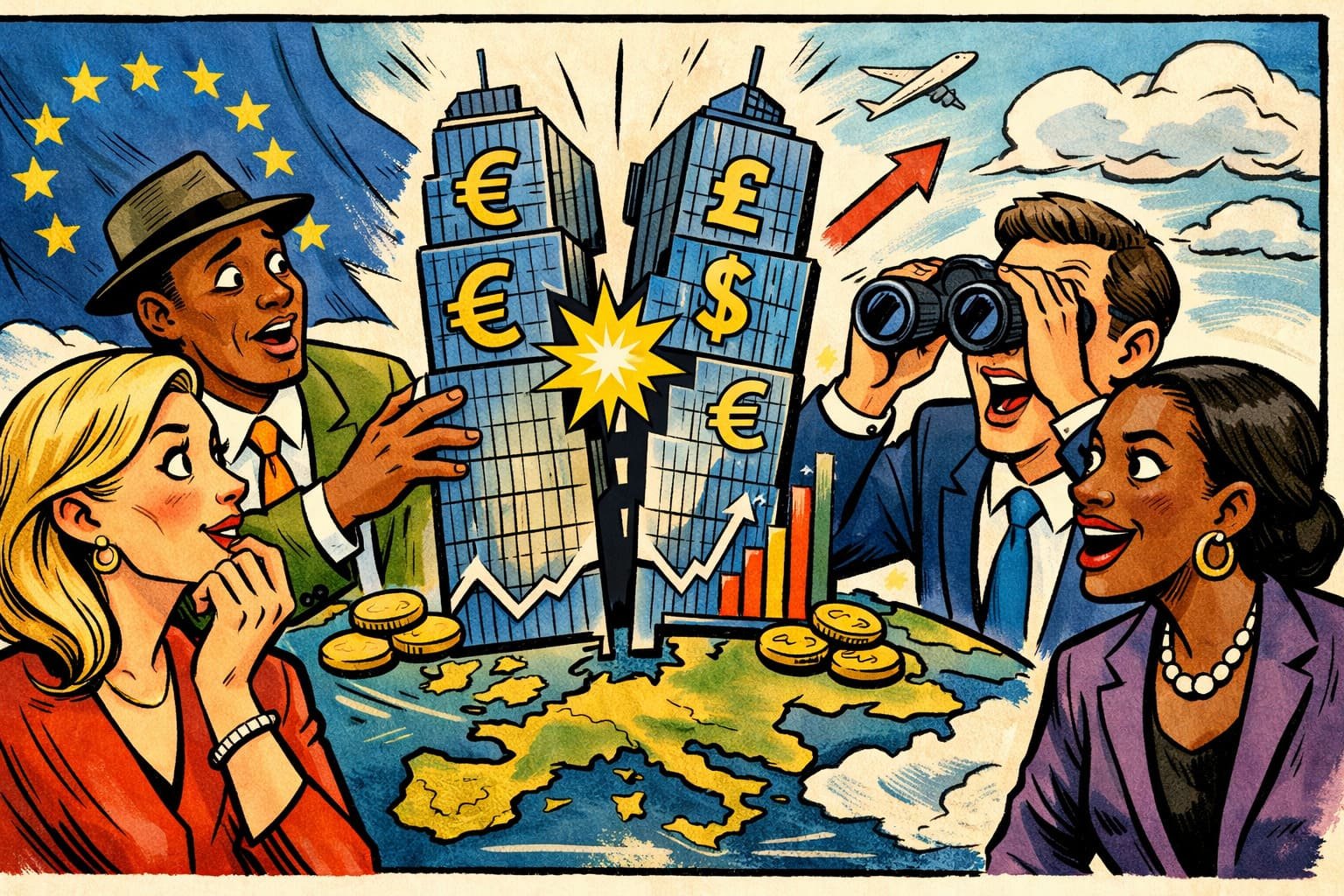
Glass corridors echoed with quiet conversations as finance ministers, exchange executives, and investment managers studied maps that had nothing to do with geography. Their challenge was not finding new countries. It was connecting old markets. Europe possesses world-class companies, respected financial institutions, and deep household savings, yet capital still moves across borders with surprising friction. That fragmentation has become increasingly expensive in an era where American and Asian rivals raise enormous sums with remarkable speed, leaving Europe searching for financial scale without sacrificing national identity.
European businesses rarely struggle because talent is scarce or innovation has disappeared. They struggle because financing often remains divided across different legal systems, tax structures, insolvency rules, and regulatory traditions. A startup in Germany can face a different investment landscape than one in Spain or Italy despite sharing the same currency. Investors notice those barriers immediately. Fragmented capital markets increase transaction costs, reduce liquidity, and make ambitious expansion more difficult, especially for companies competing against globally financed rivals.
Leaders across the European Union have therefore renewed interest in strengthening the Capital Markets Union, hoping deeper integration will unlock private investment across member states. Airbus offers a useful reminder of what coordinated European ambition can accomplish when political cooperation aligns with financial commitment. A biotechnology founder named Sofia encountered the opposite reality while seeking growth funding beyond her domestic market. Interest from investors arrived quickly, but legal complexity stretched negotiations into months. Opportunity existed. Financial architecture slowed its momentum.
Economists have long argued that deeper financial markets improve productivity by directing savings toward businesses capable of generating stronger returns. Larger, more integrated capital markets also spread risk more efficiently, making economies more resilient during periods of uncertainty. Accounting standards, disclosure rules, and governance frameworks become strategic infrastructure rather than administrative formalities. Trust scales only when institutions do. Capital follows confidence, and confidence grows where investors believe similar rules apply regardless of national borders.
Critics worry that greater financial integration could weaken national oversight or concentrate risk inside larger institutions. Those concerns deserve attention, yet fragmentation carries its own hidden costs. Promising companies sometimes list abroad because domestic markets cannot provide sufficient liquidity or investor depth. Pharmaceutical firms, clean energy innovators, and advanced manufacturers increasingly compete for global capital, not merely local savings. Financial sovereignty, paradoxically, may depend less upon standing apart than upon building stronger common foundations across the continent.
River currents merged beneath an old stone bridge where separate streams gradually became impossible to distinguish from one another. European finance faces a similar choice. Independent markets can preserve familiar traditions, yet connected markets can create the scale needed for future competitiveness. History rarely rewards economies that confuse fragmentation with resilience. Perhaps Europe’s greatest financial breakthrough will not emerge from inventing another remarkable company, but from ensuring remarkable companies never need to leave home to find the capital they deserve.
