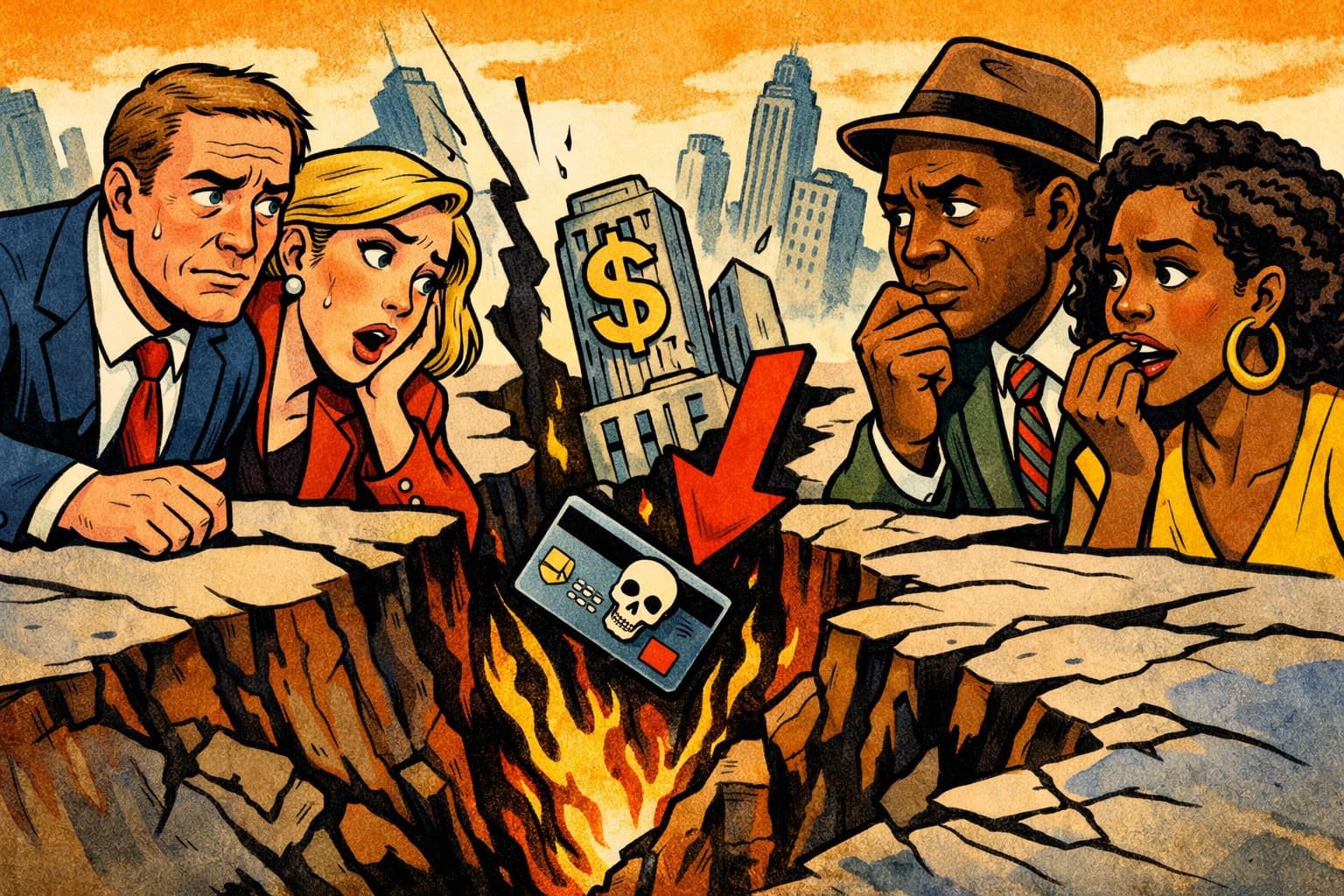
Emergency lights washed a deserted office tower in pale red while security guards wandered empty corridors that once echoed with confident footsteps. Nothing looked broken. Coffee machines still worked, elevators still climbed, quarterly presentations still promised resilience. Yet lenders had already sensed a change hidden beneath polished earnings reports. Default risk rarely arrives wearing a warning label. Instead, it slips quietly through weakening cash flow, shrinking margins, delayed payments, and balance sheets that slowly lose their ability to absorb another unexpected shock.
Markets often treat default as a dramatic event, but finance professionals know it begins much earlier. Credit quality weakens in small, almost forgettable moments. Customers take longer to pay invoices. Inventory lingers in warehouses. Interest expenses quietly consume larger portions of operating income. None of these developments alone guarantees failure. Together they reshape how banks, bond investors, and credit rating agencies measure confidence. A company can remain profitable while simultaneously becoming less trustworthy in the eyes of lenders.
The retail sector has illustrated this reality repeatedly as shifting consumer habits exposed businesses carrying heavy debt from stronger years. Bed Bath & Beyond became a striking example, struggling to adapt while financial flexibility steadily disappeared. A logistics entrepreneur named Hana experienced a quieter version of that pressure. Her delivery company continued winning contracts, yet rising financing costs and slower customer payments forced uncomfortable conversations with creditors. Revenue remained visible. Financial breathing room quietly disappeared, making every future decision more constrained than the last.
Credit analysts spend less time predicting bankruptcy than understanding resilience. They examine liquidity, leverage, interest coverage, governance, and management credibility because default rarely results from one disastrous quarter. More often, weaknesses accumulate until ordinary challenges become impossible to manage. Economist Irving Fisher described how debt can amplify economic distress once confidence begins fading. That insight still resonates today because financial systems depend as much upon trust as mathematics. Credit quality reflects both measurable numbers and collective belief about tomorrow.
An unusual contradiction defines modern financial markets. Investors celebrate ambitious expansion during prosperous periods, yet rapidly punish similar strategies once uncertainty rises. Borrowing itself does not create danger. Fragile cash generation does. Companies with disciplined accounting, diversified revenue, and conservative capital management often secure financing even during difficult conditions because lenders value predictability above excitement. Credit markets reward patience with surprising consistency. That discipline rarely attracts headlines, although it frequently determines which businesses survive challenging economic cycles.
Dim reflections lingered across polished glass as another lending committee closed thick folders without dramatic speeches or visible celebration. Decisions had already been made through countless small observations invisible to everyone outside the room. Credit markets possess an almost cinematic habit of recognizing trouble before public narratives catch up. Default risk never begins with collapse. It begins when confidence quietly changes direction, leaving every leader with a question worth carrying forward: what invisible crack might already be growing beneath today’s strongest foundation?
