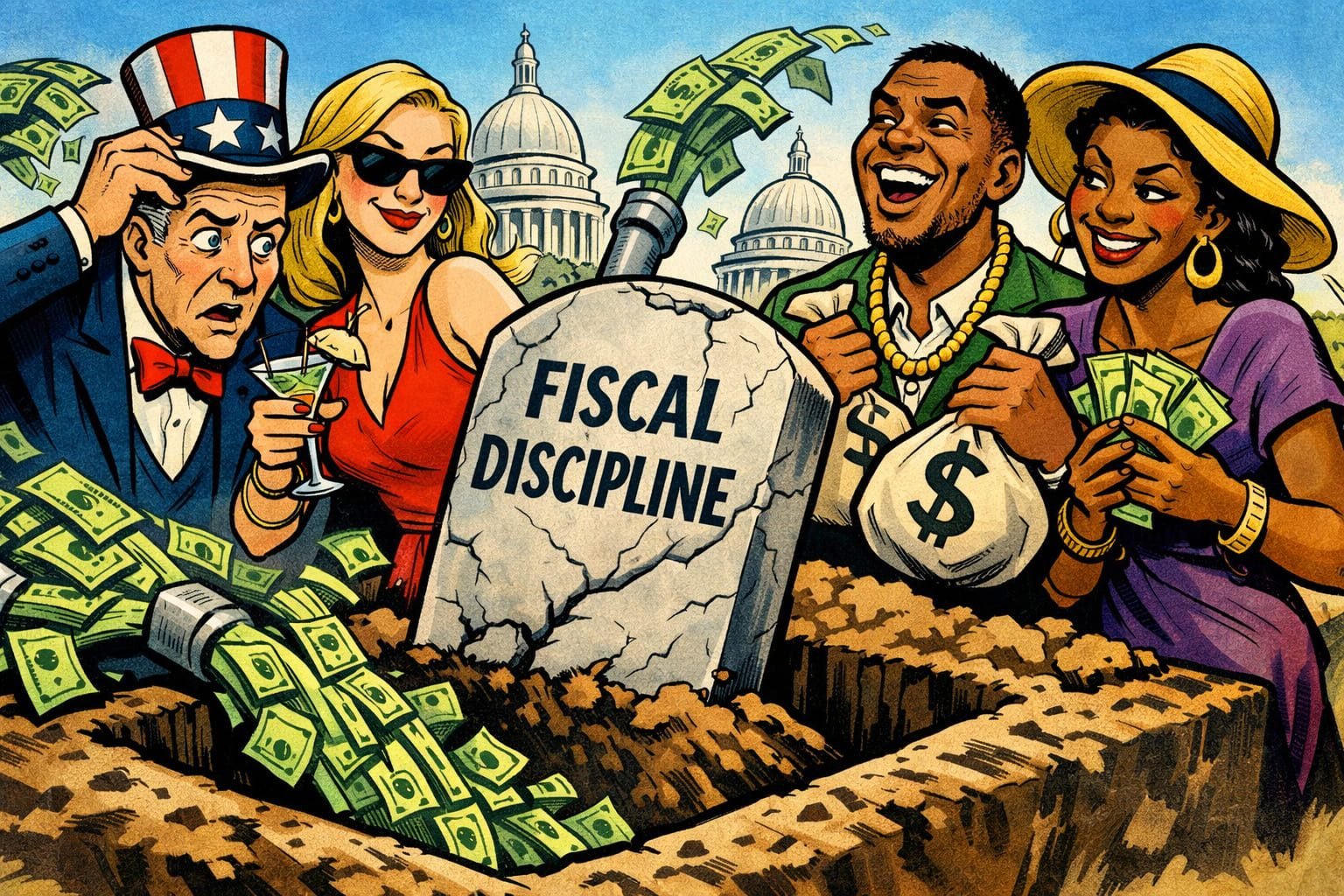
Subsidies are the political equivalent of snacks left out at a party. Everyone swears they will only take a few, and then somehow the tray is empty, the host is stressed, and nobody remembers who started it. Governments love subsidies for obvious reasons. They are faster than structural reform, kinder in tone than tax hikes, and easier to market than saying, “life is expensive and there are no painless fixes.” In hard times, subsidy states expand because they promise relief without confession. Later, fiscal discipline dies by a thousand compassionate cuts.
The trouble is not that subsidies always fail. Some are justified. Temporary support during an energy shock can prevent real hardship. Targeted help for strategic sectors or vulnerable households can stabilize an economy that might otherwise slide into uglier damage. The danger begins when temporary relief becomes permanent political furniture. Subsidies start as an exception. Then they become expectation. After that they become entitlement. At that point, cutting them feels like betrayal even when keeping them means borrowing more, starving investment, or protecting consumption patterns that the state cannot keep affording.
The World Bank’s recent work on fuel subsidies and price controls makes the core point clearly: governments often use subsidies to stabilize economies or ease pressure on households, but these measures come with significant trade-offs, large fiscal costs, and distorted incentives. It has also emphasized that reform design and communication matter enormously for public support.
Subsidies are seductive because they blur the cost. A direct tax rise is a loud argument. A subsidy is a warm blanket draped over the price tag. Consumers see the softened price. They do not always see the line moving somewhere else in the budget, or the extra borrowing, or the investment that got kneecapped to keep the scheme alive. In some cases, the richest households benefit handsomely from universal subsidy regimes because they consume more energy, more fuel, more of whatever is being cushioned. The policy feels generous while behaving strangely.
That strange behavior has haunted many energy systems. Cheap fuel may soothe street anger for a season, but it can also reward overconsumption, delay reform, and trap governments in ugly fiscal loops. Argentina’s continuing efforts to rationalize energy subsidies show how politically explosive it is to unwind support once voters and firms have built habits around it. The issue is not only technical. It is emotional. A subsidy becomes woven into daily expectation, like an invisible wall holding back the full force of reality. Remove the wall badly and the public feels ambushed.
A bakery owner in a subsidy-heavy city once planned prices around artificially cheap electricity that had become normal over the years. When reform finally arrived, costs jumped, margins vanished, and anger spilled toward the government. Yet the unreformed system had already been draining the budget, delaying grid investment, and leaving power quality unreliable. The owner had been protected and trapped at the same time. That is the subsidy state in miniature. It shields today while quietly sabotaging tomorrow. The politics are sweet. The economics are often diabetic.
There is also a cultural problem. Subsidy politics can infantilize the relationship between the state and the citizen. Every price shock becomes a plea for rescue. Every reform becomes a scandal. Governments learn that direct relief buys calm faster than difficult explanations about efficiency, targeting, or long-term resilience. Citizens, understandably, grow suspicious of any attempt to retune the system. The trust that would make smart reform possible gets eroded by years of broad, blunt support. It is a tragic little loop. Easy relief today makes credible reform harder tomorrow.
This is why the quality of subsidy design matters more than politicians like to admit. Universal subsidies are often lazy subsidies. They are easy to announce and hard to justify. Targeted transfers, lifeline tariffs, or temporary support tied to clear conditions are less glamorous, but far more fiscally sane. They can protect the vulnerable without turning the treasury into a permanent sponsor of habits and sectors that ought to adapt. The problem is that targeted measures require administrative competence, political discipline, and clear communication. Blanket subsidies require a podium and a phrase about standing with the people.
The phrase “fiscal discipline dies” sounds dramatic, but the death is usually bureaucratic rather than operatic. It happens when every year’s budget inherits old supports that nobody has the courage to review. It happens when subsidy lines expand during shocks and never quite shrink after them. It happens when ministers describe reform as politically impossible instead of administratively overdue. Over time, the state loses room to invest in the systems that would reduce the need for subsidies in the first place, whether that means better transit, cleaner energy, housing supply, or more competitive markets.
There is a sharp contrarian point here. Subsidy-heavy governments are often praised as caring when they may in fact be choosing the least durable form of care. Durable care builds capacity, cushions the vulnerable precisely, and reforms the structures producing pain. Performative care throws public money at prices while ducking the uglier work of redesign. One approach feels humane in a headline. The other actually survives contact with the future. Economists sometimes explain this too coldly. The real issue is not generosity versus restraint. It is theater versus stamina.
No modern state can entirely avoid subsidies. That is neither possible nor wise. The question is whether subsidies behave like bridges or like swamps. Bridges carry households and firms across a shock. Swamps swallow fiscal discipline, distort incentives, and make reform feel like drowning. A strong treasury knows the difference, even when the political class prefers not to. Relief has its place. So does sunset. A subsidy without an exit is not compassion preserved. It is policy cowardice with a smile.
Sooner or later, the expanded subsidy state confronts a room with no hiding place. The bills stack up, the investment backlog grows, the reform window narrows, and every gentle delay becomes another future rupture. That is the eerie silence after years of noisy benevolence. The public was promised protection from the full price of reality. Reality, patient as ever, kept the receipt. The hard question now is whether the state will keep buying calm on installment, or finally admit that real mercy is not endless cushioning, but a system sturdy enough to survive without pretending prices are made of wishes.
