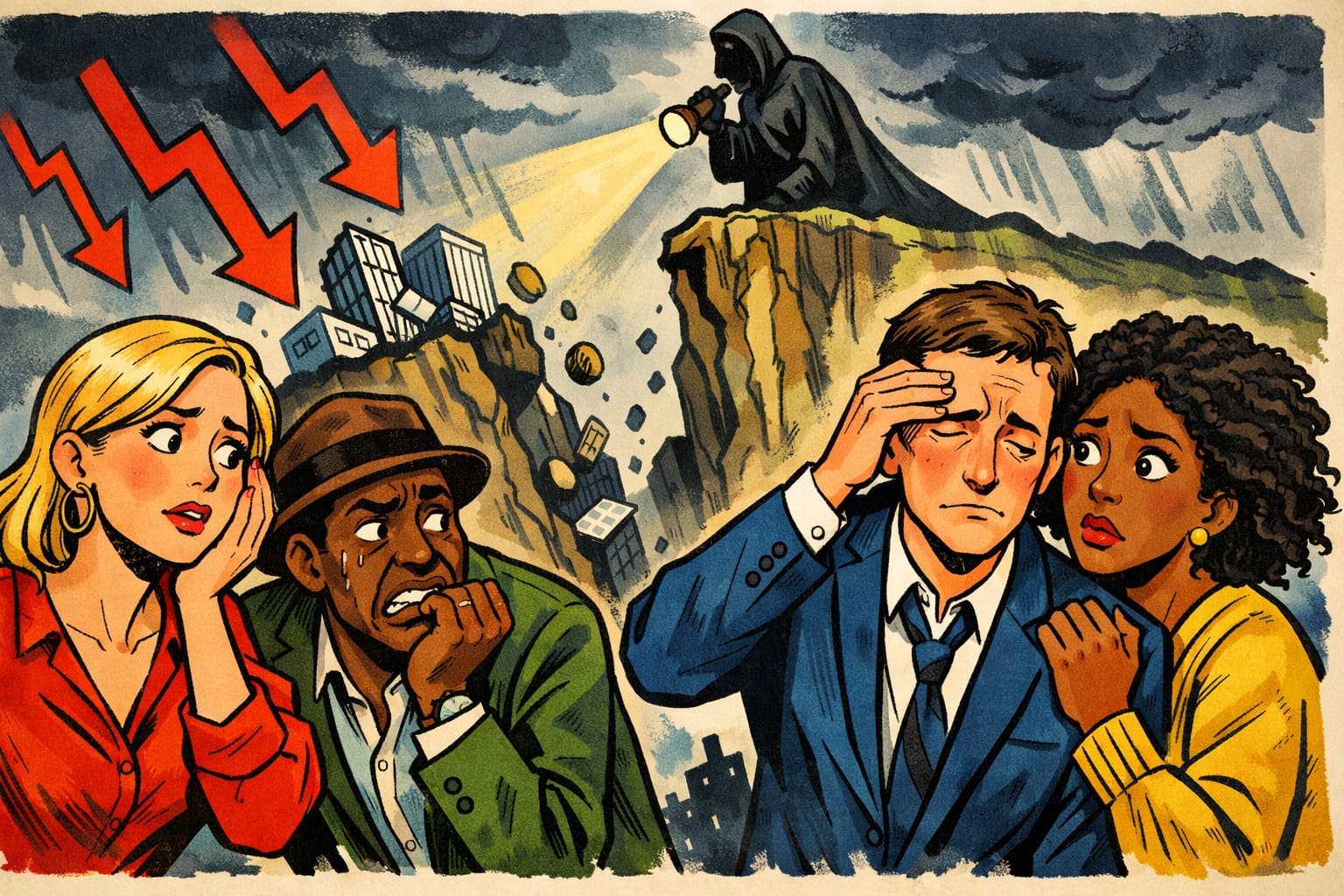
Crowds still fill shopping malls, yet conversations sound different. A cashier notices customers holding products a little longer before placing them back on the shelf, while restaurant owners quietly count empty tables between dinner rushes. Nothing dramatic has happened. Not yet. Markets often stumble after confidence weakens, not before. Financial crises frequently begin as invisible emotional shifts that spread through households, boardrooms, banks, and trading floors long before economic indicators finally confirm what cautious behavior already revealed.
Confidence is one of the least appreciated assets in any economy because accountants cannot record it directly on a balance sheet. Consumers postpone purchases when uncertainty grows. Businesses delay hiring, lenders tighten credit, and investors demand greater returns before committing fresh capital. Each decision appears rational in isolation. Together they create a feedback loop that slows spending, weakens investment, and gradually reshapes expectations. Fear often becomes economically productive in only one industry, the business of selling certainty.
Disney experienced this during periods when households reduced discretionary spending despite stable employment in many regions. Families simply became more cautious about vacations and entertainment. A different lesson unfolded inside Amina’s neighborhood electronics shop. Customers still visited every afternoon, admired new devices, compared features, then quietly promised to return next month. Sales softened without any obvious collapse. She expanded repair services alongside new products, creating dependable income while shoppers slowly rebuilt confidence in their personal finances.
Behavioral economics explains why confidence deserves as much attention as inflation or interest rates. Nobel laureate Daniel Kahneman demonstrated that people often fear losses more intensely than they value equivalent gains. Financial markets display similar psychology. Investors who expect uncertainty demand wider safety margins, lowering asset prices before corporate earnings materially decline. Banks become more selective, businesses conserve cash, and expansion plans quietly disappear from boardroom presentations. Expectations begin shaping reality instead of merely reflecting it.
Another example emerged through Karim, who managed a growing catering business serving corporate clients. Orders gradually shifted from elaborate celebrations toward modest meetings despite healthy company revenues. Executives preferred caution because uncertain headlines made visible extravagance feel uncomfortable. Karim adapted by offering flexible packages rather than waiting for optimism to return. His revenue stabilized because he recognized that confidence, not purchasing power alone, had become the scarce resource clients were protecting with unusual discipline.
Streetlights shimmer across rain-soaked pavement while storefront windows reflect people calculating tomorrow with unusual care. Economies rarely lose momentum in a single dramatic moment. They slow through thousands of cautious decisions that quietly reinforce one another until hesitation begins resembling destiny. Confidence cannot eliminate every financial challenge, yet sustained prosperity has never existed without it. Before watching interest rates or stock indexes, watch human behavior, because fear almost always arrives first, carrying recession behind it like an unseen passenger.
