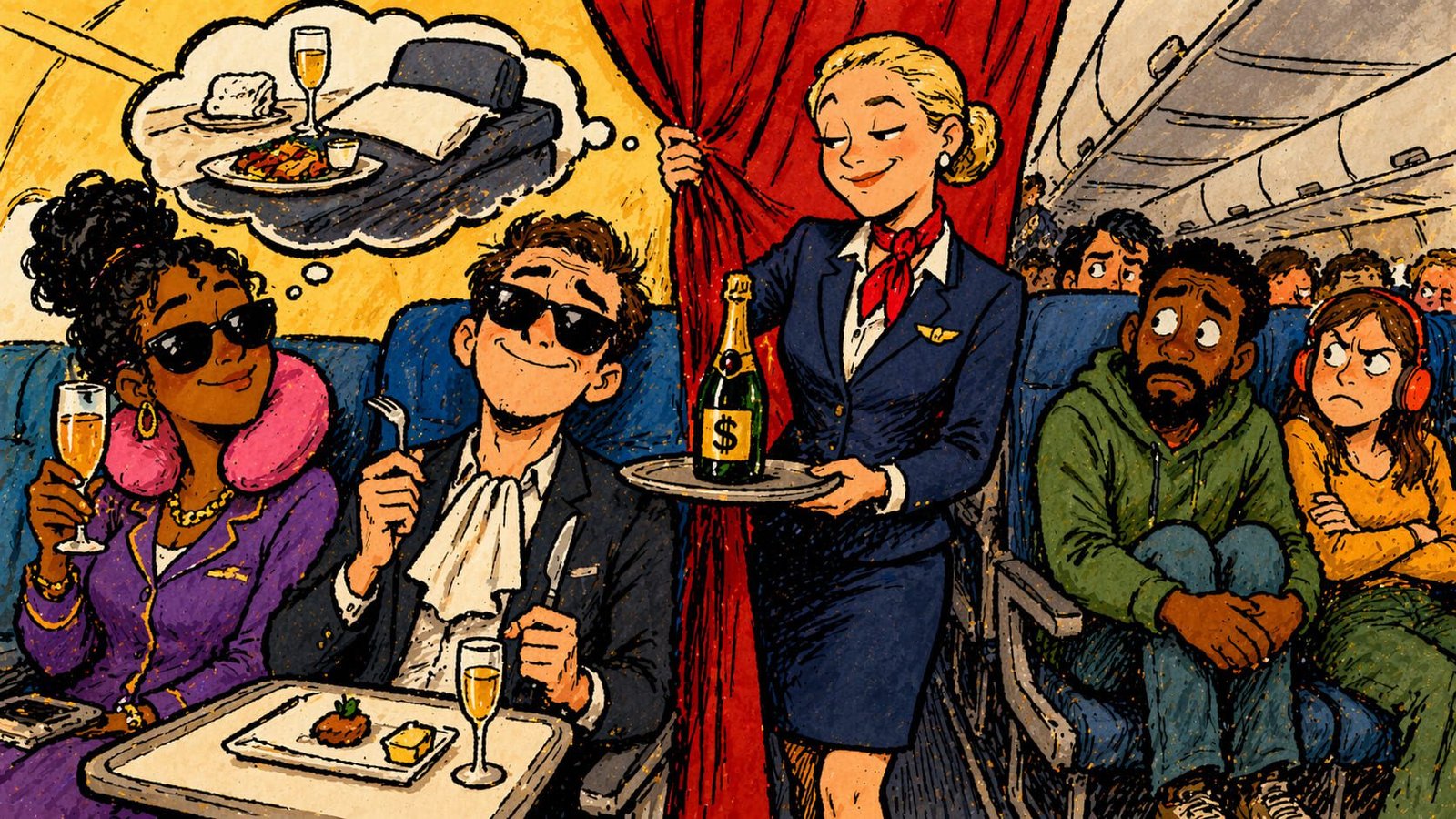
The cabin lights dim just enough to suggest exclusivity. A curtain separates sections, soft voices replace the hum of general chatter, and a glass of something sparkling arrives before takeoff. It feels like an upgrade, a shift into a different experience. Yet somewhere between boarding and landing, the illusion begins to thin.
Airlines have mastered the art of layered experience. Premium does not mean entirely different. It means slightly adjusted. More space, better service, subtle signals of distinction. The core journey remains the same. The plane does not change its destination. The difference lives in perception.
What makes this model effective is not deception, but expectation. Travelers are not just buying comfort. They are buying a feeling. The idea of being treated differently, of stepping into a space that suggests status. That feeling can exist even when the underlying reality remains largely unchanged.
A consultant named Rhea once analyzed airline pricing strategies for a client. She described the premium cabin as “a story with physical features.” The features matter, but the story matters more. It shapes how the experience is interpreted from the moment a ticket is purchased.
You can see the contrast in small details. Priority boarding creates a sense of movement before others. Dedicated spaces reinforce separation. Even the tone of communication shifts slightly. Each element contributes to a narrative that feels distinct, even if the flight itself follows the same path.
There is a tension between promise and delivery. The promise suggests transformation. The delivery offers enhancement. Most travelers accept this gap, sometimes without fully acknowledging it. The experience feels better, and that is often enough.
A frequent traveler named Elias once upgraded for a long-haul flight after months of routine travel. He described the initial moments as almost surreal, quieter, more attentive. Hours later, he realized that the journey itself had not fundamentally changed. The difference was real, but it was not as absolute as it first appeared.
The broader pattern extends beyond aviation. Many industries operate on similar principles. Luxury becomes a layer added to an existing structure rather than a complete redefinition. The experience is elevated, but not entirely transformed.
Yet the appeal persists. People continue to seek these upgrades, not because they are unaware of the limitations, but because the feeling still holds value. The momentary shift in environment, the sense of being treated differently, carries its own significance.
As the plane descends and the cabin prepares for landing, the distinctions begin to dissolve. Curtains open, passengers move together, the shared reality returns. The journey ends where it always does, on the same ground.
And the thought settles quietly, almost gently: if luxury is mostly a story we agree to believe, what does that say about the experiences we are willing to pay for?
