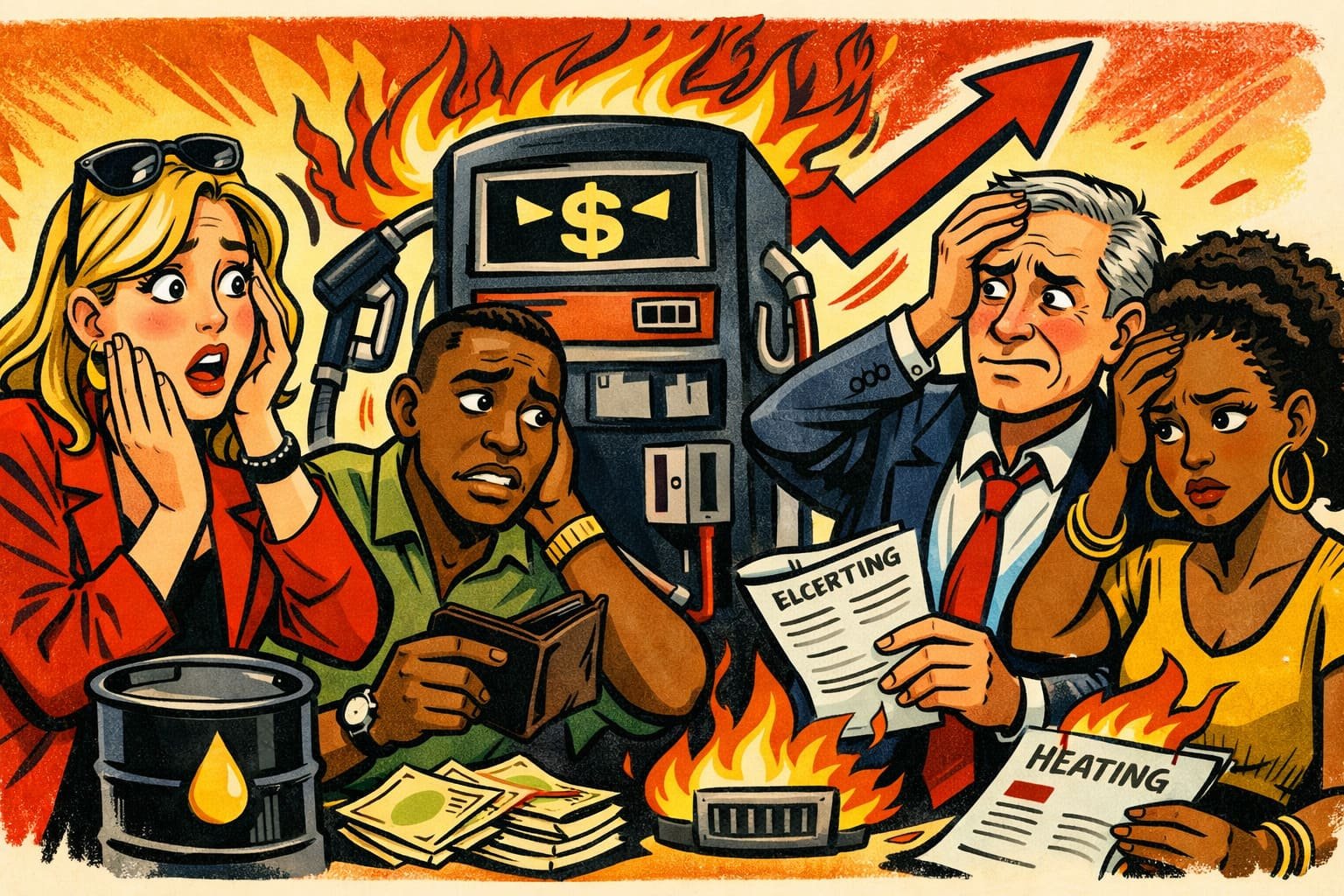
Oil has a way of humiliating budget plans. It turns elegant forecasts into damp paper and makes confident ministers sound like men reading vows during an earthquake. One month the treasury speaks of prudence, resilience, and room to maneuver. Then energy prices leap or collapse, and the budget discovers it is living inside somebody else’s weather. Oil exporters feel the jolt in revenue and spending pressure. Importers feel it in inflation, subsidy demands, and public anger. Different pain, same humiliation. Energy prices begin issuing commands, and fiscal policy starts replying with less dignity than advertised.
That is the brutal fiscal truth about oil shocks. They are never just commodity stories. They are budget stories, political stories, and social stories. The IMF has long warned that oil price declines hit exporters through revenue loss, weaker non-oil activity, and spending stress, while ECB research on oil shocks points to the way higher energy prices can drag on activity even as inflation rises. When budgets are built with too much faith in stable energy conditions, the state becomes a passenger in its own car.
For exporters, the seduction usually begins during good years. High prices flatter everything. Governments spend more, public payrolls feel easier, grand projects acquire patriotic language, and citizens start treating the temporary as normal. Then the cycle turns. Revenues sink. Commitments remain. Suddenly ministers discover the concept of restraint, usually after a decade spent acting as though oil had solved politics. That is the real budget trap. Windfalls are mistaken for reform. Temporary ease is mistaken for fiscal intelligence. When the reversal comes, the correction feels cruel because the promises were made with such confidence.
Importers face a different but equally political pain. High energy prices spread through transport, food, electricity, and household budgets. Governments feel intense pressure to cushion the blow. Some relief is justified. The danger lies in broad, costly, poorly targeted measures that outlive the shock or mute the price signal too completely. Central bankers dislike them for obvious reasons. Finance ministries dislike them for private ones. Voters love them at first because relief always feels humane in the week it arrives. The bill, again, comes later, carrying fewer cameras.
Europe has repeatedly shown this tension. Energy shocks can push governments toward urgent support for households and firms, but the quality of support matters. Recent ECB guidance has stressed that fiscal responses to energy price spikes should be temporary and targeted rather than open-ended. That is not technocratic fussiness. It is a recognition that universal cushioning can preserve pain politically while expanding it fiscally.
A refinery town in West Africa once learned the exporter’s version of false comfort. During high price periods, public expectations swelled with government confidence. Local contractors expanded. Shops borrowed. Politicians hinted that modernity had finally clocked in for the night shift. Then prices weakened and payment delays spread through the local economy like a rumor nobody wanted to confirm. The budget had not simply lost income. It had lost authority. People discovered that a state built on commodity luck speaks boldly in sunshine and often stammers when clouds arrive.
Oil shocks also expose an awkward philosophical truth. Budgets are often less about priorities than about assumptions. A government may claim to value schools, hospitals, roads, security, and social stability. Yet if those priorities rest on an oil price path that cannot survive real volatility, then the budget was not a plan. It was a bet. Too many treasuries operate like casual gamblers who insist they are performing strategic analysis because the spreadsheet font looks serious. Energy markets are not impressed by formatting.
The smarter response is almost boring, which is precisely why it is often neglected. Save windfalls during good years. Build buffers. Use conservative assumptions. Broaden the tax base. Reduce the state’s emotional dependence on commodity cycles. For importers, design support that protects the vulnerable without pretending the price signal does not exist. For exporters, build non-oil revenue systems and spending frameworks strong enough to survive a bad turn. None of this wins a slogan contest. It wins endurance, which is usually the better prize.
There is a cultural dimension too. Oil wealth can teach governments bad habits just as oil shocks can teach them fear. Windfall periods reward centralization, executive swagger, and the idea that history favors bold spenders. Downturns then teach the opposite lesson in a rush. Publics become cynical. Investors become selective. Reformers become suddenly fashionable. The budget lurches between euphoria and restraint like a person swearing off sugar after finishing the cake. That kind of fiscal psychology is not sustainable. It makes policy reactive and citizens tired.
A shipping executive in Rotterdam once said the most honest thing about energy prices. “Everybody calls it a shock after they spent years behaving as if volatility had retired.” That line captures the heart of the problem. Oil is volatile. Politics keeps acting surprised. The same governments that write crisis packages after a spike may have ignored resilience, storage, diversification, or revenue reform before the spike. Shock management then becomes a substitute for preparedness, and the public ends up financing the cost of collective surprise.
The lesson from decades of oil-linked fiscal stress is painfully simple. Energy prices should inform budgets, not rule them. That means resisting both the exporter’s vanity during booms and the importer’s panic during spikes. It means targeted support, stronger buffers, and less romance around commodity income. It means admitting that oil can move fast while public commitments move slowly, which is exactly why fiscal design has to be sturdier than the last rally or slump.
In the end, an oil shock budget reveals whether a state governs with foresight or with mood. One path treats price swings as a reality to prepare for. The other treats them as surprises to narrate after the damage. The difference shows up not in speeches, but in whether the budget still has a spine when energy prices start barking orders. Oil will always move. The more haunting question is whether governments ever truly stop letting it write their emotional script.
