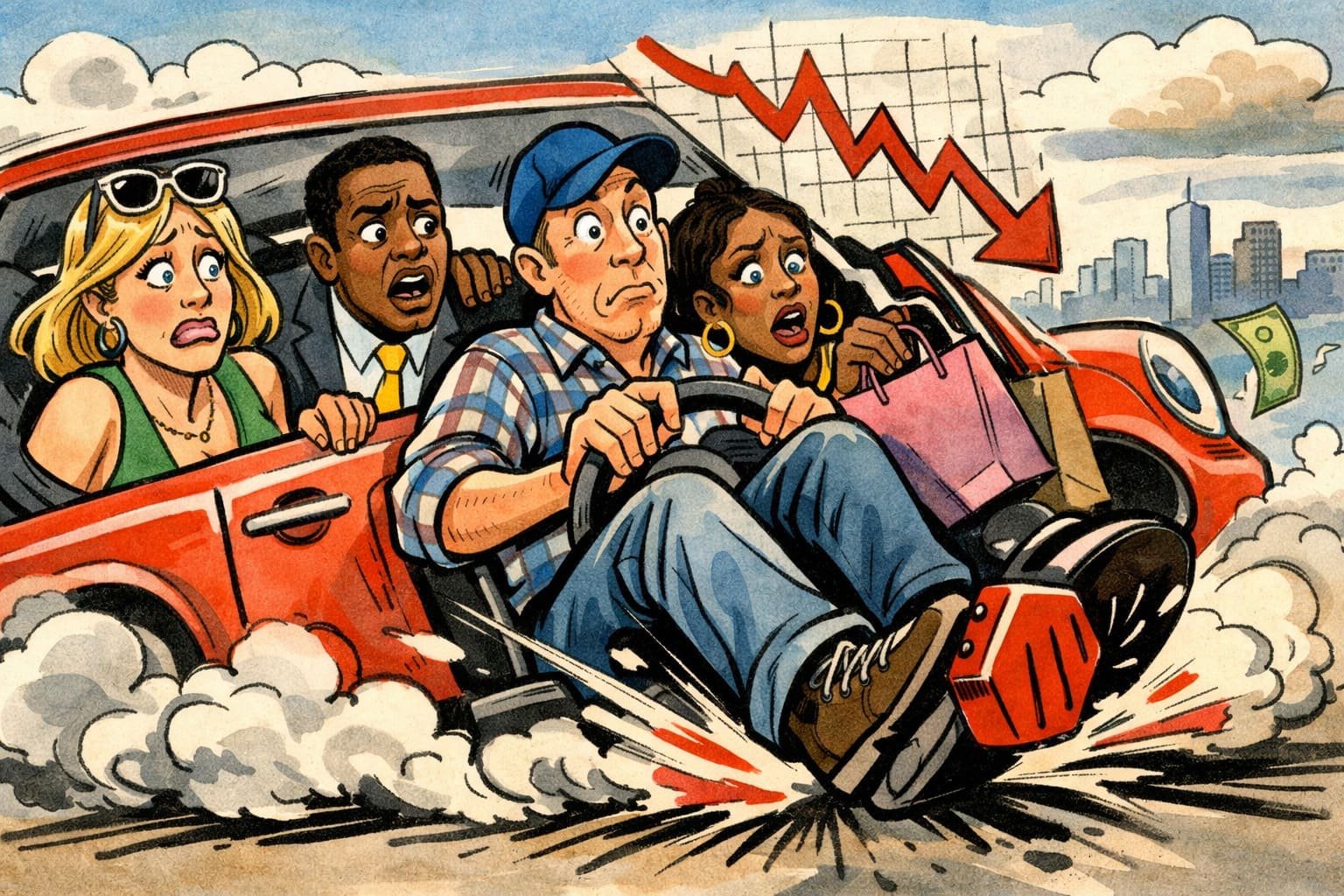
Checkout scanners still chimed, shopping carts still rolled, and cafés continued pouring coffee, yet an invisible hesitation had settled over every purchase. A family lingered before a supermarket shelf, comparing prices that once required no second thought. Retailers noticed it before economists did. Receipts became smaller, impulse buys quietly disappeared, and conversations shifted from “Can we afford this?” to “Should we wait?” Confidence had not vanished overnight. It had simply begun leaking away, one cautious decision at a time.
Consumer confidence is less about emotions than many people imagine. It reflects expectations about income, employment, inflation, borrowing costs, and financial security. When households become uncertain about tomorrow, they naturally spend less today. That single behavioral shift ripples through the economy with remarkable force. Businesses delay expansion, manufacturers reduce production, lenders tighten credit, and investors reassess growth expectations because consumer spending remains one of the strongest engines supporting modern economic activity.
Disney experienced softer demand in parts of its consumer-facing businesses during periods when households became more selective about discretionary spending. Starbucks has also acknowledged changing customer behavior as consumers increasingly searched for value rather than convenience alone. Amelia, who managed a neighborhood furniture showroom, noticed visitors filling notebooks with measurements instead of placing orders. One customer smiled apologetically before leaving. “We’ll come back after things feel steadier,” he whispered, a sentence repeated often enough to become its own economic indicator.
Financial statements quickly reveal what shrinking confidence means for organizations. Lower sales reduce revenue, slower inventory turnover ties up working capital, and declining cash flow limits future investment. Accountants monitor these trends closely because consumer hesitation often appears in quarterly reports before broader economic data confirms the slowdown. During periods of uncertainty, companies with stronger balance sheets, diversified revenue, and disciplined cost management typically outperform competitors relying on continuous consumer enthusiasm to maintain profitability.
Behavioral economists have long observed that expectations can become self-reinforcing. Fear encourages reduced spending, weaker demand slows business activity, and slowing business activity reinforces fear. Marcus owned a successful outdoor clothing store that survived fierce competition through loyal customers. Then shoppers began postponing purchases despite steady employment because headlines alone changed financial behavior. Sales recovered only after optimism returned, proving that confidence itself can become an economic asset almost as valuable as capital.
Streetlights reflected across storefront windows where carefully arranged displays waited for buyers who were no longer rushing through familiar doors. Markets often measure inflation, interest rates, and employment with impressive precision, yet confidence remains harder to capture because it lives inside ordinary conversations around dinner tables and crowded buses. Economies rarely stall because people forget how to spend. They pause because uncertainty quietly persuades them to wait. Every delayed purchase writes a small chapter in tomorrow’s economic story.
