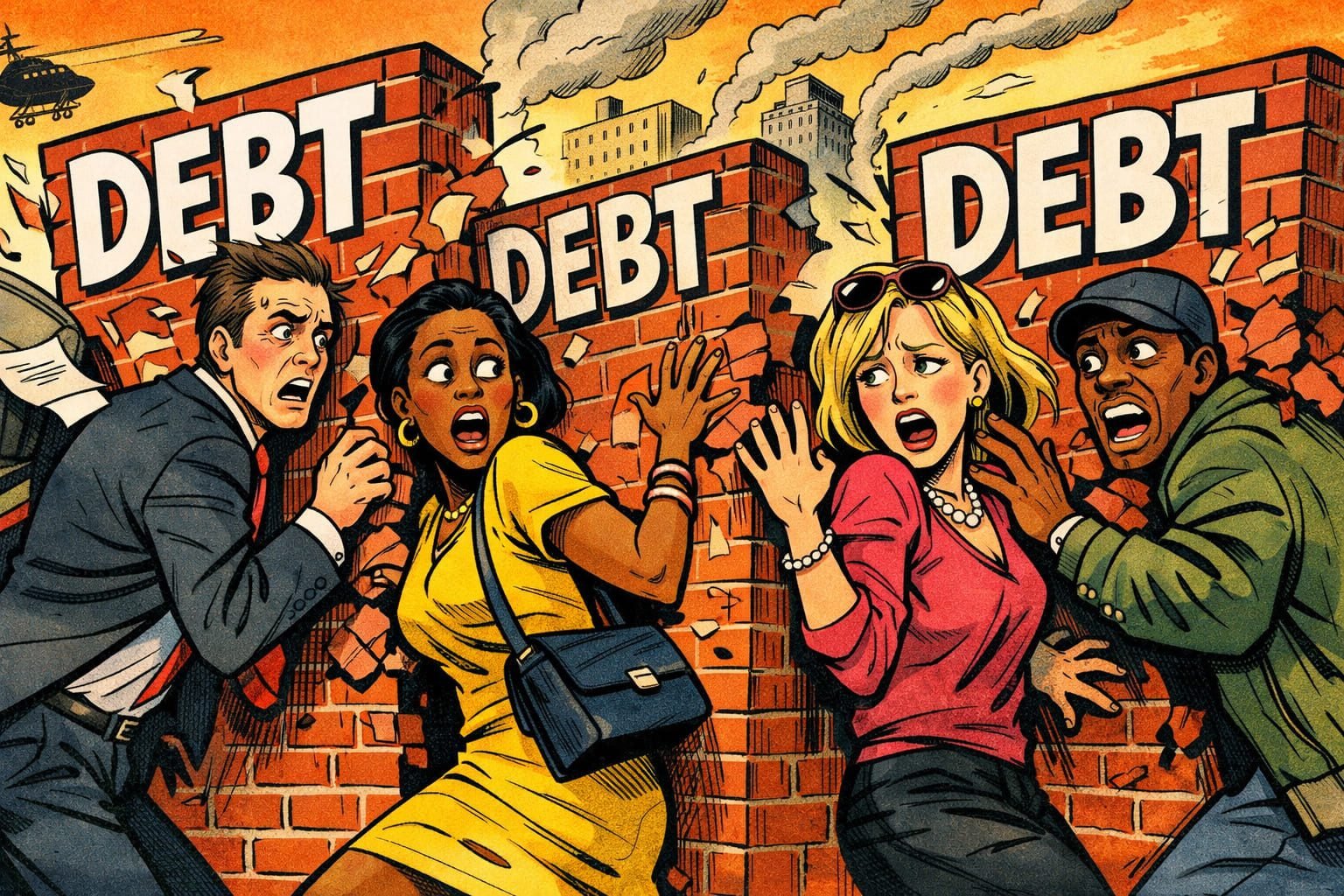
Concrete barriers rose around a half-finished bridge while rust gathered faster than construction crews. Budget officials shuffled thick folders through echoing government corridors, searching for savings that seemed to disappear before the ink dried. Every delayed project carried a hidden cost. Citizens rarely saw the spreadsheets, yet they felt every consequence through crowded hospitals, aging roads, rising taxes, and promises that quietly slipped beyond another election cycle.
Government debt is not inherently dangerous. Borrowing finances infrastructure, education, healthcare, and economic recovery when managed responsibly. Trouble begins when debt grows faster than the economy supporting it. Interest payments gradually consume public revenue that might otherwise fund essential services or productive investment. Financial flexibility shrinks. Leaders face increasingly uncomfortable choices between raising taxes, reducing spending, borrowing even more, or accepting slower economic growth that weakens future government income.
Sri Lanka’s recent sovereign debt crisis offered a painful reminder that debt problems rarely emerge from one bad decision. Years of external borrowing, weakened foreign currency reserves, declining tourism, and policy missteps combined into a financial emergency that affected ordinary families far more than financial markets. Restaurant owner Kavin watched imported cooking oil become prohibitively expensive while electricity shortages interrupted business operations. Debt sounded abstract until everyday commerce became an exhausting exercise in uncertainty and survival.
Accounting principles provide a useful lens for understanding public finances. Borrowing creates liabilities that require future cash flows to service. As interest costs rise, governments allocate larger portions of annual budgets toward existing obligations rather than new investments. Investors closely monitor fiscal sustainability because confidence influences borrowing costs. Japan maintains substantial public debt, yet stable institutions and domestic financing have supported market confidence. Other nations lacking similar conditions often encounter much harsher financial consequences when confidence weakens.
Debt also shapes private-sector decisions. Businesses hesitate to expand when governments signal future tax increases or reduce infrastructure spending. Banks become cautious if public finances appear fragile. Sofia operated a construction company that relied heavily on public contracts for schools and transportation projects. As budget pressures intensified, approved projects were postponed indefinitely. Skilled workers remained available, equipment stood ready, yet uncertainty replaced opportunity because fiscal strain quietly rippled through the broader economy.
Dust drifted across abandoned construction fences where ambitious blueprints once promised brighter futures for entire communities. Debt becomes dangerous not because numbers grow large, but because choices grow smaller. Sustainable borrowing expands opportunity, while persistent fiscal imbalance gradually narrows every available path forward. Nations rarely collide with financial walls in dramatic fashion. They arrive through countless ordinary decisions that seemed manageable in isolation. Every borrowed future deserves a realistic plan for repayment before optimism becomes obligation.
