Rain hammered the tinted windows of a private co-working loft somewhere between Silicon Valley fantasy and late-stage capitalist fever dream. Screens glowed like tiny artificial suns. A founder in a wrinkled black hoodie stared at a spreadsheet the way exhausted gamblers stare at slot machines that stopped singing back. The room smelled faintly of burnt espresso and ambition left too long in the microwave. Somewhere in the distance, a podcast host was explaining “freedom” while selling another course about escaping the matrix. Nobody looked free. That was the strange thing. Everybody looked recruited.
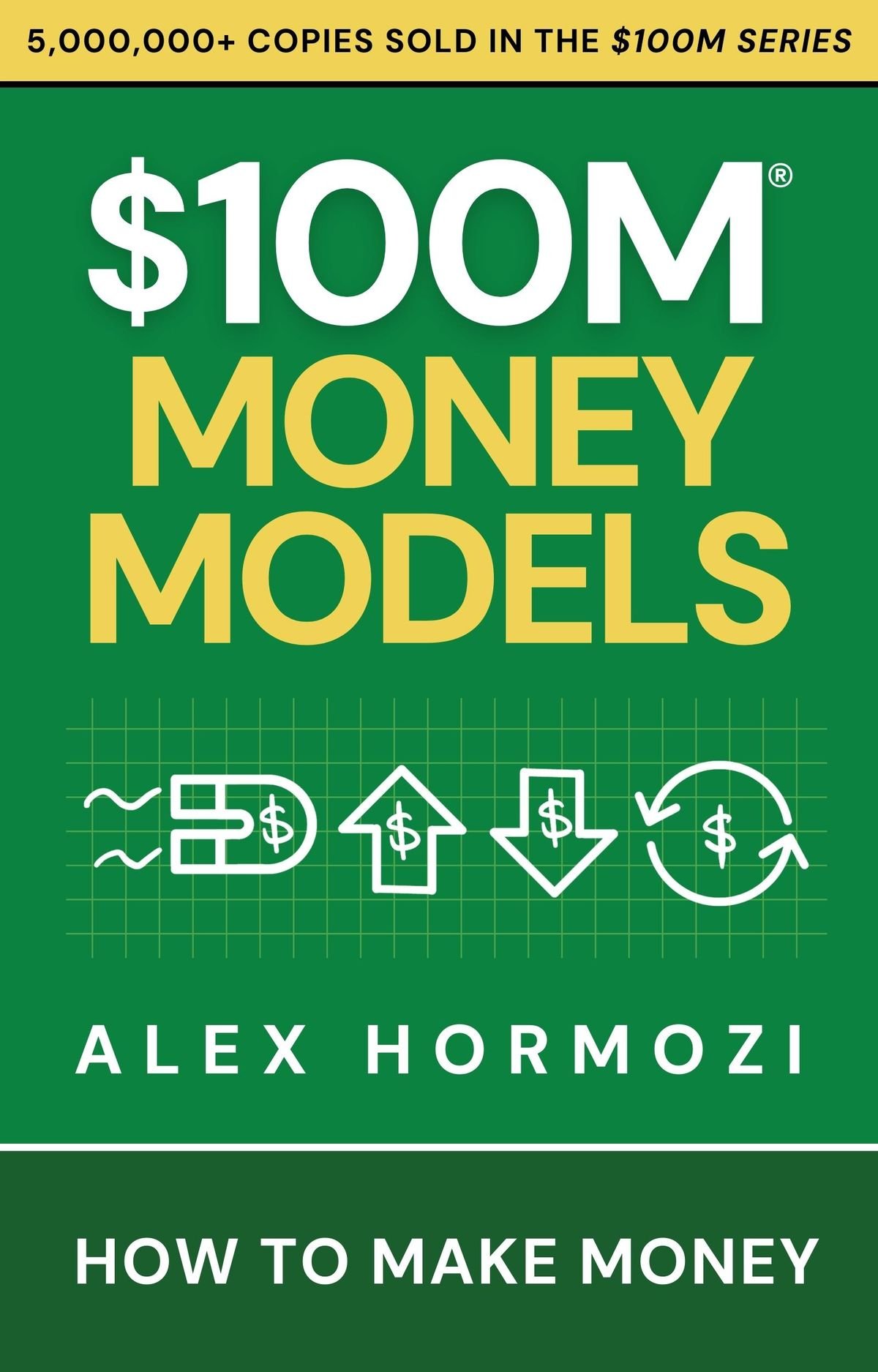
Then a different kind of voice entered the culture. Less guru, more mechanic. Less incense, more steel pipe. $100M Money Models arrived like a brick thrown through the glass cathedral of performative entrepreneurship. Alex Hormozi did not market fantasy. He marketed extraction. The book reads like someone dismantling the modern business world with an industrial wrench while quietly laughing at how complicated everyone else made it. Underneath the blunt language sits something colder and far more unsettling: most businesses are not dying because the market is cruel. They are dying because their owners secretly love chaos more than systems.
That idea cuts deeper than many readers expect. Modern business culture worships personality. Hormozi worships infrastructure. The distinction feels small until the lights go out. Instagram rewards charisma. Markets reward repeatability. One gets applause. The other survives recessions. Reading the book feels strangely similar to watching a casino surveillance tape after a glamorous heist film. The glamour disappears. Patterns remain. Tiny habits. Margins. Offers. Incentives. Human weakness arranged into predictable architecture.
A restaurant owner named Celina learned this the brutal way after expanding her trendy burger chain across three cities. Social media adored her. Food bloggers treated her dining rooms like sacred temples of urban cool. Behind the scenes, inventory systems were collapsing like wet cardboard. Staff turnover turned kitchens into emotional war zones. One exhausted night, she discovered a rival competitor with worse branding quietly outperforming her locations using simpler menus, tighter margins, and standardized operations. That realization changed her business more than motivation ever could. Style had built attention. Systems built permanence.
The book’s most dangerous insight is not really about money. It is about emotional detachment. Hormozi repeatedly dismantles the romantic myths entrepreneurs tell themselves. Many founders believe suffering itself deserves compensation. Markets disagree. Customers rarely purchase effort. They purchase relief. That sounds obvious until pride enters the equation. Entire industries are filled with brilliant people emotionally attached to products nobody actually wants. Hollywood does this constantly. So do startups. One only needs to look at the wreckage of expensive streaming platforms chasing prestige while ordinary audiences quietly rewatch old sitcoms for comfort.
There is a chilling management philosophy underneath the pages. Organizations decay when leaders confuse movement with progress. Endless meetings become corporate theater. Branding exercises replace difficult conversations. Employees learn to perform productivity instead of creating value. Hormozi’s framework strips away that illusion with almost offensive simplicity. Offers must solve painful problems. Operations must scale without emotional drama. Teams must understand incentives clearly enough that confusion cannot hide incompetence. It feels harsh because modern work culture often rewards emotional choreography over operational clarity.
A logistics consultant named Ibrahim once inherited a collapsing regional freight company whose executives kept using words like “vision alignment” while delivery schedules imploded daily. Drivers were furious. Clients were leaving. Morale resembled a hostage negotiation. During one tense board meeting, Ibrahim erased the entire quarterly strategy presentation and replaced it with three handwritten questions on a whiteboard: What creates value? What destroys value? Why are intelligent people pretending not to know the difference? Silence swallowed the room. The company recovered months later after removing layers of ceremonial management rituals that nobody could explain anymore.
What makes the book linger in the mind is its psychological honesty about ambition itself. Money changes meaning depending on who touches it. For some, wealth becomes insulation against humiliation. For others, it becomes proof they mattered. The modern entrepreneur often behaves like a medieval knight chasing dragons that disappear upon arrival. Hormozi never fully romanticizes that chase. He treats wealth creation more like engineering than self-actualization. That perspective feels strangely liberating in a culture addicted to motivational hallucinations. The message hidden beneath the tactical frameworks is brutally human: discipline scales better than inspiration.
There is also an uncomfortable social commentary buried beneath the revenue models. The digital economy increasingly rewards people who understand attention, positioning, and behavioral psychology better than institutions do. Universities move slowly. Bureaucracies move slower. Meanwhile creators with lean systems quietly build financial empires from bedrooms, warehouses, and laptops balanced beside half-finished protein shakes. It resembles a strange cyberpunk economy where algorithms function like invisible landlords collecting emotional rent from distracted populations. Hormozi understands this ecosystem with unsettling precision. He knows people rarely buy products rationally. They buy identities, shortcuts, certainty, status, and emotional relief disguised as utility.
Near the end of the book, something unexpectedly reflective begins to emerge beneath all the hard-edged business logic. The entrepreneur stops looking like a conqueror and starts resembling an architect trapped inside his own machine. Revenue solves certain problems magnificently. It cannot solve emptiness. A company can scale while a soul quietly malfunctions in the background. Corporate history is filled with leaders who built empires large enough to impress strangers while privately losing the ability to sit alone in silence without panic. Wealth magnifies character the way stadium lights magnify sweat.
Inside a nearly empty airport lounge, a founder named Mireille once stared at departure screens after selling her software company for life-changing money. Champagne glasses clinked nearby. Investors celebrated loudly enough to sound almost frightened. Across the terminal sat a janitor calmly eating rice from a plastic container while watching old football highlights on his phone. The contrast haunted her for months. One person owned millions yet could not rest. The other owned almost nothing and looked emotionally untouched by the machinery surrounding him. Success had become strangely difficult to recognize.
That tension gives $100M Money Models its strange gravity. The book is not merely explaining how businesses grow. It is quietly asking what kind of human survives the growth intact. Behind every pricing strategy hides a philosophy of value. Behind every scalable system hides a moral choice about how people should work, buy, and live. Most readers arrive searching for financial leverage. Many leave confronting something heavier: the suspicion that modern ambition has become a beautifully optimized machine for postponing self-confrontation.
Somewhere tonight, another exhausted founder is refreshing dashboards beneath cold fluorescent light, convincing himself the next revenue milestone will finally make the noise stop. It probably will not. The numbers may rise. The hunger often learns arithmetic faster than the human heart. And perhaps that is the real lesson hiding beneath all the ruthless business frameworks: a machine powerful enough to print money can still quietly consume the person feeding it.
Editorial Disclaimer: Whether a book is a work of fiction, a memoir, or inspired by real events, the ideas, actions, decisions, and behaviors discussed within are not intended to be encouraged, replicated, or endorsed in real-world situations. This review is published solely for educational, analytical, literary, and entertainment purposes, with the aim of examining the book’s themes, storytelling, characters, philosophies, and broader cultural or business insights. Any ethical or unethical viewpoints, practices, or conduct presented in the book do not necessarily reflect the views, values, or endorsements of ESYRITE.
