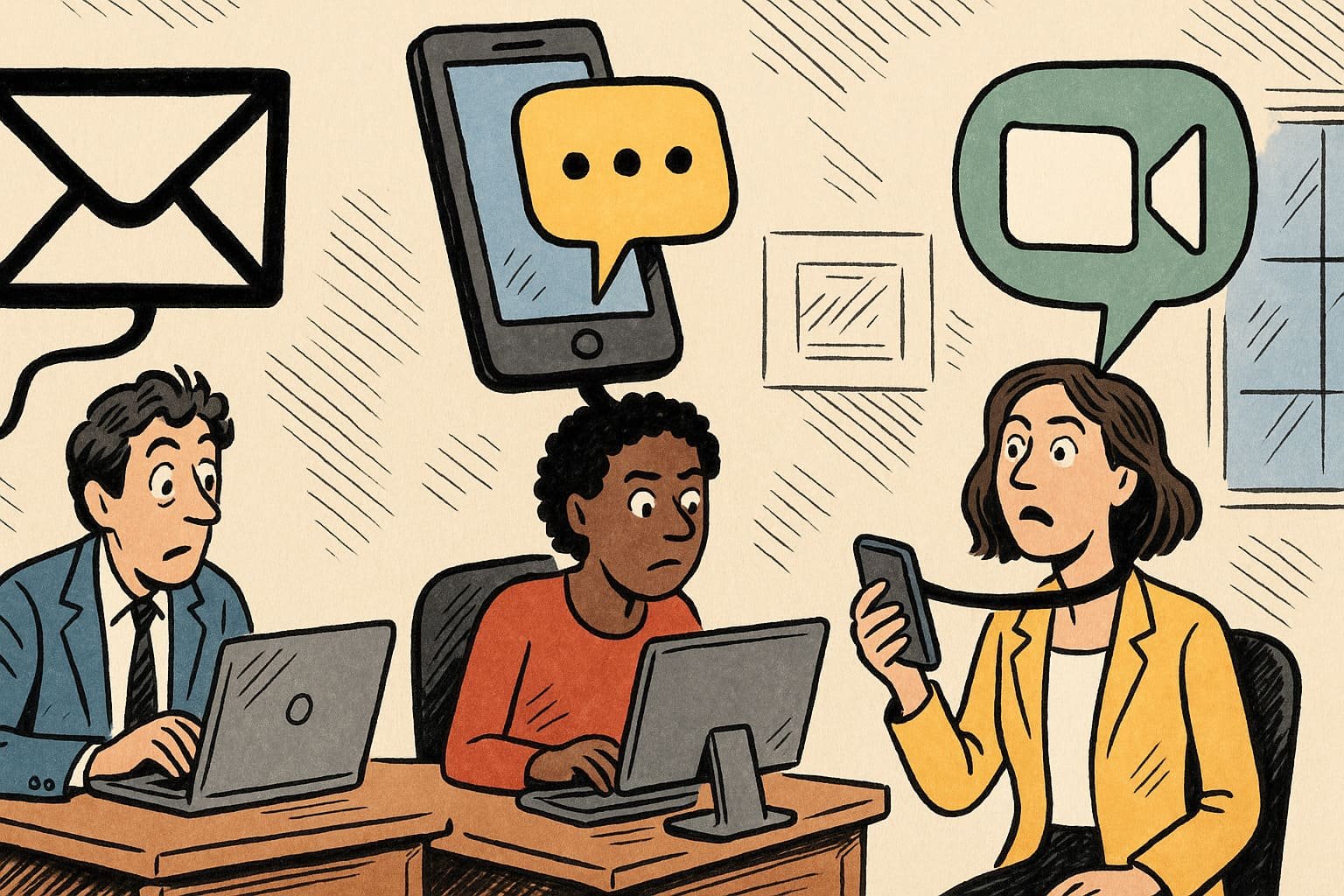
The office looked modern. Glass walls reflected polished desks, expensive laptops, and glowing screens filled with notifications. Everything appeared connected. Yet deadlines slipped, projects stalled, and frustration quietly spread from one department to another. The technology was impressive, but communication was broken. Many organizations invest heavily in digital tools while overlooking the simple truth that software never replaces clarity. It merely amplifies the habits already living inside a company.
Digital communication has become the nervous system of modern business. Platforms for messaging, video meetings, project management, and document collaboration have transformed how teams work across cities and continents. The real advantage, though, is not speed alone. It is visibility. Everyone understands who owns a task, when work is due, and how decisions evolve. When information flows freely, confusion loses its power. Productivity follows naturally because uncertainty has fewer places to hide.
A growing architecture firm discovered this after years of relying on scattered emails. Designers searched endlessly for the latest drawings while project managers chased updates across countless message threads. Clients noticed delays before employees did. Leadership introduced a unified digital workflow where conversations, files, approvals, and deadlines lived in one place. Meetings became shorter. Mistakes became rarer. Employees spent less time searching for information and more time solving meaningful problems.
Companies known for operational excellence understand that communication is a competitive advantage. Global organizations like Toyota built their reputations around clear systems where information moves quickly from the factory floor to decision-makers. Technology supports that discipline, but culture creates it. Patrick Lencioni has often argued that organizational health begins with clarity rather than complexity. The best digital platforms succeed because they reinforce shared expectations instead of replacing leadership responsibility.
Choosing the right communication tool depends on how work actually happens. Instant messaging works well for quick collaboration. Video meetings strengthen relationships when face-to-face interaction matters. Shared project boards create accountability without endless follow-up emails. Document collaboration prevents outdated versions from circulating through the organization. The mistake many businesses make is adding more platforms whenever problems appear. Complexity rarely fixes confusion. Simplicity usually does.
Human behavior remains the greatest challenge. Notifications compete for attention every minute. Employees jump between conversations while deep thinking quietly disappears. A manager may mistake constant online activity for meaningful progress. The opposite is often true. Healthy organizations establish communication rhythms that protect focus while keeping teams informed. Sometimes the most productive message is the one that never needs to be sent because expectations were clear from the beginning.
Digital communication also shapes trust. When leaders communicate consistently, employees feel connected even across great distances. During uncertain moments, silence creates rumors faster than any social platform. Honest updates, clear priorities, and visible decision-making strengthen confidence throughout the organization. Technology simply delivers the message. Leadership determines whether that message creates calm or confusion. Strong communication cultures survive disruption because people understand both the mission and one another.
As another workday fades, thousands of notifications disappear into archived folders, forgotten almost as quickly as they arrived. What remains is not the software itself but the quality of conversations it helped create. Businesses rarely dominate because they own the newest communication platform. They dominate because people understand each other, move together, and solve problems without unnecessary friction. Every digital tool is simply another instrument. The real masterpiece is the team that learns how to play it in perfect harmony.
