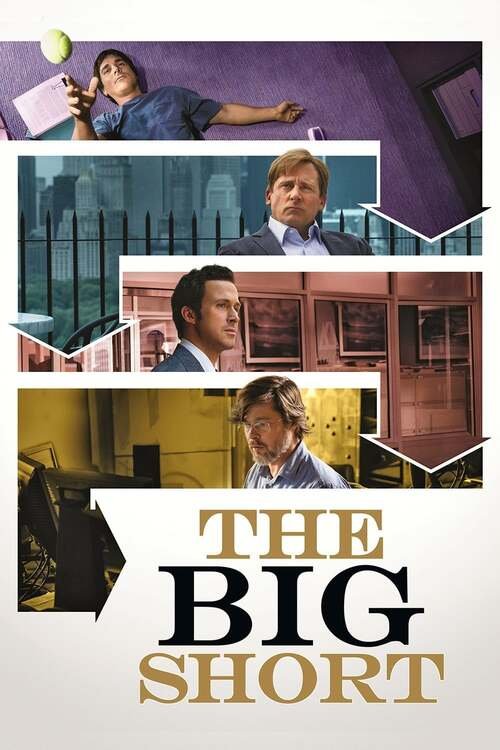
In a world drunk on housing dreams and credit illusions, “The Big Short” doesn’t just pull back the curtain; it rips it clean off. This isn’t your typical Wall Street thriller filled with pinstripe suits and generic greed. No, this 2015 cinematic gut punch directed by Adam McKay does something more haunting. It turns the complex world of subprime mortgages and credit default swaps into an emotional rollercoaster; gritty, outrageous, and devastatingly accurate. For anyone who ever wondered what truly triggered the 2008 financial meltdown, this film gives answers, but not without smirking while the world crumbles.
What makes this movie hit like a punch in the gut is its unapologetic tone. McKay doesn’t just narrate events; he unleashes them with fury, breaking the fourth wall, smashing financial jargon, and throwing in cameos from celebrities to teach you economics like you’ve never seen before. But beneath the humor, there’s horror. The kind you feel when you realize how recklessly the global economy was handled, and how little anyone really did to stop it. It’s like being in a car that’s speeding toward a cliff and no one’s even checking the brakes.
This film doesn’t worship the Wall Street elite. Instead, it places its spotlight on the oddballs: hedge fund managers with glass eyes, socially awkward geniuses, barefoot traders, and cynical realists. These are not heroes in capes. They’re math nerds, misanthropes, and angry idealists who saw the cracks in the foundation while the rest of the world partied on Wall Street. Watching them is equal parts exhilarating and infuriating.
But the brilliance of “The Big Short” is not just in the story it tells; it’s how it tells it. Through biting satire, sarcastic narration, and a jarring shift between comedy and tragedy, it becomes a masterpiece of economic storytelling. It’s a film that educates without preaching, entertains without trivializing, and reveals a raw truth most of us would rather forget: the system failed, and the people paid the price.
So if you’ve ever asked yourself how a housing bubble could bankrupt the world, or how bankers kept smiling while homes were foreclosed by the minute, you’re about to get your answer. It’s not neat. It’s not pretty. And it’s definitely not fair. But it’s real and “The Big Short” makes you feel every broken dollar of it.
Quick Notes
- Genius Misfits Made Millions: While the mainstream slept, a group of eccentric outsiders predicted the crash and placed massive bets against the U.S. housing market and won.
- The Housing Market Was a House of Cards: Banks bundled risky subprime mortgages and passed them off as safe investments, fueling a global disaster that no one wanted to admit was coming.
- Financial Jargon Gets Demystified: From credit default swaps to synthetic CDOs, the film breaks down complex finance into digestible bites using celebrities, wit, and sharp narration.
- Wall Street Ignored the Warnings: Institutions dismissed red flags, rating agencies rubber-stamped toxic assets, and regulators looked away, allowing a ticking time bomb to detonate.
- Millions Suffered, Few Were Punished: Despite catastrophic losses, only a handful of people faced consequences, exposing a deeply flawed financial system that rewards recklessness.
When the Market Lied and the Nerds Called Its Bluff
Michael Burry (played with brilliant awkwardness by Christian Bale), a hedge fund manager with a glass eye and an eye for patterns, notices something no one else is willing to confront: the U.S. housing market, believed to be rock solid, is built on garbage loans. Subprime mortgages; loans handed to people who couldn’t afford them are about to implode. His solution? Short the housing market. Everyone thinks he’s insane. But Burry isn’t guessing; he’s reading the fine print.
Enter Jared Vennett (Ryan Gosling, deliciously slick and sarcastic), a Deutsche Bank trader who catches wind of Burry’s strategy and wants in. He connects with Mark Baum (Steve Carell, playing a furious moral compass), a fund manager haunted by the greed he sees around him. Baum and his team dig deep and uncover the rot: loans made with no documentation, strippers owning five houses, and Wall Street partying while America’s economy teeters on collapse.
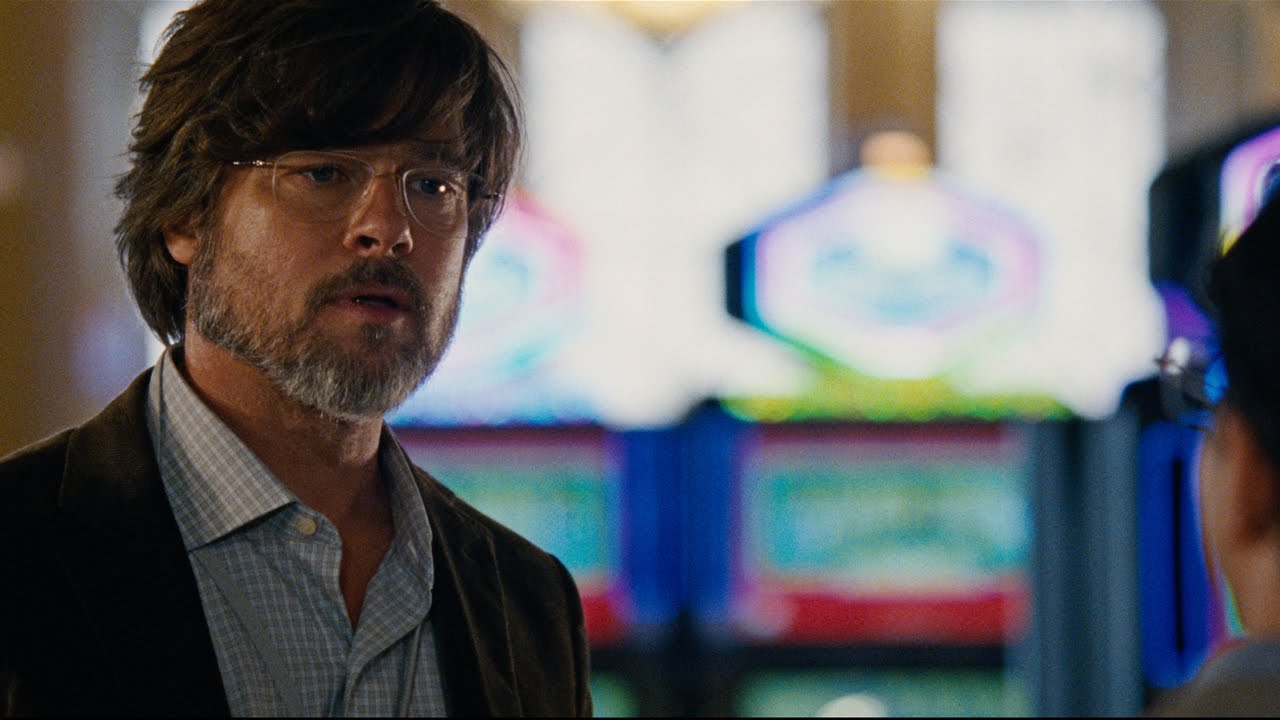
Meanwhile, two scrappy young investors; Charlie Geller and Jamie Shipley stumble upon Vennett’s pitch. Hungry for a shot at the big leagues, they enlist retired banker Ben Rickert (Brad Pitt, grizzled and quietly intense) to access the tools needed to bet against the market. Their journey is filled with disbelief and growing dread as they confirm what Burry already knew: a financial earthquake is imminent.
As the movie unravels, these players watch the system dismiss reality and double down on denial. The banks continue issuing loans, the agencies keep giving AAA ratings, and regulators twiddle their thumbs. Even when the first tremors hit, the market tries to cover it up. And when the tsunami finally arrives, the only people left standing are the misfits who saw it coming.
But victory isn’t sweet. As the economy crashes, the characters realize they were right, but at a moral cost. Millions lose their homes, jobs, and savings. And the institutions responsible? They’re bailed out. The film closes not with triumph, but with bitter irony; truth doesn’t always reward, and justice rarely follows money.
Key Lessons and Insights to Learn from the Movie
Truth, as “The Big Short” illustrates, doesn’t scream; it whispers. Michael Burry’s ability to predict the collapse wasn’t born out of insider tips or market wizardry, but out of quiet diligence and ruthless pattern recognition. His obsession with mortgage data revealed what no one dared to look at: the real economy was cracking under the weight of bad loans. The takeaway? In a world dominated by noise and hype, discipline and detail win. Sometimes, the person most obsessed with the fine print is the only one who sees the ticking time bomb.
The film slams home the devastating consequences of collective denial. Wall Street didn’t just miss the signs; it deliberately ignored them. Mortgage brokers handed out loans like candy, banks bundled them into toxic financial weapons, and credit rating agencies blindly slapped on AAA stickers. Everyone had a stake in keeping the illusion alive. The insight is brutal but necessary: when money speaks, truth gets drowned out. “The Big Short” doesn’t just show us systemic failure; it shows us how greed can build a castle out of lies and convince the world it’s made of gold.
One of the most harrowing moments in the film is when Mark Baum realizes his team has successfully shorted the market, yet the crash means human misery on a massive scale. Homelessness, layoffs, suicides; it’s all collateral damage in a rigged game. That scene lays bare the moral paradox of profiting from collapse. It’s a cold reminder that being right in the market doesn’t mean being righteous. The movie urges viewers to question not just who wins, but at what cost. Success, if soaked in others’ suffering, leaves a bitter aftertaste.
Another sharp lesson? Complexity hides crime. The sheer opacity of the financial products involved; from synthetic CDOs to tranches wasn’t an accident. It was a smokescreen. The more complicated the asset, the less people questioned it. The film ruthlessly exposes how jargon becomes armor for corruption. If you can’t understand it, you won’t challenge it. And if you don’t challenge it, those responsible keep running the show. In every industry, not just finance, clarity is a threat to the powerful and a friend to the truth-seeker.
“The Big Short” champions curiosity and dissent in a world that worships conformity. Every protagonist in the film was laughed at, ridiculed, or dismissed. Yet they persisted. They challenged groupthink and asked uncomfortable questions. That kind of courage; intellectual and moral is rare and priceless. It’s a wake-up call for anyone operating within institutions that reward blind loyalty over bold scrutiny. If everyone around you is nodding in unison, it might be time to be the person who asks: “What if we’re all wrong?”
The Punchline Wall Street Never Expected
The final act of “The Big Short” doesn’t tie things up with a neat bow. There are no slow-motion champagne showers or motivational speeches. Instead, we’re left with silence; the kind that sits heavy in your gut when you realize that the villains didn’t fall. The system cracked, bled, and limped, but it never truly collapsed. In fact, it survived, got a taxpayer-funded Band-Aid, and strutted back into business like nothing ever happened. That’s the real horror of it all. The heroes didn’t win. They just saw the iceberg early and jumped off the ship before impact.
This isn’t just a movie about finance; it’s a morality tale soaked in irony. The same institutions that manipulated risk, denied the obvious, and played roulette with people’s lives walked away richer, stronger, and more untouchable than ever. No handcuffs. No public reckonings. Just billion-dollar bonuses and new regulations with loopholes built in. Watching this play out on screen feels less like fiction and more like emotional blackmail: you can’t unsee what they got away with.
Even as viewers cheer for Burry’s data crunching or Mark Baum’s righteous rage, the film keeps the tone grounded. There are no saviors here. These aren’t protagonists you idolize. They’re mirrors, showing us what happens when a few smart people profit off a blind system, then have to live with the knowledge that their gain is another family’s ruin. It’s not heroism. It’s survival wrapped in spreadsheets.
The movie’s most heartbreaking reality? It’s not ancient history. The same culture of unchecked risk, glossy deception, and institutional arrogance still simmers in corners of the financial world today. Watch the film now, and it feels prophetic, not nostalgic. It whispers: if no one’s watching, it will happen again. The bubble always reinflates. Greed is stubborn like that.
So, what are we left with? A cinematic autopsy of one of the most catastrophic financial collapses in history, stitched together with sarcasm, smarts, and unsettling truth. “The Big Short” doesn’t preach. It pokes. It prods. It shocks. It warns. And maybe, just maybe, it teaches us to question what we’re told, challenge what’s “too big to fail,” and never, ever assume that the smartest people in the room have everything under control.
Disclaimer
It’s also critical to remember that whether the Movie is either a work of fiction or a real-life depiction, it must be emphasized that the actions depicted within are not encouraged in reality and shouldn’t be imitated. The review aims to analyze the storytelling, characters, and business decisions portrayed in the Movie solely for educational and entertainment purposes. Any ethical & unethical practices highlighted in the Movie are not endorsed by the Esyrite publication.
Why scroll… When you can rocket into Adventure?
Ready to ditch the boring side of Life? Blast off with ESYRITE, a Premier Management Journal & Professional Services Haus—where every click is an adventure and every experience is enchanting. The ESYRITE Journal fuels your curiosity to another dimension. Need life upgrades? ESYRITE Services are basically superpowers in disguise. Crave epic sagas? ESYRITE Stories are so wild, your grandkids will meme them. Want star power? ESYRITE Promoted turns your brand cosmic among the stars. Tired of surface-level noise? ESYRITE Insights delivers mind-bending ideas, and galactic-level clarity straight to your inbox. Cruise the galaxy with the ESYRITE Store —a treasure chest for interstellar dreamers. Join now and let curiosity guide your course.
