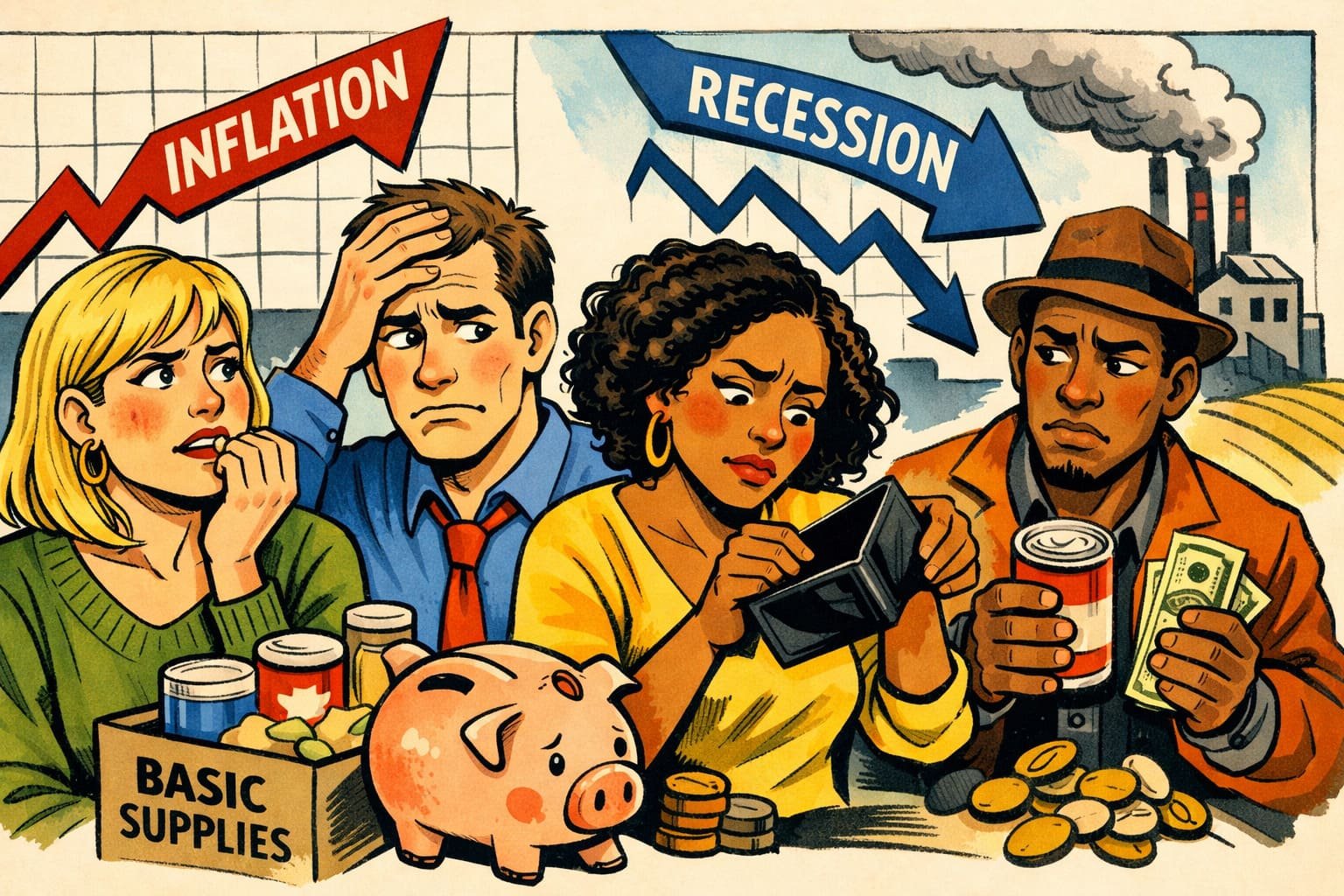
Streetlights shimmer across a nearly empty shopping district where discounted signs hang stubbornly in display windows. Customers wander slowly, comparing prices with quiet concentration instead of excitement. Businesses crave stronger sales, yet households hesitate because every paycheck seems to stretch a little less each month. That uneasy combination forms the shadow economists call stagflation, a rare moment when slow economic growth collides with stubborn inflation, leaving policymakers, investors, and families searching for solutions that rarely arrive quickly.
Most economic slowdowns reduce inflation because weaker demand eases pressure on prices. Stagflation breaks that familiar pattern. Supply disruptions, expensive energy, labor shortages, or geopolitical shocks can keep costs elevated even while businesses struggle to grow. Consumers cut discretionary spending, companies delay investment, and confidence gradually erodes. Economic expansion weakens, yet prices remain frustratingly high. That unusual combination limits policy options because tools designed to fight inflation can slow growth further, while measures supporting growth may intensify price pressures.
Financial markets often become cautious when stagflation risks increase. Investors seek businesses with resilient cash flows, strong pricing power, and conservative balance sheets rather than companies relying on rapid expansion. Consumer staples, healthcare, and utilities frequently attract renewed attention because demand remains relatively stable despite economic uncertainty. During the inflationary turmoil of the nineteen seventies, firms capable of protecting profit margins consistently outperformed competitors dependent upon aggressive borrowing or discretionary consumer spending. Financial resilience became a competitive advantage instead of a defensive posture.
Amina managed a family-owned packaging manufacturer supplying regional food producers. Orders continued arriving, yet customers negotiated harder because their own operating costs kept climbing while consumer demand softened. Instead of chasing volume through discounts, she invested in production efficiency, reduced material waste, and strengthened supplier relationships that stabilized purchasing costs. Her margins remained healthy despite slower sales growth because disciplined financial management replaced optimism as the company’s primary growth strategy. Calm execution often proves more valuable than bold expansion during uncertain economic cycles.
Central banks face extraordinary pressure whenever stagflation threatens. Raising interest rates can reduce inflation, but slower borrowing and weaker investment may deepen economic stagnation. Lowering rates encourages activity, yet persistent inflation risks becoming entrenched if demand strengthens before supply conditions improve. Governments also encounter difficult fiscal choices because expanding public spending may support employment while increasing budget deficits and inflationary pressures. Monetary policy, fiscal policy, corporate strategy, and household budgeting become deeply interconnected during prolonged periods of economic strain.
Clouds drift across a skyline where construction cranes stand motionless beside towers still waiting for tomorrow’s promise. Every paused project, delayed purchase, and cautious investment reflects a broader lesson hidden beneath economic headlines. Stagflation reminds societies that prosperity depends upon more than growth alone. Stability, confidence, productivity, and sound financial stewardship matter just as much when uncertainty refuses to loosen its grip. History rewards those who prepare before conditions improve, not those who assume difficult seasons cannot last.
