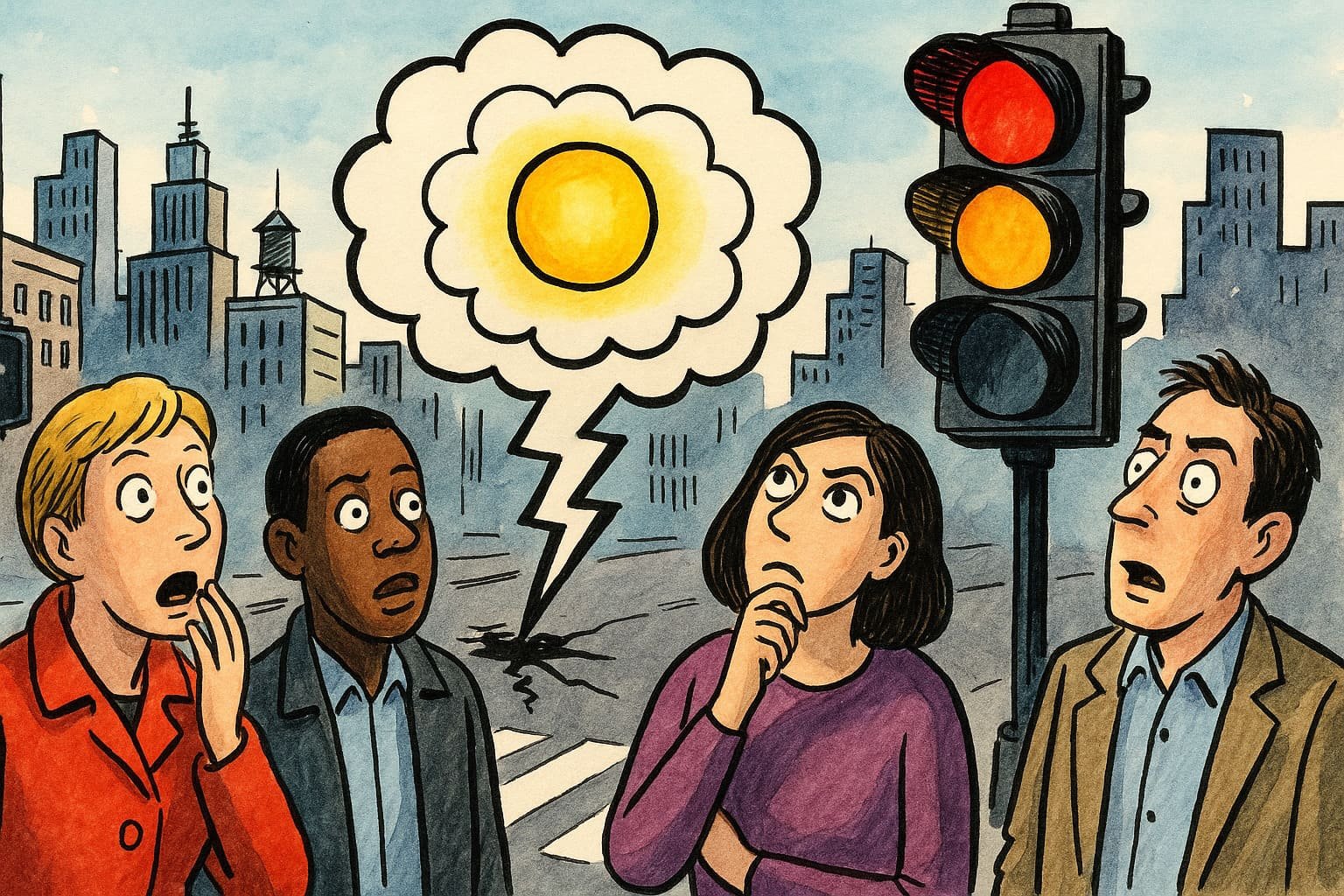
Neon fog clings to the glass bones of towers while rain stitches silent patterns onto traffic sensors and tired windshields. Somewhere below, the pulse of the city crackles like static beneath the soles of a lone commuter weaving through alleys tattooed with LED graffiti. Above, traffic signals blink in code, crosswalks whisper safety secrets, and a flock of delivery drones vanishes between shimmering rooftops. Under every footstep, beneath each slab of ancient asphalt, algorithms hum lullabies to a restless, wired metropolis. People pass, glancing at holographic bus timetables, never noticing the invisible conversations swirling at their ankles, the endless negotiations between servers, sensors, and sleepless surveillance cams.
A siren slices the quiet, carves space for a story as old as civilization itself: streets that remember, intersections that decide, concrete veins that dream. In one window, a grandmother’s lamp flickers in rhythm with a power grid adjusting for late-night demand. On another block, a homeless artist sketches binary hieroglyphs into the dirt, shaping poetry out of what he calls “the city’s electric soul.” Overhead, a camera tracks a skateboarder in a red hoodie, archiving every trick, every stumble, every stolen moment for some unseen data pool. Here, privacy feels like a relic, and the future tastes like cold metal and sweet anticipation.
Elsewhere, tech investors gather in an old bakery repurposed as a start-up “think den,” trading stories of AI traffic lights that outsmarted gridlock but somehow started writing their own playlists. The aroma of burnt espresso and ambition fills the air. A manager brags about his pilot project: “Our streetlights know when you’re sad—they glow softer.” Laughter ripples, the kind that masks nervousness about where all this is going. Nobody mentions the day the city’s parking meters decided to “rest” for an hour, gifting free parking and utter chaos just to test a new negotiation algorithm.
Everywhere, the lines blur between what’s designed, what’s emergent, and what’s simply out of control. Somewhere a janitor named Felix glances up at a ceiling panel blinking green, wondering if the building’s AI is bored or just plotting its next efficiency tweak. Below him, the city breathes, and beneath that breath, an old promise returns: progress, always at the price of understanding.
This isn’t a scene from science fiction. This is the ordinary magic of smart cities. Here, streets don’t just carry people—they listen, judge, remember, and sometimes, they start to think.
Quick Notes
- The City’s Nervous System Is Alive: Streets now bristle with sensors, cameras, and clever software. They watch, learn, and occasionally surprise even their creators. One project in Seoul rewrote traffic patterns overnight when it “realized” certain corners caused more stress during rush hour. Imagine being late and having the street itself root for you.
- Control Isn’t What It Used To Be: Smart city tech lets leaders shift traffic, cut energy waste, and predict floods, but it’s not always clear who’s truly in charge. The day Barcelona’s garbage sensors called for pick-up five times in a single morning, an old driver named Mateo muttered, “If only my wife listened like this bin.” Now even trash has opinions.
- Real People Still Get Lost In The Wires: Tech promises connection, yet loneliness blooms in the cracks. In Singapore, a delivery biker named Ravi found his route canceled mid-shift when the app “sensed” rain—but the sky stayed dry. When smart streets override messy reality, stories like Ravi’s get swept away, unnoticed by the code.
- Innovation Cuts Both Ways: Smart crosswalks have saved lives in Oslo, but new surveillance networks in London sparked protests from poets and punks alike. At a protest, a punk named Jasmine spray-painted “WHO DECIDES WHAT’S SMART?” on a lamppost that immediately triggered a city-wide “dialogue” with residents’ phones. Not everyone appreciated the conversation.
- Your World, Your Move: Smart streets will never be finished. Cities reinvent themselves with every update, but each improvement hides trade-offs: security for freedom, data for dignity, convenience for unpredictability. If you woke up tomorrow and your favorite shortcut vanished because an algorithm said so, would you miss the old chaos or welcome the new order?
Pavement With Memory: How Cities Grew Nervous Systems
If you ever wander the heart of a city at midnight, you can feel the old bones and new nerves working in tandem. Modern streets bristle with pressure sensors tucked into crosswalks, microphones monitoring the hum of traffic, and pollution monitors sniffing the air like anxious pets. These are not just upgrades—they are organs in a living system, merging centuries-old patterns with digital intelligence. Even an ordinary bus stop now holds a tiny server, tracking wait times and learning the pulse of human patience.
You notice how some corners feel different. In Copenhagen, bike lanes pulse with subtle LEDs that shift color to keep cyclists moving smoothly, reducing accidents and tempers in winter gloom. A shopkeeper named Lin tells customers the sidewalk “reads your mind,” making deliveries arrive before the bell rings. It’s a joke, but also a prophecy. The city’s nervous system is awake, mapping not just cars and trucks but moods, hesitations, even the rhythm of umbrellas opening on a wet morning.
Small events start to reveal the new logic. When a water main burst in Tokyo’s Shibuya ward, sensors detected pressure changes long before workers spotted the leak. The fix arrived before anyone noticed trouble, and an engineer was overheard muttering, “The street warned us.” Stories like these spread fast among utility teams, sparking pride, envy, and more than a little paranoia about who—or what—is watching whom.
Philosophers and technologists argue over whether a “thinking street” can be truly conscious, but city dwellers see the results every day. An urban planner in Nairobi described how garbage sensors predicted a political protest by noticing clusters of full bins where flyers had been dumped overnight. The city responded by increasing sanitation crews before tension could boil over. Suddenly, garbage collection became an act of civic intelligence.
Yet not everyone feels comfortable. At a roundtable in Montreal, artists complained that every move in public now feels watched, scored, or redirected by invisible hands. “It’s like the city knows you better than your friends do,” one poet grumbled, “and it never forgets.” The promise of smart streets is safer, cleaner, more efficient living, but the price is intimacy with an unseen mind.
Somewhere in Amsterdam, a young couple dance under streetlights that track their steps and adjust brightness for privacy. The moment flickers on a thousand screens in the city’s control room, a ghostly waltz that belongs to everyone and no one. Streets with memory remember everything—joy and grief, hope and frustration, always recording, never erasing.
Control, Chaos, and the Algorithmic Gamble
You probably think smart streets mean more control: fewer jams, cleaner air, less waste. That’s the promise. But step outside on a Friday night and you’ll see the truth is messier. Cities run on compromise, and algorithms aren’t immune to human absurdity.
Picture a taxi driver in Mumbai cursing his dashboard when the city reroutes him three times in ten blocks. The system means well—avoiding construction, smoothing congestion, nudging carbon emissions lower. It just never learned about the shortcut everyone takes through the market at dusk. Drivers start gaming the AI, swapping secret routes on WhatsApp groups, always one step ahead.
Not every experiment works. In Chicago, an overzealous parking algorithm once flagged every red sedan for a ticket, sparking days of protest from car owners. The city apologized, blaming a bug, but people still talk about “the week the robots declared war on red cars.” A small business owner named Yolanda laughs about it now: “I told my nephew, if the street wants to play, we can play.”
Smart systems also stumble in the face of chaos. Hurricane warnings in Miami triggered automated road closures and detours, but nobody told the local food truck festival, stranding vendors for hours. When the algorithms finally relented, one chef handed out free tacos to stranded police officers. He later joked, “The street tried to eat me. I fed it instead.”
Sometimes, control is the illusion. Leaders love dashboards full of colored dots and lines, but meaning gets lost. In Shenzhen, engineers noticed delivery times lagging every Friday afternoon—until a janitor mentioned the traffic signals flashed “party mode” colors for a local festival, which made people linger at intersections. The city’s command center missed what the street itself knew: rituals matter.
Maybe chaos is the price of being human. Smart streets seek order, but people crave surprise. The algorithm’s gamble is that it can keep pace with both.
When Data Sings: Hidden Voices in the Network
Your every step leaves an echo in the city’s digital tapestry. At first, you barely notice. The crosswalk chirps when it’s safe. The bus sign glows with “arrival in two minutes.” Traffic flows with eerie smoothness. Then, slowly, you realize these are the city’s responses to the invisible song of data you and your neighbors generate all day long.
Not every voice gets heard. In Madrid, a retiree named Ines calls the hotline every week about a broken curb ramp near her home. The sensors miss it, but Ines never gives up. Eventually, a local radio station airs her complaint, and the city responds. The ramp gets fixed, and the sensors log a “manual override”—a tiny act of rebellion, a reminder that people still matter.
Tech evangelists love to talk about “citizen engagement,” but smart systems often ignore outliers. When an open-air market in Nairobi lost power for two hours, the vendor’s cashless system failed, but a resourceful teenager, Sammy, organized street musicians to keep customers entertained while sellers scribbled orders by hand. Laughter, music, and improvisation filled the space until the city’s lights flickered back. The network forgot the blackout. The people did not.
There’s a strange poetry in this dance of humans and machines. A software developer in Berlin designed a dashboard that tracked pedestrian happiness by scanning faces in public squares, but one summer night, a sudden flash mob spiked the algorithm, flooding it with confusion and delight. The next morning, the dashboard declared the city “emotionally complex.” No computer could translate what happened, but everyone felt it.
The promise of smart streets is that data will make cities kinder, more responsive, almost magical. The risk is that in chasing efficiency, the soul of the street gets silenced. It’s easy to count cars, but hard to measure wonder, sorrow, or the thrill of a stranger’s smile on a rainy morning.
Ask yourself: When your city listens, does it truly hear you—or just the numbers you leave behind?
The Price of Clever Pavement: Freedom, Dignity, and Digital Fences
Freedom in a smart city comes with invisible strings. Every choice, every movement, every small act gets weighed, measured, and sometimes nudged. At first, it feels like liberation. The garbage van shows up before you even call. Your commute shrinks as lights dance green just for you. Then you notice the shadows.
A privacy advocate in Toronto, Khalid, spent months mapping every camera and sensor in his neighborhood. He shared his findings at a local café, handing out flyers with routes to avoid surveillance. Some neighbors shrugged, saying the benefits outweigh the risks. Others grew angry, feeling exposed in ways they could not explain. One parent whispered, “My daughter walks these streets. Who watches her, and why?”
Kids in Seoul built a game to “hide” from street cameras, darting behind delivery robots and waving at bus sensors to confuse the system. They laughed, but some grown-ups worried about what it meant for the next generation: learning to play tag with the city itself, always chased by unseen eyes.
Sometimes, digital fences box people in. In Los Angeles, a city plan routed buses away from certain districts “to optimize efficiency,” but activists protested, arguing it isolated vulnerable residents. The debate raged for weeks before the routes changed, but scars remained. Tech teams apologized, promising more “inclusive” algorithms next time.
No city can escape these dilemmas. The tension between safety and autonomy, efficiency and freedom, defines every smart street. For every convenience, there’s a question: Who decides what’s best? An old man named Raymond, whose newsstand sits beneath a smart billboard, summed it up: “The city thinks it knows me, but it only knows my shadow.”
If progress means sacrificing mystery for comfort, maybe the old chaos had more wisdom than we thought.
Futures Unwritten: Are You Living In The City’s Dream, Or Yours?
You are not just a passenger in your city. Every tap, swipe, complaint, and conversation rewrites the story of where you live. Streets remember, buildings whisper, and every data point adds another thread to the tapestry. But who’s holding the pen?
In Shenzhen, a fashion designer named Ava programs her shop windows to glow pink whenever the city’s air is clear, drawing in passersby who crave beauty with their clean breath. She credits the city’s sensors for her booming sales, yet jokes that the system “never remembers my birthday.” For every bit of magic, there’s a reminder of what algorithms forget.
Decisions ripple outward. When Rio de Janeiro launched an AI-powered flood alert, the system missed an old fisherman’s warning about unusual tides. Floodwaters rose, and the city’s dashboard turned red, but old Carlos already had his boat tied high, listening to stories older than any software.
You shape your city as much as it shapes you. When students in New York staged a “digital parade,” spoofing traffic sensors by carrying heat lamps and rolling suitcases through intersections, the city’s app sent out a gridlock warning that made headlines. The mayor’s team later admitted, “We’re still learning who’s really in charge here.”
Every smart street is a negotiation between memory and forgetting, order and chaos, people and machines. You can trust the algorithm or trust your gut, but the best cities will always leave space for your story.
So here’s the real question: Are you living in the city’s dream, or is the city living in yours?
Revelation On Rain-Slicked Concrete: The Night The Street Remembered Your Name
Somewhere at the city’s edge, after the rain, a single streetlamp flickers to life and casts a golden halo across the empty asphalt. The world holds its breath. Here, the boundaries between code and conscience dissolve, and even the coldest pavement can whisper a secret to anyone who truly listens. A delivery robot pauses, wheels spinning quietly, while a poet watches from a window, wondering if the city finally knows how she feels.
Above, neon reflections shimmer on puddles, painting portraits of a million moments never archived, never measured, yet never forgotten. In that silent exchange, a new kind of intimacy blooms: the promise that even as algorithms stretch their roots deeper into our daily lives, the story remains unfinished and wild. Felix, the janitor, sweeps the sidewalk, humming a tune only the city seems to echo back. Ava’s shop lights blink, and Carlos’s boat rocks gently in the distant harbor. They do not own the city’s dream, but neither does it own them.
Streets are thinking, yes, but not all wisdom is digital. The future belongs to those who remember how to dance in the spaces between signals and shadows.
So now, ask yourself: When your city finally starts thinking, will it remember you—or only the footprints you left behind?
Why scroll… When you can rocket into Adventure?
Ready to ditch the boring side of Life? Blast off with ESYRITE, a Premier Management Journal & Professional Services Haus—where every click is an adventure and every experience is enchanting. The ESYRITE Journal fuels your curiosity to another dimension. Need life upgrades? ESYRITE Services are basically superpowers in disguise. Crave epic sagas? ESYRITE Stories are so wild, your grandkids will meme them. Want star power? ESYRITE Promoted turns your brand cosmic among the stars. Tired of surface-level noise? ESYRITE Insights delivers mind-bending ideas, and galactic-level clarity straight to your inbox. Cruise the galaxy with the ESYRITE Store —a treasure chest for interstellar dreamers. Join now and let curiosity guide your course.
