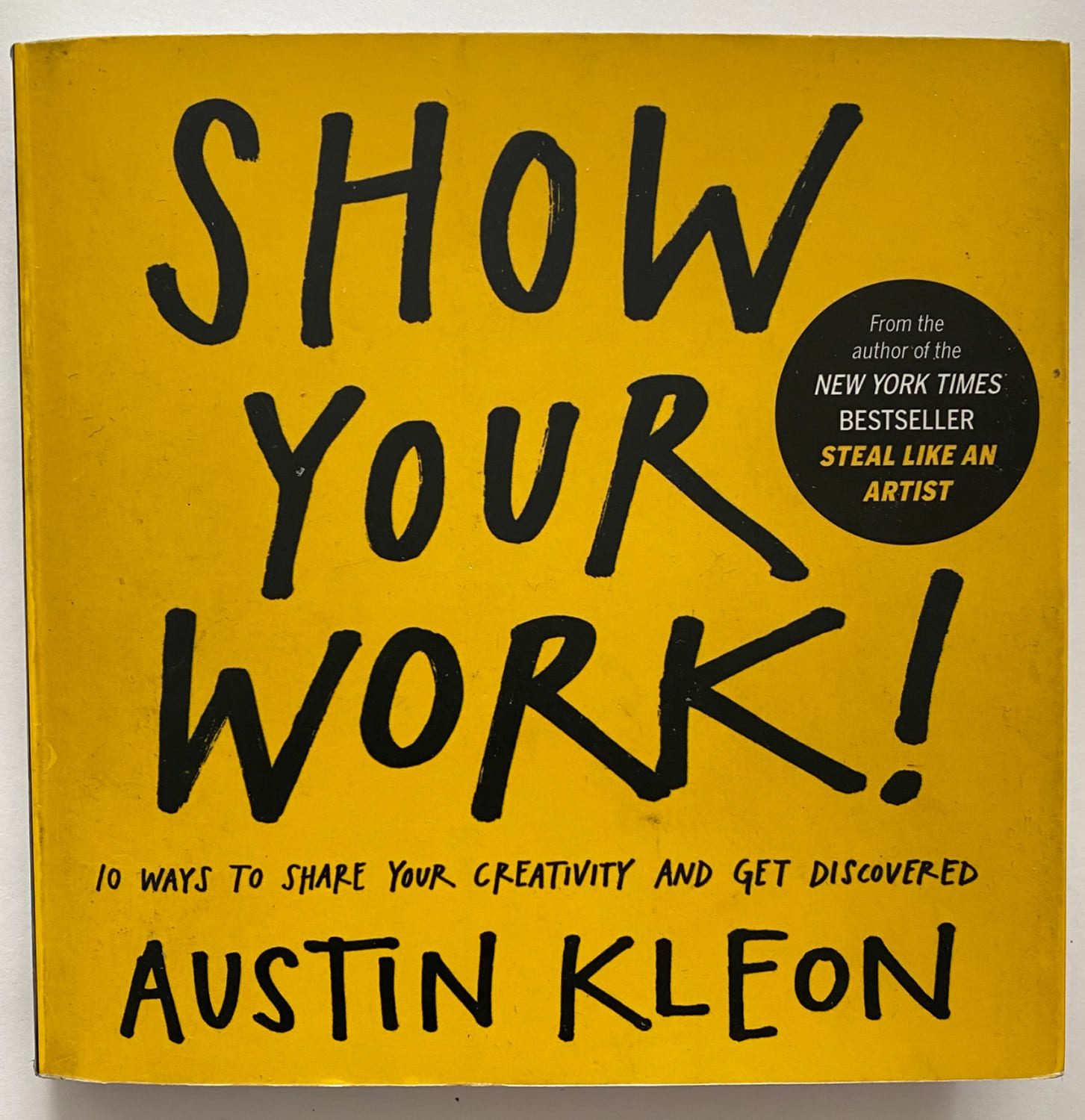
Modern creative life is haunted by a single, relentless question: “How do I get discovered?” The anxiety lingers in every artist’s studio, every developer’s code repository, every musician’s cramped home studio. “Show Your Work!: 10 Ways to Share Your Creativity and Get Discovered” by Austin Kleon drops into this nerve center like a spark in dry brush. Published in 2014, the book boldly tells you to stop waiting for the world to find you. Instead, it shows how to make yourself visible—without becoming a self-promotion machine or losing your authenticity. It’s not about shouting; it’s about showing.
Right from the opening, Kleon’s voice feels like a wise friend who has already been burned by obscurity and learned to turn vulnerability into an asset. He insists that you don’t have to be a genius or an overnight sensation to get noticed. What you need is the courage to reveal your messy creative process. That idea—sharing before perfection—challenges the myth that only finished, flawless work belongs in public. The book’s central premise is magnetic for anyone stuck between big dreams and tiny audiences.
The magic of “Show Your Work!” lies in its celebration of process over product. Kleon dismantles the illusion that only big names get seen. Instead, he lays out a roadmap where beginners, hobbyists, and even the quietest creators can build an audience simply by documenting their daily journey. Each chapter is packed with bite-sized advice and memorable, sketched visuals. Readers find themselves nodding, laughing, and scribbling ideas for their next social post, blog, or video.
Crucially, Kleon’s book goes beyond motivation—it’s a hands-on manual for getting your ideas into the world. He pulls stories from artists who found community through sharing rough drafts, scientists who sparked global conversations by live-tweeting their research, and writers who built loyal followings by letting people peek behind the curtain. The lessons apply across fields, from startups to classrooms, poetry circles to YouTube.
By the time you reach the final pages, you feel both challenged and seen. “Show Your Work!” isn’t just a manifesto. It’s a wake-up call for creatives hiding behind the excuse of obscurity. The book promises: you can connect, you can grow, and you can get discovered by simply daring to show up—every single day.
Quick Notes
- Sharing Your Process Is More Powerful Than Sharing Just Finished Work.
- You Don’t Need to Be an Expert—Amateurs Build Community Too.
- Consistency Beats Perfection When Building an Audience.
- Teaching Others What You Learn Amplifies Your Reach.
- Don’t Wait for Permission—Start Now, Share Now, Grow Now.
From Hidden Genius to Creative Connection
Austin Kleon’s “Show Your Work!” is a creative’s survival guide in an age where obscurity feels like the default. The book unpacks the power of transparency and positions sharing as the essential engine of discovery. Kleon sets the tone by debunking the myth of the lone genius. Instead, he highlights how creativity thrives in networks of sharing, remixing, and collaborative curiosity.
Each chapter is built around a core principle—like “Think Process, Not Product” and “Share Something Small Every Day.” These rules are illustrated with real-world examples: musicians documenting their songwriting on Instagram, researchers using Twitter threads to explain new discoveries, illustrators posting daily sketches. The beauty is that sharing becomes less about self-promotion and more about authentic participation in a larger conversation.
Throughout the book, Kleon arms readers with practical tools. He encourages creating “scrapbooks” of your progress, embracing mistakes as learning opportunities, and inviting feedback from a supportive online community. The narrative brims with actionable ideas, from starting a simple blog to joining online creative challenges. Each story is chosen for its resonance and accessibility, demystifying the path to being seen.
A major theme running through “Show Your Work!” is the value of generosity. Kleon urges creators to give credit, recommend others, and help people learn from their mistakes. This approach, he argues, builds credibility and draws others into your orbit. By helping and teaching, you become a magnet for collaboration and attention.
The book closes with a rallying cry: embrace the messy middle, share often, and trust the process. Kleon’s blend of tough love, humor, and wisdom turns the daunting world of self-promotion into an inclusive, joyful practice. For creators of every stripe, “Show Your Work!” becomes both shield and compass, guiding you out of the shadows and into the light.
Why Process is Your Best Asset: Ditch the Myth of Overnight Success
Many creators are paralyzed by the fear of not being “ready.” Kleon attacks this head-on, showing that the world is starved not just for polished products, but for stories of how those products come to life. He shares examples from across industries, like software engineers who blog about debugging failures and fashion designers livestreaming their design process. These creators attract audiences not because they are perfect, but because they are honest and relatable.
The book champions transparency as a competitive advantage. By documenting daily work—be it sketches, drafts, or half-baked ideas—creators build a narrative that audiences love to follow. Over time, these stories become the real value, creating a sense of investment and loyalty. Fans, customers, and peers begin rooting for the journey, not just the destination.
Kleon pushes readers to reconsider their own standards. What feels mundane to you may be fascinating to someone else. This shift in perspective transforms anxiety into opportunity. The message is liberating: you don’t need a masterpiece to start sharing. You just need to share the work you’re already doing.
The author also explores how public process builds accountability. When you make your goals and progress visible, you invite support, feedback, and sometimes even collaboration. This open-book approach has helped countless creators overcome procrastination and perfectionism, sparking new projects and relationships.
The impact ripples far beyond personal growth. Companies, non-profits, and entire industries have embraced open process as a strategy for building brand loyalty and trust. “Show Your Work!” makes a convincing case that transparency, far from a vulnerability, is a superpower.
Amateur Advantage: Community Over Expertise
Kleon dismantles the myth that only experts have a right to share. Instead, he celebrates the “amateur spirit”—the idea that beginners, tinkerers, and enthusiasts often create the most interesting work. This attitude opens the door to endless creative growth and unexpected connections.
He highlights case studies like the indie developer who blogs about building their first game and quickly amasses a fanbase invested in every trial and error. Or the self-taught baker who posts kitchen experiments and ends up with a loyal Instagram following eager to try new recipes. These stories illustrate how the amateur approach can be magnetic, drawing in fellow learners and mentors alike.
Sharing as an amateur is freeing. There’s less pressure to be flawless and more permission to experiment, fail publicly, and pivot quickly. This transparency attracts community, not just spectators. People feel invited to participate in your journey, offer feedback, and even become collaborators.
Kleon emphasizes that expertise isn’t a prerequisite for impact. By sharing what you’re learning as you learn it, you build trust and make your process accessible. The willingness to say “I don’t know yet, but I’m trying” forges deeper connections than endless polish ever could.
By the end of this section, readers are emboldened to start sharing regardless of their skill level. The message is clear: community is built by showing up, not by waiting until you’ve “made it.”
Consistency Is King: Winning by Showing Up Every Day
A consistent presence outshines occasional bursts of brilliance. Kleon insists that daily (or near-daily) sharing of small progress is far more effective than waiting for a “big break.” Regular posting, journaling, or uploading creates momentum and keeps audiences engaged.
He shares the journey of a comic artist who committed to posting one strip every morning, even if it felt rough or incomplete. Within months, the artist built a dedicated following and sharpened their skills dramatically. The discipline of showing up leads to improvement, but also builds trust—the audience knows you won’t vanish.
Kleon provides practical strategies: batch your content, schedule posts, and set reminders so that creativity becomes a habit. The focus is on process, not perfection. Audiences respond to honesty and persistence, not just highlights. The daily grind reveals character and resilience, two traits every audience craves.
Social media algorithms reward consistency. By keeping your signal steady, you increase your chances of discovery. Brands, recruiters, and collaborators look for creators who show reliability and drive—traits signaled more by your pattern of sharing than by any single viral post.
By committing to small, consistent acts of sharing, readers unlock a powerful flywheel: creativity breeds audience, and audience breeds opportunity. Kleon’s approach turns discipline into an ally rather than a chore.
Teach What You Know: Amplify Your Voice Through Generosity
Teaching is the secret to multiplying your impact. Kleon explains how sharing tips, lessons, and resources not only helps others, but cements your own expertise. Whether you’re an artist sharing techniques, a coder posting tutorials, or a gardener uploading planting tips, teaching builds authority and loyalty.
The book explores case studies such as YouTube creators who built thriving careers by demystifying their craft for beginners. These creators attract both fans and peers, earning respect through openness and generosity. In an attention economy, those who teach become magnets for engagement and goodwill.
Kleon encourages readers to create resources—cheat sheets, process breakdowns, Q&As—that help others succeed. This strategy turns “followers” into a tribe of supporters who feel invested in your journey. Even simple gestures, like answering questions in comments, reinforce your value.
Generosity fuels the network effect. As you teach, your name gets shared in communities and circles beyond your reach. Teaching isn’t just good karma; it’s a growth strategy. Kleon’s stories remind us that success multiplies when we pull others up with us.
Readers leave this section with a clear directive: teaching is not about arrogance, but about service. Every lesson shared increases the chances of being remembered and recommended.
Don’t Wait for Permission: Start Now, Adjust as You Go
Too many would-be creators get stuck waiting for validation. Kleon obliterates this inertia with practical wisdom: nobody needs to “authorize” your creative presence. The digital world rewards those who take initiative. Real-life case studies abound, like bloggers who started with tiny audiences and slowly snowballed by showing up and iterating in public.
He encourages readers to embrace experimentation. Launch side projects, test new formats, and let public feedback shape your path. The freedom to pivot and adapt becomes a competitive advantage, fueling innovation and keeping work relevant.
Kleon draws from examples in music, where independent artists upload early demos, take audience suggestions, and craft albums alongside their fans. This collaborative process breeds loyalty and buzz—two things that money cannot buy.
The lesson: the perfect moment never comes. Start now, with what you have, where you are. The internet rewards movement, not hesitation. Waiting for expertise or a huge following is a recipe for regret.
By removing the mental blocks that keep creators silent, Kleon unleashes a new kind of energy. Readers finish ready to press “publish” instead of waiting for a green light that never arrives.
Key Lessons and Insights to Learn
Kleon’s philosophy stands out for its blend of hope and rigor. One lesson is the power of incremental progress. The book champions daily habits—small posts, rough sketches, or live notes—over grand launches. This approach chips away at resistance and builds a recognizable public body of work.
A second insight is the value of radical honesty. Audiences crave the behind-the-scenes reality: mistakes, pivots, breakthroughs. Showing failures and unfinished ideas draws people closer, fostering genuine connection.
Third, the book reminds creators to spotlight others. Amplifying the voices of peers, mentors, and even rivals generates goodwill and broadens networks. Success in creative work is rarely a solo achievement.
Fourth, Kleon stresses adaptability. By sharing early and iterating in public, creators gain valuable feedback and new opportunities. Change becomes a feature, not a bug.
Lastly, “Show Your Work!” teaches the importance of self-care and boundaries. Sharing doesn’t mean sacrificing privacy or personal values. Kleon urges creators to define what is sacred and what is shareable, building a practice that is both visible and sustainable.
Your Audience Is Waiting—Step Forward
Kleon’s “Show Your Work!” is more than a creative guide; it is a clarion call for every person with an idea, a project, or an itch to make a mark. By reframing sharing as generosity instead of self-promotion, the book gives readers permission to be both vulnerable and brave. No longer do you have to wait for a publisher, a gatekeeper, or a viral moment. The door to discovery stands open—if you’re willing to step through.
The book’s mix of stories, sketches, and plainspoken wisdom makes it impossible to finish without wanting to take action. Readers realize that discovery is not luck, but the natural outcome of consistent, honest, and open sharing. Kleon arms you with a toolkit, but more importantly, a mindset. Sharing your work is no longer a risk; it’s a creative act in itself.
As the digital age explodes with new platforms and opportunities, the hunger for authentic, accessible stories grows. “Show Your Work!” reminds us that the most powerful way to cut through noise is to invite people along for the ride. You don’t have to be famous, flawless, or even finished. You just have to be present and willing to show what you’re building.
This book becomes a companion for those just starting, those stuck in the middle, or those ready for the next leap. The conclusion is clear: your work deserves to be seen, your story deserves to be heard, and the world needs your creativity—shared, imperfect, and evolving.
About the Author
Austin Kleon is an artist, writer, and creativity advocate who has inspired millions through his books, talks, and viral blog. With a background in poetry and digital media, he is best known for his trilogy: “Steal Like an Artist,” “Show Your Work!,” and “Keep Going.” Kleon’s work bridges the gap between creativity and real-world action, distilling big ideas into bite-sized, actionable advice. His knack for combining visual art with practical wisdom has earned him fans from classrooms to Fortune 500 boardrooms. He lives in Austin, Texas, where he continues to champion the cause of ordinary people doing extraordinary creative work.
Disclaimer
Note that the ideas and content in the book are solely from the Author of the book and not the ESYRITE Editorial Team. All opinions expressed in this book review are entirely from the ESYRITE Editorial Team. This review may contains affiliate links, meaning ESYRITE may earn a small commission if you make a purchase through these links, at no additional cost to you.
