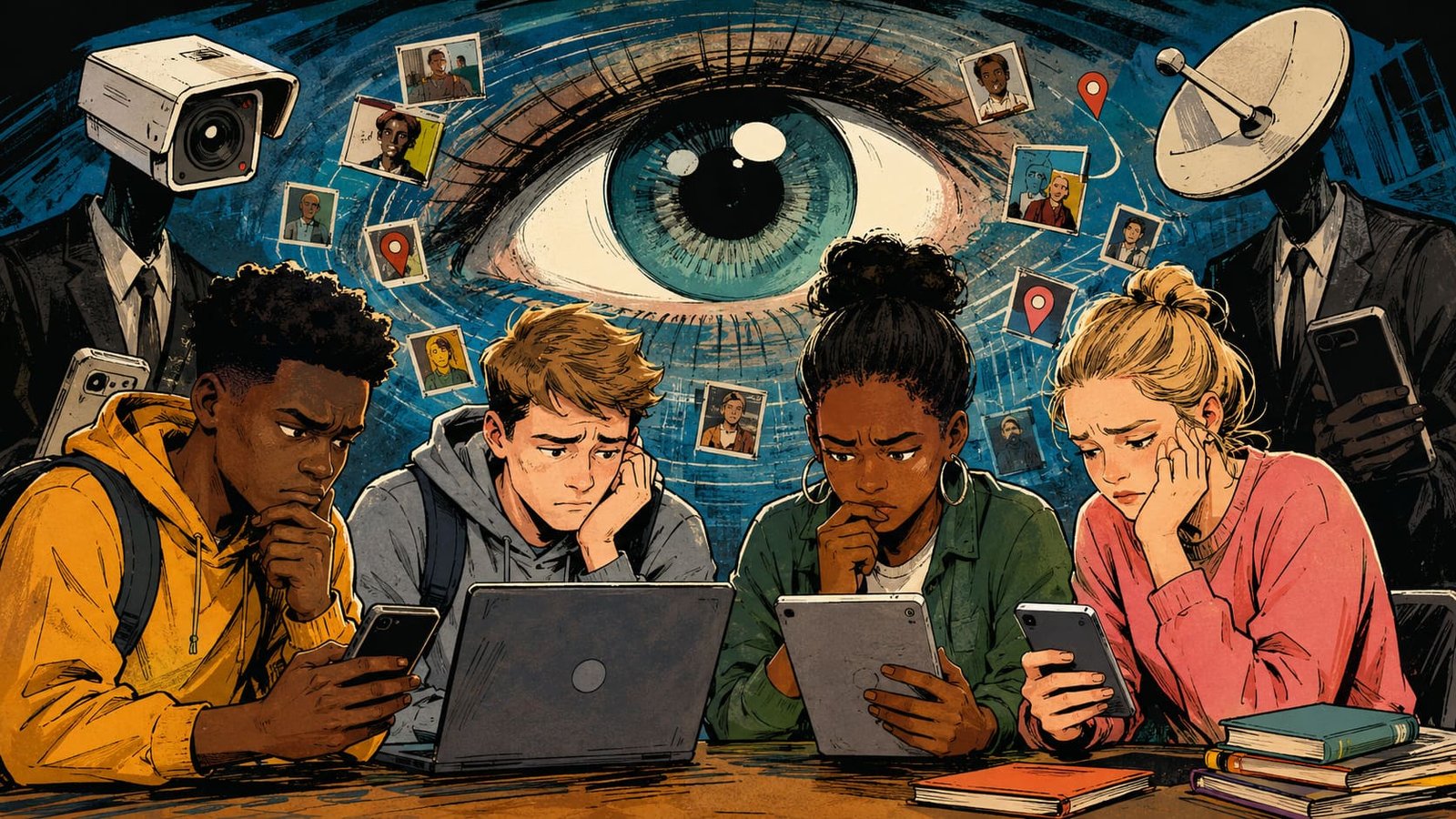
Blue notification lights flicker across a crowded lecture hall while dozens of phones quietly exchange more information than their owners could ever imagine. A harmless app requests permission, a quick tap follows, and another invisible trail begins stretching across digital networks. Almost nobody notices. Higher education has become one of the richest hunting grounds for data collection, placing students inside a silent cyberwar where personal information often holds greater value than tuition fees.
University life has always encouraged openness through collaboration, discussion, and shared learning. Digital education has expanded those opportunities by connecting classrooms, research projects, cloud storage, and communication platforms across continents. Convenience feels irresistible. Yet every online submission, social media interaction, connected device, and downloaded application quietly produces data that organisations, advertisers, cybercriminals, and sophisticated threat actors may seek to analyse, exploit, or monetise for entirely different purposes.
Leah downloaded what appeared to be a free note-sharing application after classmates recommended it before final examinations. Within weeks she noticed unfamiliar login alerts, unsolicited advertising, and suspicious emails referencing details that had never been shared publicly, forcing university technicians to investigate compromised credentials linked to excessive application permissions. Relief arrived after restoring account security. Trust did not recover as easily because convenience had quietly exchanged places with caution.
Educational institutions increasingly recognise cybersecurity as a strategic responsibility rather than a purely technical concern. Google continues strengthening account protection through advanced authentication technologies, while Microsoft invests heavily in security features that help schools defend identities, devices, and sensitive academic information against evolving cyber threats. Technology alone remains insufficient. Strong digital resilience depends equally upon informed behaviour, clear governance, responsible data practices, and continuous awareness across entire learning communities.
Privacy is not merely about hiding information from strangers. Knowledge systems rely upon trust because students explore ideas, test assumptions, challenge accepted thinking, and conduct original research only when they believe intellectual freedom exists without unnecessary surveillance or manipulation. Security therefore becomes an educational issue before becoming a technological one. Healthy academic environments protect curiosity by safeguarding personal information with the same seriousness applied to protecting scientific discoveries or institutional reputation.
Dark screens slowly fade across campus buildings while countless invisible signals continue travelling long after classrooms stand empty. Every digital footprint carries a story that someone else may wish to interpret, reshape, or profit from unless careful choices interrupt that silent exchange before lasting consequences emerge. Awareness remains the strongest defence. Every click now asks an unsettling question: are your decisions protecting your future, or quietly handing it away one permission at a time?
