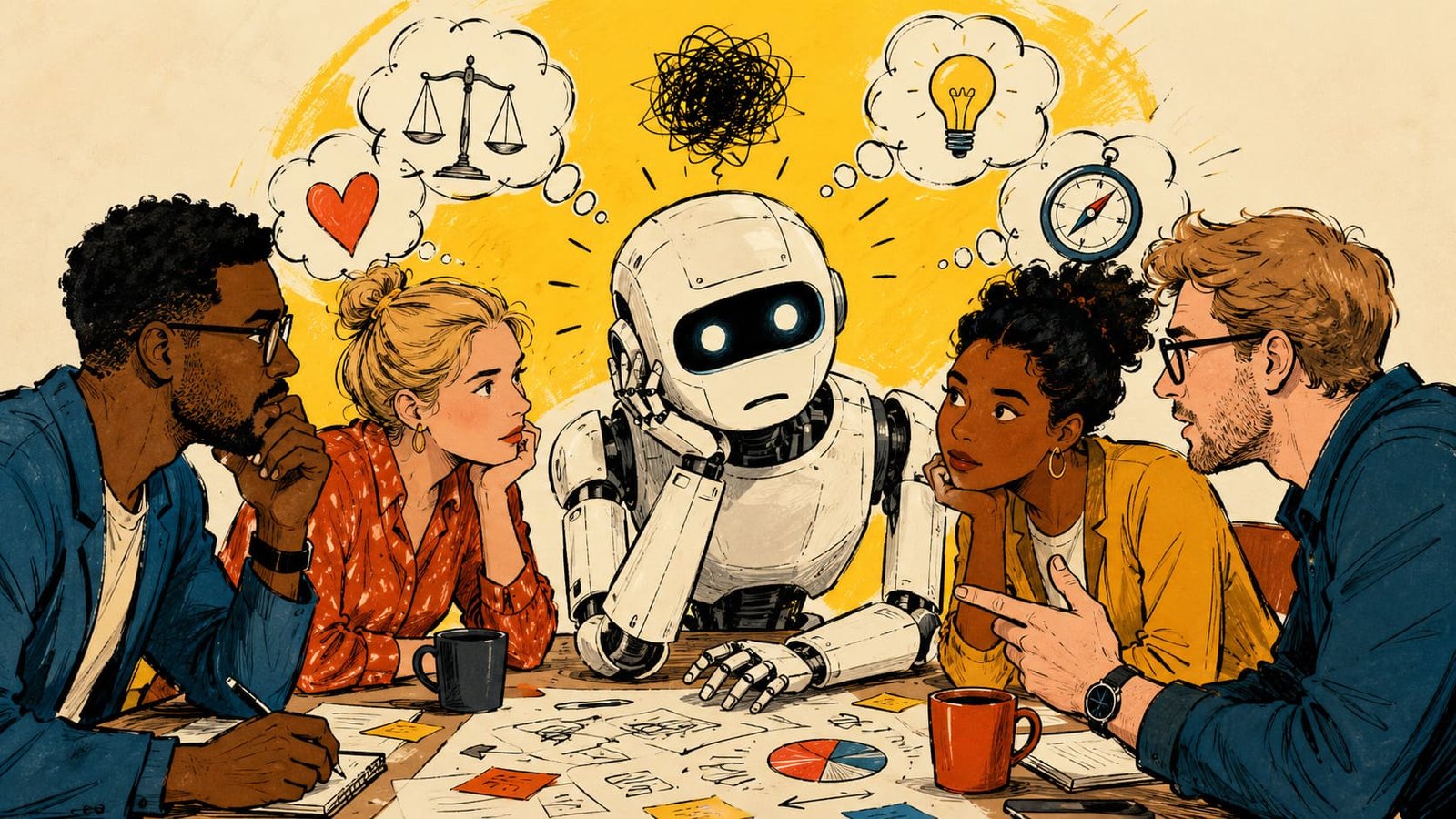
A recommendation appears on a manager’s screen with the confidence of a verdict. A customer has been flagged, a candidate ranked, a risk assigned, a forecast adjusted. Nothing looks dramatic. That is precisely the danger. Modern AI can turn enormous amounts of information into clean recommendations, making difficult decisions feel strangely simple. Yet management has never been merely the art of finding patterns. It is the discipline of deciding what those patterns mean when circumstances are messy, exceptions matter, and somebody must eventually answer for what happens next.
Machines are remarkably good at identifying relationships inside data, but organizations rarely operate inside perfectly measured worlds. A hiring model can detect characteristics associated with previous high performers while missing an unconventional candidate whose strengths do not resemble the historical pattern. A customer system can identify declining purchases while overlooking a service failure that explains them. A manager therefore has to ask a more uncomfortable question than “What does the model recommend?” The better question is “What might this recommendation fail to understand?” That is where judgment begins.
A restaurant manager once received an automated alert identifying a previously loyal customer as a declining account. The numbers were persuasive. Orders had fallen, visits had become less frequent, and the system recommended reducing attention. Yet the manager remembered a complaint about delivery delays and made one phone call. The customer was not losing interest. He was considering leaving because nobody had fixed the problem. The algorithm had identified the pattern correctly and interpreted the situation badly. That distinction is easy to miss when technology makes an answer look finished.
Amazon provides a useful example because machine learning supports areas ranging from recommendations and forecasting to logistics and operations, yet those systems still operate within goals, constraints, and decisions established by people. Healthcare makes the same principle harder to ignore. An algorithm can flag a potential risk, but a clinician must interpret that signal alongside symptoms, history, circumstances, and professional responsibility. Neither human judgment nor machine intelligence is sufficient for every problem. The real management challenge is deciding where each should carry authority, and where one must challenge the other.
That requires organizations to redesign how disagreement works. Employees need permission to question automated recommendations without being branded inefficient or resistant to technology. A junior analyst who says, “The pattern is real, but this case is different,” may be demonstrating more judgment than a senior colleague who accepts an impressive dashboard without inspection. Leaders can create review points, escalation rules, audit trails, and clear ownership for consequential decisions. None of these mechanisms makes AI weaker. They make its use more mature because accountability remains attached to a human decision-maker rather than disappearing into software.
There is an odd temptation in corporate technology to celebrate every process that requires fewer people. Efficiency matters, but removing human involvement from every decision can also remove context, empathy, dissent, and responsibility. A machine may detect that an employee’s performance has changed, but it cannot automatically know whether grief, illness, poor management, unclear expectations, or genuine disengagement sits underneath the pattern. A customer may look unprofitable until one overlooked detail changes everything. AI will keep getting better at finding answers. The harder skill will remain knowing when an answer is not enough, and having the courage to decide anyway.
