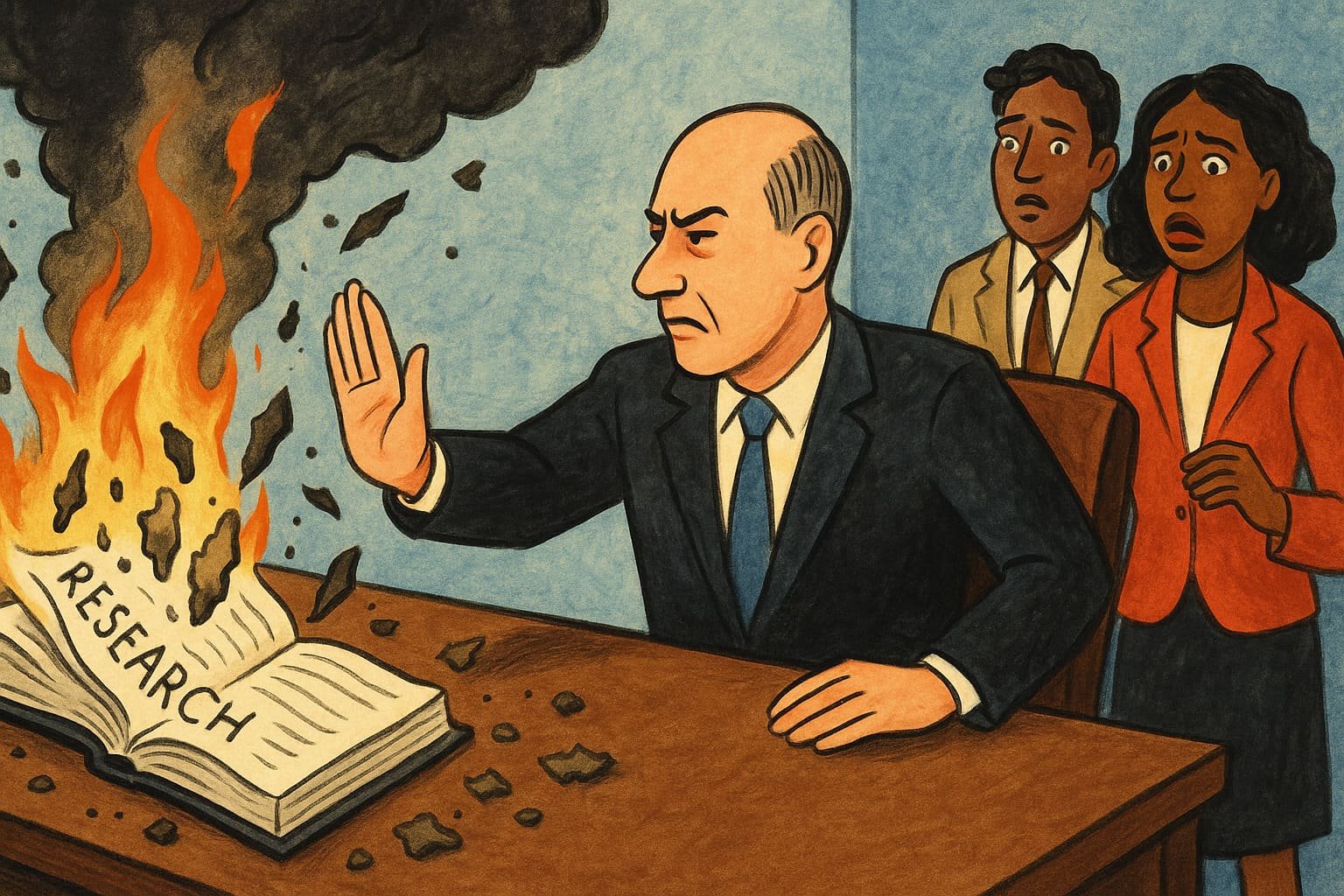
Picture this: The boardroom’s humming, suits line the table, and decisions worth millions rest on the next sentence out of the CEO’s mouth. Yet beneath the sleek confidence and sharp tailoring, there’s a silent saboteur stalking every corner of corporate power; willful ignorance of research. It’s the elephant nobody wants to acknowledge, the one that tramples profit, guts innovation, and, paradoxically, wears the mask of certainty. CEOs around the world are sleepwalking through a minefield, mistaking gut instinct for insight and treating rigorous research like yesterday’s newsprint.
Why is this happening? In the chase for quarterly wins, research feels slow, academic, even quaint. The latest “disruptive” app and boardroom bravado command more respect than dense reports or peer-reviewed studies. But here’s the plot twist: skipping research doesn’t just risk missing trends; it lays a trap that swallows entire companies. Enron’s “smartest guys in the room” ignored cautionary evidence; Kodak dismissed the digital future their own engineers predicted. The world’s greatest business collapses didn’t come from bad luck or market shifts, but from a stubborn refusal to listen to the facts staring them in the face.
Ignoring research is not a victimless crime. Behind every failed merger, every botched product launch, every PR nightmare, there’s a hidden story of someone, somewhere, waving a report that no one bothered to read. In this article, we’re ripping off the bandage. We’ll dive deep into the psychology behind the C-suite’s research allergy, the real-world disasters caused by this blind spot, the secret sauce research-driven companies use to win big, and the transformation that awaits those bold enough to put research first. Saddle up because this journey will leave you questioning everything you thought you knew about leadership, evidence, and the true cost of ignoring reality.
Quick Notes
- Ignoring research is a silent destroyer of company value: When CEOs push aside research in favor of gut feeling or tradition, they set up their organizations for catastrophic failures, often missing early warning signs that could save billions and reputations.
- The myth of the “visionary leader” is dangerously overhyped: Some of history’s most infamous business blunders stemmed from leaders who shunned evidence and doubled down on their own unchecked opinions; transforming boldness into corporate ruin.
- Research-driven companies consistently outperform their rivals: Case studies show that firms which treat research as a core asset achieve more sustainable growth, make smarter bets, and recover faster from setbacks.
- Organizational culture can make or break the value of research:
Even with mountains of data, a culture that punishes dissent or questions isn’t just wasteful; it can drive away the very talent needed for true innovation and resilience. - The future belongs to those who treat research as a leadership superpower: Embracing a research-first mindset isn’t about playing it safe; it’s about building organizations that thrive amid uncertainty and turn evidence into competitive advantage.
Gut Instincts or Hidden Landmines? The Cost of Ignoring Evidence
Ignoring research isn’t just a quirk of ego; it’s the corporate equivalent of playing Russian roulette with loaded chambers. Many CEOs find comfort in intuition, especially when it has paid off in the past. Yet, beneath the success stories lies a graveyard of cautionary tales, littered with companies that once seemed too big to fail. Each ignored report, every dismissed analyst, plants a landmine that explodes years later, often when least expected.
Take the legendary fall of Blockbuster. At the height of its empire, executives were warned by both internal teams and external research about the growing threat of online streaming. Netflix’s tiny operation barely registered as a threat in early reports, yet evidence showed shifting consumer habits. Blockbuster’s leadership brushed off these studies, clinging to physical stores and late fees. The results were catastrophic. Within a few years, what seemed like “common sense” decision-making turned into a global punchline.
This pattern repeats itself in less obvious ways. Blackberry executives notoriously dismissed research pointing to the iPhone’s disruptive potential. Market analysts sounded the alarm, but executives doubled down on the old model. The cost? Market share evaporated overnight, erasing decades of dominance. Each failure started with the same blind spot; treating research as an afterthought, not a compass.
Why do smart leaders ignore evidence? Part of the answer lies in the seductive appeal of narrative. Charismatic CEOs love to cast themselves as mavericks, slaying dragons with nothing but a hunch. The press eats up these stories, fueling the myth of the lone genius. But the myth rarely survives contact with reality. Steve Jobs read voraciously, Bill Gates devoured data, and even Warren Buffett attributes his fortune to relentless research not just “gut feeling.”
Ignoring research often means ignoring the people closest to real problems. Engineers, frontline staff, and market researchers are dismissed in favor of “big picture” thinking. This breeds resentment and kills innovation at the roots. When teams see leadership ignoring facts, they stop bringing uncomfortable truths forward. This creates a dangerous echo chamber where disaster is only a matter of time.
Sometimes, ignoring research is about speed. In hyper-competitive markets, executives claim there’s “no time” for long reports or deep dives. Ironically, this rush increases the likelihood of costly mistakes, delays, and backtracking. A fast wrong move is far worse than a slow, well-researched step. The business graveyard is filled with companies that mistook speed for strategy and bravado for brilliance.
Visionary Myths: How Overconfidence Topples Empires
Some leaders become legends for their audacity, but history shows that unchecked overconfidence is the stuff of corporate tragedy. There’s a seductive allure in the myth of the “visionary” CEO; someone who sees around corners, ignores the naysayers, and changes the world with sheer force of will. But when vision turns into stubbornness, empires can crumble overnight.
The story of Nokia is a cautionary masterpiece. In the early 2000s, Nokia owned the mobile phone market, seemingly untouchable. Yet internal research showed cracks; consumers wanted smarter, more connected devices. Executives dismissed these warnings, betting everything on what worked yesterday. Apple’s iPhone blitzed the market, and Nokia’s empire imploded almost overnight. Vision, unmoored from evidence, became a curse.
Elizabeth Holmes and the rise (and fall) of Theranos remains another pop culture fable. Armed with charm, Holmes convinced investors and even world leaders to buy into a dream. But inside the company, researchers and scientists repeatedly flagged technical impossibilities. Their reports were buried, voices silenced. The world watched in shock as the company’s promise evaporated, leaving lawsuits and shattered careers in its wake.
History repeats itself in quieter ways. Boeing’s rush to launch the 737 Max sidelined internal safety research in favor of keeping up with competitors. Engineers who spoke up were ignored, reports warning of potential disasters shelved. The tragic consequences led to global scrutiny and one of the most expensive recalls in aviation history.
Why does this keep happening? The media lionizes “disruptors” and risk-takers, but rarely celebrates the quiet power of research-driven leadership. This distorts what executives reward and value. The person waving the spreadsheet gets branded a “downer,” while the bold talker is promoted. Yet real innovation happens when bold vision is tethered to honest, unflinching research; a lesson Google famously institutionalized, encouraging employees to “show the data” at every major meeting.
In every disaster, a pattern emerges. The higher leaders climb, the harder it becomes to hear truth. Boardrooms echo with agreement, not debate. Research is seen as a bureaucratic hurdle, not the foundation of smart bets. The myth of the lone genius crumbles in the face of reality: sustainable success demands humility, curiosity, and the discipline to test every big idea against hard evidence.
Winning with Evidence: The Secret Playbook of Research-First Companies
There’s a quiet revolution underway among companies that make research the centerpiece of their decision-making. These organizations don’t just avoid disaster; they build engines of growth, adaptability, and sustained advantage. The world’s most admired businesses, from Amazon to Procter & Gamble, share a relentless obsession with research. They treat it not as an insurance policy, but as the single most powerful tool for building the future.
Amazon’s famous “working backward” method starts every project with research. Teams craft press releases and FAQs for hypothetical products, stress-testing ideas with real data before a single dollar is spent. This culture saves billions in failed bets and accelerates the path from concept to customer delight. Employees know that every hunch must survive a grilling from evidence; a practice that’s embedded in the DNA of their success.
Toyota’s rise from postwar obscurity to industry dominance is another testament to research-led culture. The company pioneered the concept of “kaizen,” or continuous improvement, which relies on frontline workers and engineers to flag problems and propose solutions. Research isn’t a department; it’s everyone’s job. This decentralized approach led to historic reliability, customer loyalty, and industry-defining quality.
Netflix transformed its entire business model by trusting the numbers. Faced with the decline of DVDs, the leadership didn’t panic. Instead, they invested heavily in customer data, researching what viewers actually wanted. This commitment to evidence led to a bold pivot into streaming and later, content creation that redefined entertainment itself.
Small companies can win big with research, too. Warby Parker’s founders tested their eyewear direct-to-consumer model using endless customer surveys and rapid prototyping. Each tweak was rooted in real-world feedback, not boardroom daydreams. Their ascent in a stodgy, competitive market shocked industry giants and delighted millions of customers.
When research leads, luck becomes strategy. Risks don’t disappear, but they become calculated gambles, not roulette spins. Employees feel safe raising dissent, confident that their input matters. These companies weather storms better, pivot faster, and turn failures into stepping stones. In the arms race for the future, research-driven organizations wield a secret weapon that turns chaos into clarity.
The Cultural Equation: Why Evidence Dies (or Thrives) Inside Organizations
Data is useless without a culture that values it. Some of the world’s best research sits unread in company servers, while groupthink runs rampant in open-plan offices. The real challenge isn’t producing insights; it’s getting leaders to listen, learn, and act on what matters. Culture, more than policy or procedure, determines whether research becomes rocket fuel or just paperwork.
Look at Pixar, the animation giant known for hit after hit. Its legendary “Braintrust” meetings bring directors, writers, and animators together to critique every project. Brutal honesty rules. Anyone, from an intern to a founder, can question a story decision. Research and feedback are woven into the creative process, not just tacked on at the end. This relentless search for truth turns good movies into masterpieces, and bombs into box office gold.
Contrast that with Sears; a company whose leadership dismissed years of internal research predicting online shopping’s rise. Frontline staff saw the change coming. Store managers warned of digital threats. But a culture that prized hierarchy over facts doomed Sears to irrelevance. Research was seen as threatening, not enlightening. The result? A slow-motion collapse that stunned no one but those at the top.
Innovation dies in cultures obsessed with harmony and politeness. Leaders who fear dissent build echo chambers where research is weaponized to confirm biases, not challenge them. When people are punished for surfacing bad news, they stop talking. This culture of silence has toppled more empires than any competitor could dream of.
Building a culture that celebrates evidence takes courage. Leaders must reward the messenger, not shoot them. Google famously allows employees to spend “20 percent” of their time on self-directed research and projects; a move that birthed Gmail, AdSense, and countless other innovations. When employees feel safe sharing research, magic happens.
Changing culture isn’t easy. It means fighting old habits and embracing discomfort. It means hiring people who think differently and challenging assumptions at every level. The payoff is huge: organizations that crack the culture code turn research into their most powerful asset. They see around corners, survive shocks, and create legacies that last.
The Research-Driven Future: Why Embracing Evidence Is the Ultimate CEO Superpower
The business world is entering an era where research isn’t optional; it’s survival. Rapid technological change, shifting consumer demands, and global volatility make gut instinct alone a recipe for disaster. The leaders who win tomorrow will be those who make research their superpower, not their afterthought.
Consider Satya Nadella’s transformation of Microsoft. Taking over a lumbering giant, Nadella listened first, launched a company-wide push to gather research, and rebuilt the culture around learning. The company shifted from knowing everything to asking better questions. Microsoft’s resurgence as a tech powerhouse proves that humility plus evidence beats bravado every single time.
Research-driven leaders don’t just collect data; they act on it. They build diverse teams, question their own biases, and turn failure into feedback. Their companies learn faster, adapt quicker, and seize opportunities others miss. As artificial intelligence, automation, and disruption reshape every industry, research becomes the lifeline that keeps companies from drowning in uncertainty.
The next generation of CEOs faces an inflection point. Cling to outdated myths of the all-knowing visionary, and risk becoming tomorrow’s cautionary tale. Embrace evidence, and unlock a future where mistakes become lessons and every decision is a chance to get smarter. The playbook is clear: the winners are those who treat research as sacred, culture as flexible, and humility as the ultimate edge.
The world needs more leaders who admit what they don’t know and chase the truth; no matter how uncomfortable it feels. In doing so, they earn not just profits, but trust, loyalty, and a legacy that endures. The path isn’t easy, but the rewards are massive. Ask yourself: will your company be known for its bold vision, or for the humility to change when the facts demand it?
The Courage to Listen: And the Power to Change
Ignoring research isn’t just a business risk; it’s an act of self-sabotage disguised as strength. Every time a CEO shrugs off evidence, the organization inches closer to disaster, all while congratulating itself on decisiveness. The true heroes of the corporate world aren’t the loudest or the boldest; they’re the ones willing to sit with uncomfortable truths, ask hard questions, and build companies on the bedrock of reality, not wishful thinking.
We live in a world that prizes speed, charisma, and certainty. Yet the best leaders have learned the ultimate paradox: wisdom grows from doubt, not dogma. The next generation of business icons will be those brave enough to listen when it matters, pivot when they’re wrong, and make research their most loyal ally.
The future is littered with the wreckage of companies that mistook instinct for insight. But it’s also alive with stories of those who turned research into rocket fuel and wrote the next great chapter of innovation. Don’t become another cautionary tale. Take the risk of being curious. Build a culture where research isn’t just welcome; it’s celebrated.
So here’s your challenge: The next time you’re tempted to trust your gut, pause. Ask yourself: What does the evidence say? Are you building a company that will stand the test of time, or just one that will be remembered for ignoring the warnings? The fate of your organization and perhaps your own legacy depends on the answer.
