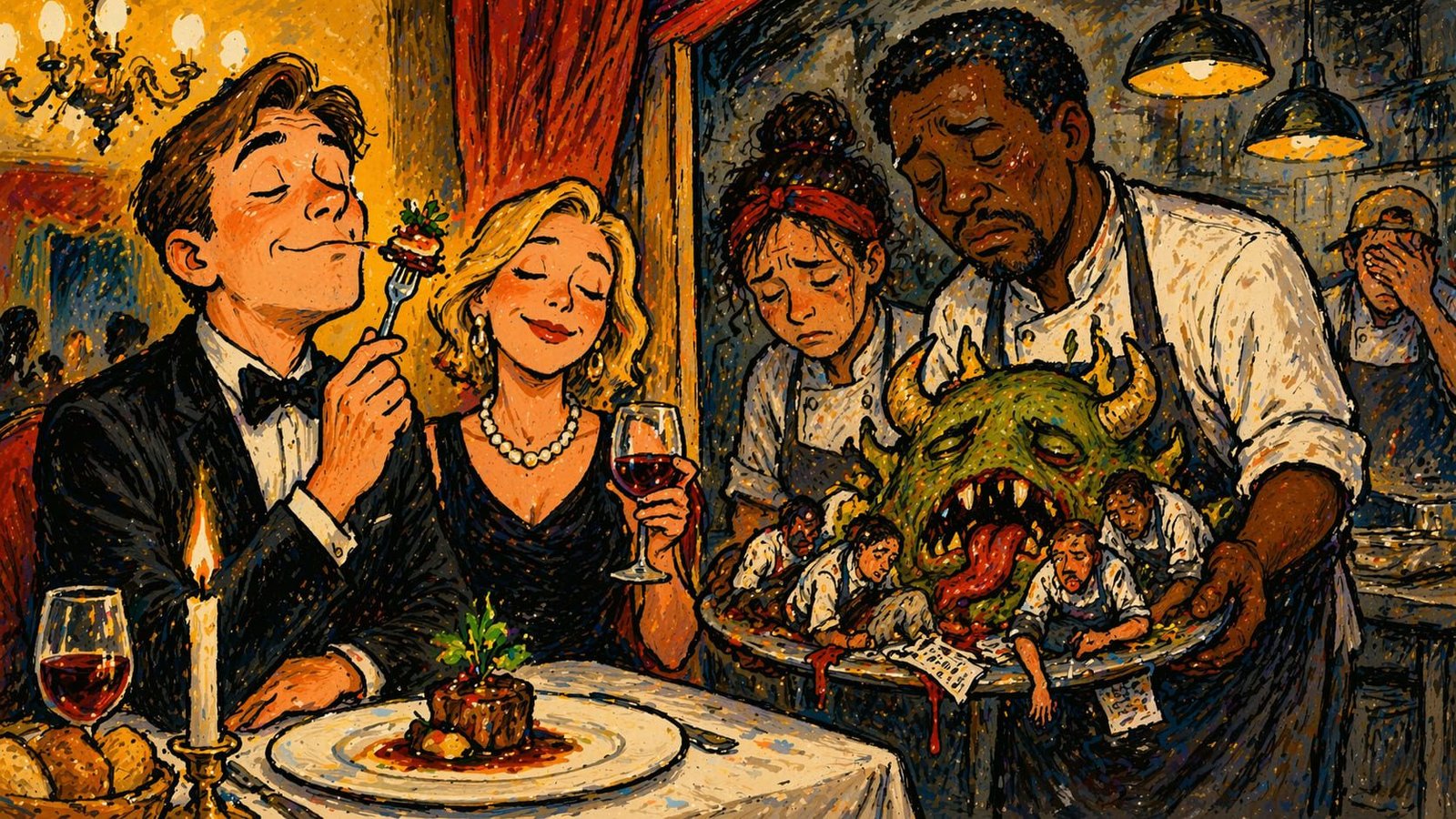
The dining room glows with soft light, plates arrive like small works of art, and every detail feels intentional. Guests lean in, speaking in low tones, as if the experience demands reverence. Each bite is precise, balanced, almost choreographed. It feels like luxury. It also feels distant from the place where it was created.
Behind the swinging doors, the atmosphere shifts completely. Heat rises, voices sharpen, movements accelerate into a rhythm that borders on urgency. The kitchen is not a place of calm refinement. It is a system under pressure, driven by expectations that leave little room for error. Perfection is not a goal here. It is a requirement.
Fine dining has long been associated with excellence, discipline, and craft. These kitchens are spaces where skill is honed through repetition, where standards are enforced with intensity. The results are undeniable. Dishes reach levels of precision that feel almost impossible. Yet the process that produces them often carries a different kind of cost.
A young chef named Luca once entered a renowned kitchen with admiration and ambition. The environment was everything he had imagined, demanding, fast, relentless. He learned quickly, adapted to the pace, absorbed the standards. Over time, the pressure became constant. Mistakes were not just corrected, they were amplified. The line between discipline and strain began to blur.
This is where the tension sharpens. The pursuit of perfection can elevate craft, but it can also create systems that prioritize results over well-being. The kitchen becomes a place where intensity is normalized, where endurance is expected, where emotional strain is often hidden beneath the surface of professionalism. The beauty on the plate does not reveal the weight behind it.
Stories from the industry reflect this duality. Celebrated chefs have spoken openly about the pressures within high-end kitchens, environments that demand total commitment and leave little space for balance. The culture is changing in some places, yet the legacy of intensity remains deeply embedded in how excellence is defined.
A restaurant group once attempted to redefine this model. They introduced structured schedules, emphasized collaboration over hierarchy, and focused on sustainability within the kitchen itself. The initial results were promising. Morale improved, creativity expanded, and the team felt more connected. Yet maintaining that balance required constant effort against an industry that still equates intensity with quality.
The deeper question is not whether excellence should be pursued, but how it is pursued. When perfection becomes the central value, it can overshadow the human elements that make creativity possible. The system begins to serve the outcome rather than the people who create it. Over time, that imbalance becomes harder to ignore.
There are chefs who are quietly reshaping this narrative. They maintain high standards while rethinking the environments that produce them. They question whether intensity must come at the cost of well-being. Their work suggests that excellence and humanity are not mutually exclusive, though balancing them requires intention.
In the quiet after service, when the last plate has been sent and the noise begins to fade, the kitchen reveals a different side. The energy settles, the pace slows, and the weight of the day becomes more visible. The dishes that reached the dining room carried precision and beauty. What they did not carry was the story of what it took to create them.
In that stillness, with the lights dimmed and the room finally at rest, a question lingers beneath the surface of every polished plate and every satisfied guest, one that reaches beyond taste and into something more human: when perfection becomes something to serve above all else, what does it quietly ask people to sacrifice in return?
