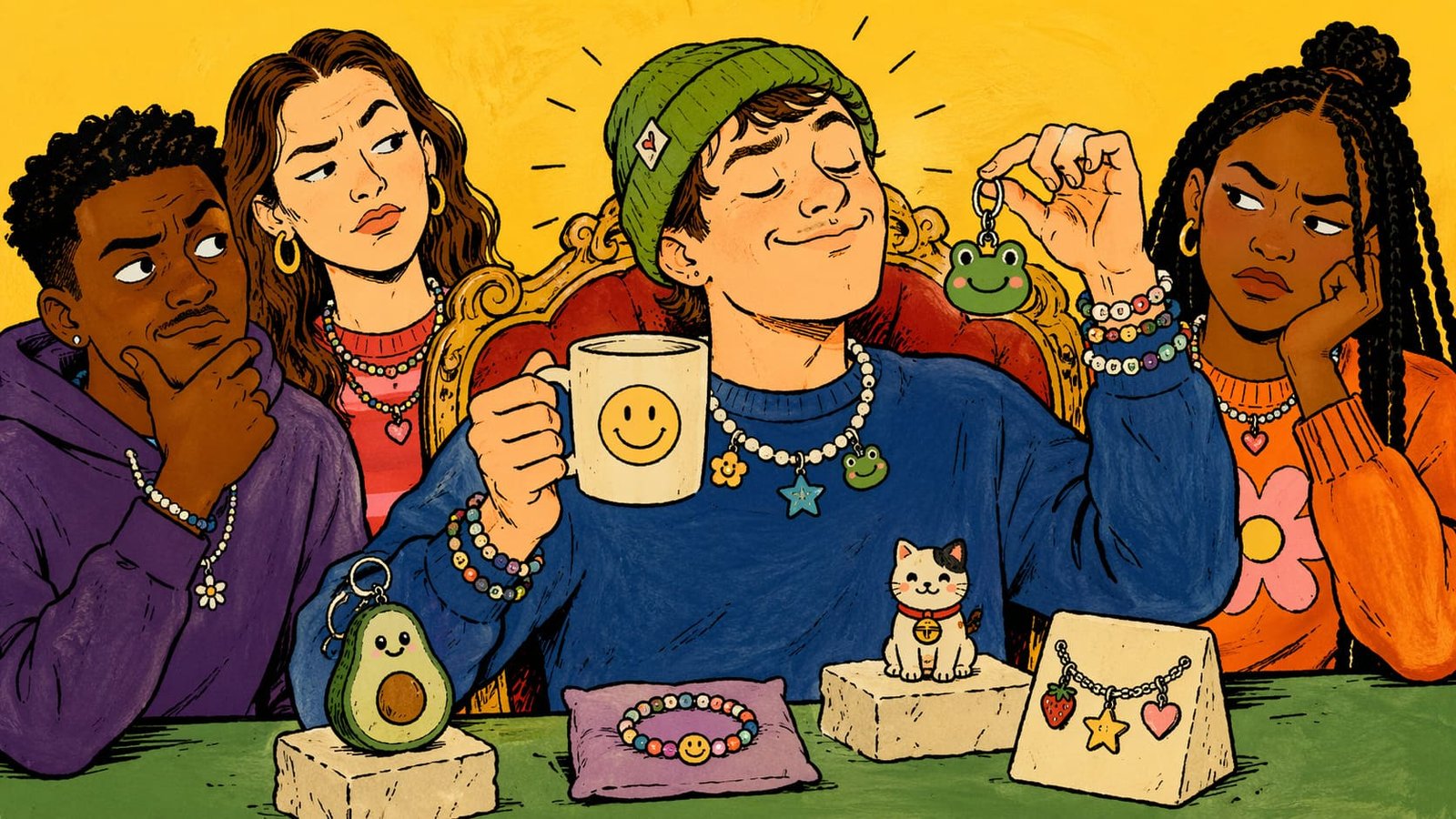
The room glitters, but something about it feels thin. Logos flash, outfits shift, phones tilt at precise angles, capturing moments engineered to look effortless. Status fills the space, visible, immediate, almost loud. Yet beneath the shine sits a quiet suspicion that something has been traded away, something heavier, harder to name, replaced by signals that travel faster but carry less weight.
Status has never disappeared. It simply changes form. For previous generations, it lived in slower signals. Careers built over time, reputations formed through consistent behavior, communities that recognized contribution rather than performance. The symbols were fewer, but they carried depth. They required time to earn and time to understand.
Then the environment accelerated. Platforms compressed identity into images, captions, and metrics. Status became something that could be displayed instantly, consumed quickly, and replaced just as fast. The shift did not feel like loss at first. It felt like access. Anyone could participate. Anyone could signal belonging.
Gen Z did not create this system, but they mastered it. Growing up inside digital ecosystems, they learned to navigate attention with precision. The language of status became visual, fast-moving, and highly adaptable. What mattered was not just what you had, but how it looked, how it moved, how it could be shared.
You can see this in the rise of micro-symbols. A specific sneaker drop, a niche brand, a fleeting trend that signals awareness more than wealth. These symbols operate at a different frequency. They are less about permanence and more about timing. Being early matters more than being established.
Consider the influence of figures like Kylie Jenner, whose ability to turn visibility into value reshaped how status is perceived. The product is not just what is sold, but the narrative around it, the sense of participation in something current, something moving. Ownership becomes secondary to association.
This creates a new kind of hierarchy, one that is fluid and constantly shifting. Status is no longer anchored in long-term achievements alone. It is distributed across moments, trends, and signals that can change within days. The advantage lies in adaptability, in the ability to read the cultural moment and respond quickly.
A young creative named Tariq once described how he built his presence online. He did not start with resources or connections. He started with observation. He watched how trends formed, how they spread, how they faded. He learned to anticipate the next signal, positioning himself just ahead of the curve. His following grew. Opportunities followed. Yet he admitted something quietly. The constant adaptation left little room for stillness. Status required maintenance.
This maintenance introduces a subtle cost. When identity is tied to signals that change rapidly, stability becomes harder to maintain. The pressure to remain relevant can shape decisions, influencing not just what is shared, but what is experienced. Life begins to align with what can be signaled effectively.
The economic layer reinforces this dynamic. Brands respond to the fluidity of status by producing faster, more targeted offerings. Limited releases, collaborations, and drops create a sense of urgency. The cycle accelerates. Consumption becomes less about need and more about participation in a moment.
Pop culture reflects this shift with increasing clarity. Platforms like TikTok amplify trends at a speed that compresses cultural cycles. A sound, a style, a gesture can rise and fall within days. Status becomes ephemeral, tied to visibility within these cycles rather than long-term recognition.
There is a paradox within this system. Accessibility expands participation, but it also reduces differentiation. When everyone can access similar symbols, the meaning of those symbols becomes diluted. The response is to move faster, to find new markers, to stay ahead. The cycle continues.
Yet beneath this movement, a quieter tension emerges. The awareness that some forms of status, the slower, deeper ones, have not disappeared entirely. They have simply become less visible. Skills, relationships, knowledge, these still carry weight, but they do not travel as easily across digital spaces.
A small group of designers working in a shared studio offers a glimpse of this contrast. Their work does not trend quickly. It develops over time, shaped by iteration and reflection. Their recognition grows slowly, often within specific communities rather than broad audiences. The status they build is less visible, but more stable.
This suggests that the shift is not absolute. It is layered. Cheap symbols dominate the surface, while deeper forms of status continue beneath it. The challenge lies in navigating both without losing sight of what holds lasting value.
The psychological impact of this environment is complex. On one hand, it empowers individuals to shape their own narratives, to participate in cultural conversations without traditional gatekeepers. On the other, it creates a constant comparison loop, where value is measured against rapidly changing standards.
A founder in a digital marketing firm once observed how younger employees approached branding. They understood instinctively how to create signals that resonate. They also struggled with defining their own long-term direction. The skills that made them effective in the short term did not always translate into sustained growth.
This is where the conversation becomes more nuanced. Cheap symbols are not inherently negative. They are tools, reflections of a system that prioritizes speed and visibility. The issue arises when they replace rather than complement deeper forms of value.
Some individuals begin to push back, not loudly, but through choices that prioritize substance over signal. They invest time in skills that do not immediately translate into visibility. They build relationships that are not publicly displayed. They create work that may not trend, but endures.
A quiet moment in a dimly lit room captures this shift. A young artist works on a piece that no one has seen yet. There is no immediate audience, no guarantee of recognition. The process is slow, deliberate. The satisfaction comes not from signaling, but from creation itself.
This moment, almost invisible within the broader noise, carries a different kind of status. One that is not dependent on external validation, but on internal alignment. It is harder to measure, but more resistant to change.
The future of status may not lie in rejecting the new symbols, but in integrating them with older, deeper forms of value. Recognizing when a signal is useful, and when it becomes a substitute for substance. Allowing visibility to support, rather than define, identity.
Somewhere between the flash of a trending moment and the quiet of sustained effort, a choice waits. Not a dramatic one, just a subtle shift in attention. Toward what lasts, even when it is not immediately seen.
