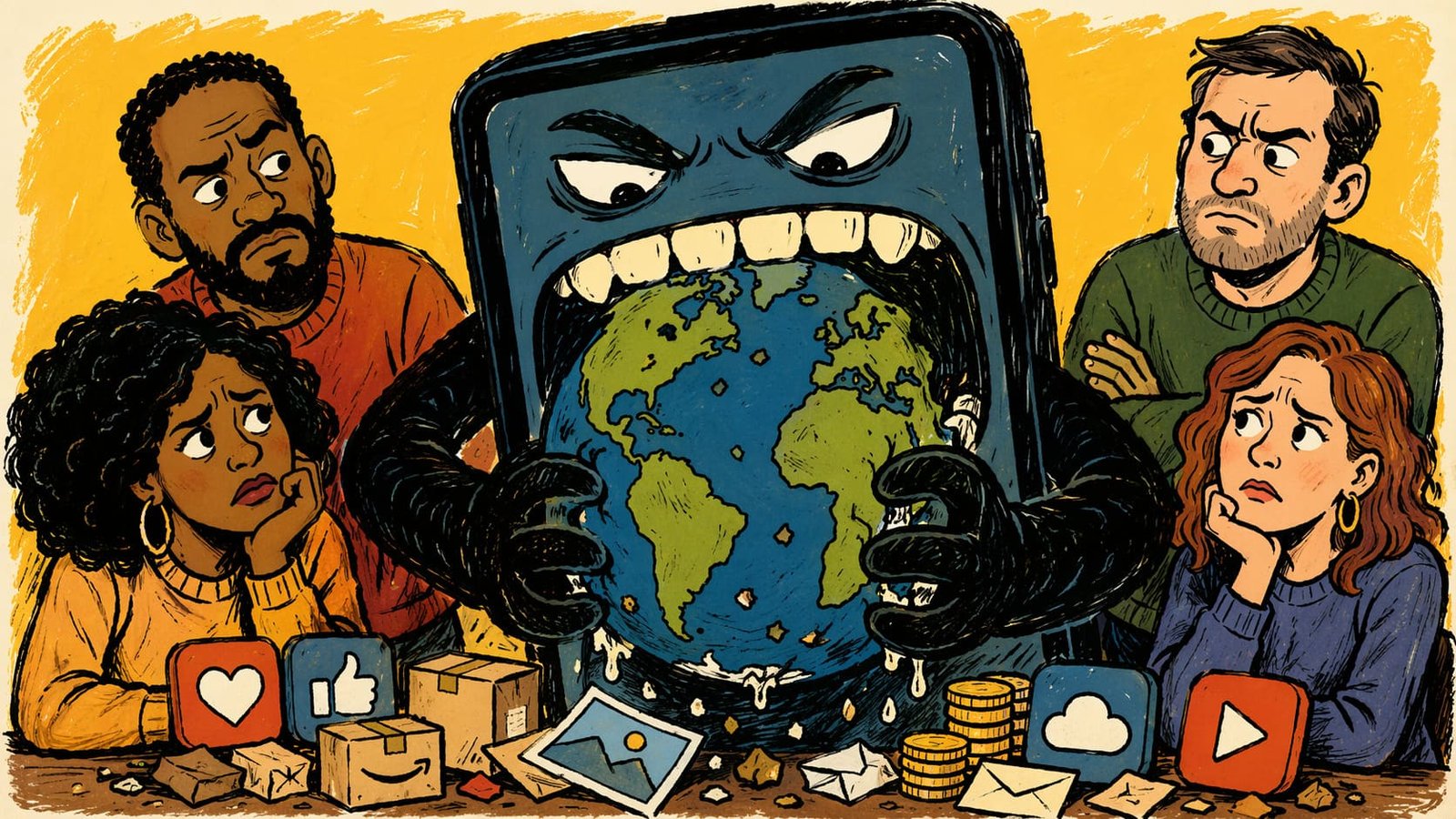
The interface looks cleaner than ever. Buttons glow, feeds scroll smoothly, and every tap responds with obedient speed. It feels efficient, almost generous. Yet something subtle has shifted. The experience no longer feels like a service offered to a user. It feels like a system extracting something invisible, piece by piece, while smiling politely through the transaction.
At first, platforms promised connection. They were built as tools that reduced friction, collapsed distance, and gave ordinary people extraordinary reach. The early days carried a sense of openness, almost innocence. Founders spoke about community, empowerment, and access. For a while, it was true. The value flowed outward, toward users, and trust grew quietly in the background like something natural.
Then the incentives changed, almost imperceptibly. Growth demanded more than satisfaction. It required engagement, retention, and monetization at scale. The shift did not arrive with a dramatic announcement. It arrived through small adjustments. A recommendation here, a notification there, a feed that learned to hold attention just a little longer. The platform still served the user, but it had started serving itself more.
A product strategist named Leila once described the moment her team crossed that line. They introduced a feature designed to keep users scrolling, not because it improved the experience, but because it increased session time. The metrics celebrated it. Users stayed longer. Revenue rose. Yet feedback became colder, less enthusiastic. People used the product more, but trusted it less. That paradox became the new normal.
This pattern repeated across industries. Marketplaces that once prioritized fairness began favoring sellers who paid more. Social networks that once surfaced genuine connections began amplifying content that provoked stronger reactions. Streaming services that once felt curated began overwhelming users with endless options. The platforms did not become worse overnight. They became optimized in a way that slowly eroded the original promise.
The term “enshittification” sounds crude, almost unserious, yet it captures something precise. It describes a cycle where platforms start by delighting users, then shift to exploiting them, and finally extract value at the expense of everyone involved. The language is blunt because the experience feels blunt. People sense the change even if they struggle to explain it. They feel it in the fatigue that follows prolonged use.
A small online store owner named Mateo felt it firsthand. His business once thrived on a marketplace that rewarded quality and customer relationships. Over time, visibility began to depend on paid placement. Competitors who spent more rose to the top, regardless of craftsmanship. Mateo adapted, spending more to stay visible. His margins shrank, his work felt secondary, and the platform that once supported him now felt like a toll gate.
The deeper tension lies in how these systems redefine value. Trust becomes a resource to be mined. Attention becomes a commodity to be traded. Relationships become data points to be optimized. The user is no longer the customer in a traditional sense. They are part of the product, part of the mechanism that generates revenue elsewhere. This inversion feels abstract until it shapes everyday experience.
And yet, people continue to use these platforms. Not because they are naive, but because alternatives are scarce. Network effects create a kind of gravity that is difficult to escape. Leaving means losing connection, visibility, opportunity. So users stay, negotiating with systems they no longer fully believe in. They adjust their expectations, lowering them just enough to remain comfortable.
Some founders resist this trajectory. A messaging app team once chose to limit features rather than introduce intrusive monetization. Growth slowed, investors questioned the decision, and competitors surged ahead. Years later, the product remained trusted, even loved, in a way others were not. It did not dominate the market, but it owned something rarer. It preserved the original contract between creator and user.
Across a dimly lit workspace, a product lead stares at a dashboard filled with rising numbers that feel strangely hollow. Engagement is high, revenue is climbing, yet something essential feels off, like a conversation that continues long after meaning has left the room. The system is working exactly as designed. That is the problem. And somewhere in that quiet realization, a harder question begins to surface, one that no metric can answer cleanly: when a platform wins by consuming trust, what exactly has it built, and what has it quietly broken?
