The ballroom looked like victory had rented it for the night. Glasses chimed. Soft jazz drifted through a ceiling full of flattering light. A founder in a dark suit stood near a cluster of smiling guests while strangers said the sort of things people say when a business appears to be ascending: unstoppable, category-defining, built for the long haul. The floor staff moved like clockwork. The branding was elegant. The room felt expensive enough to make doubt look vulgar. Then a banker, older and almost bored, leaned in near the dessert station and asked a question that could sour champagne on the tongue: if everyone wants this asset now, why assume they will want it later?
That question haunts more companies than their owners admit. Success has a smell, and it does something odd to people around a growing business. Customers smell it. Competitors smell it. Journalists smell it. Advisors smell it too, especially the seasoned ones who have lived through enough cycles to know that hot markets cool, buyer appetite shifts, and applause can hide structural weakness better than silence ever could. When a company is glowing, founders often want to believe they have reached safety. In reality, they may have reached peak desirability.
The romance of holding on is powerful. It flatters identity. It turns the business into a moral drama where staying proves courage and selling feels like betrayal. That story has ruined plenty of owners. Exiting well is not always cowardice, greed, or a lack of belief. Sometimes it is simply the clearest act of leadership available, the move that protects value before conditions turn against everyone in the room.
This article argues a point that many owners resist until the market forces it on them. You do not sell only when you are tired, cornered, or failing. Often the smartest exit happens when the business still looks strong, when buyers are leaning in, when numbers feel handsome, and when your own ego is whispering that the best must still be ahead. That is exactly when good advisors start asking harder questions.
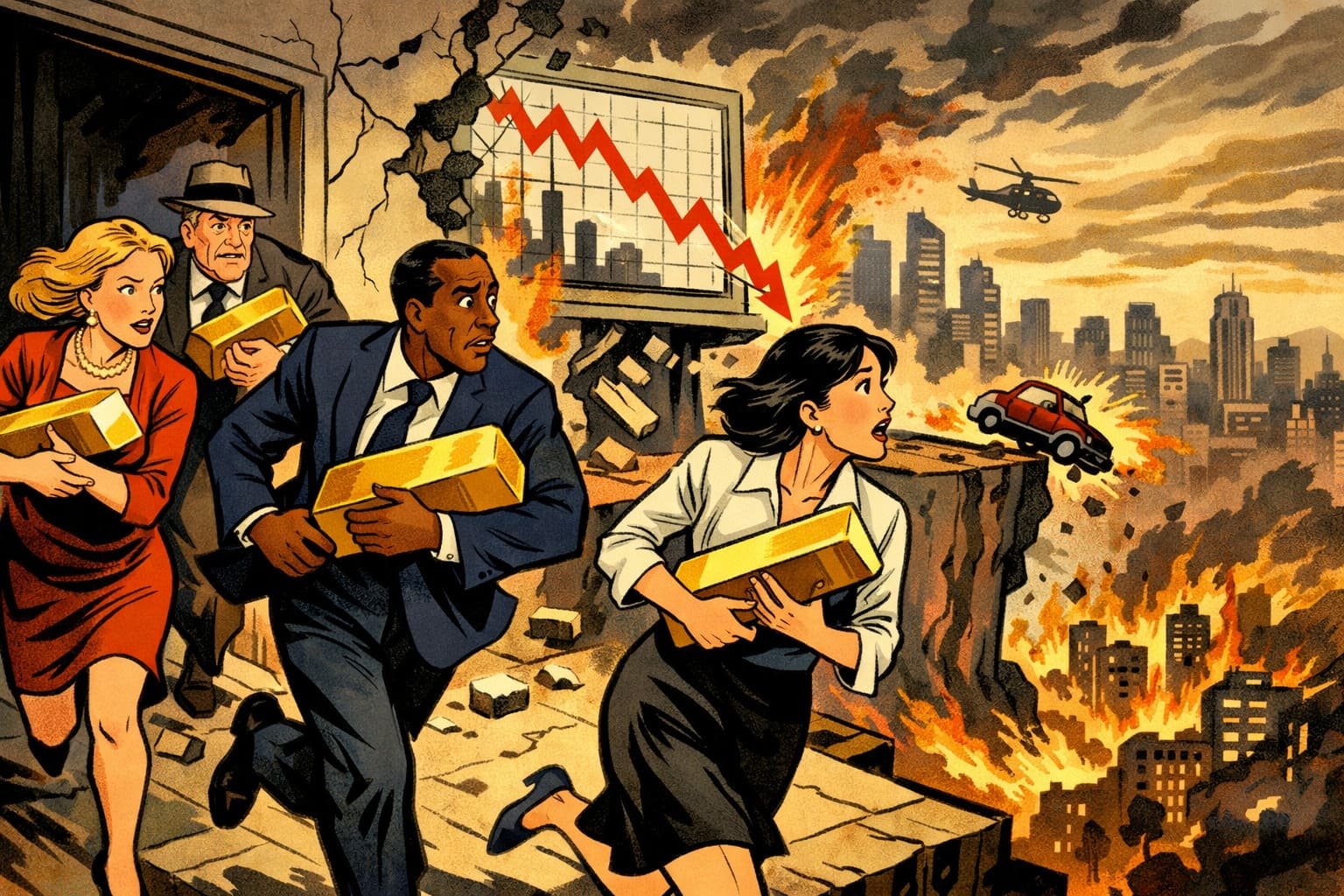
The path through this piece is blunt and uncomfortable on purpose. You will see why peak momentum can be the most dangerous time to grow sentimental, why buyers pay premiums for certainty rather than dreams, why founders often confuse identity with timing, why exit planning is a strategic discipline rather than a funeral rite, and why letting go can be the difference between preserving wealth and starring in an avoidable collapse. This is not a hymn to selling out. It is a study in knowing when the heat in the room is coming from demand and when it is coming from fire.
Quick Notes
1. The Best Time to Sell Often Feels Emotionally Wrong: When your company is finally admired, the instinct is to hold tighter. That instinct can be expensive. Peak excitement is often when buyers pay for possibility before reality starts asking rude questions.
2. Advisors Read Signals Owners Ignore: A seasoned advisor notices frothy offers, shifting market moods, buyer urgency, and category fatigue long before a founder wants to hear it. Experience sometimes sounds pessimistic because it has watched the movie before.
3. Exits Are Not Just for Failing Businesses: Strong companies sell too, sometimes because they are strong. A good exit can protect years of effort, de-risk the future, and turn paper admiration into durable freedom.
4. Identity Is the Trapdoor: Owners delay because the business stopped being a company and became a self-portrait. Once that happens, every exit conversation feels personal, even when the numbers are practically begging for sobriety.
5. Waiting for the Perfect Moment Usually Ends With Regret: Markets do not ring a bell at the top. They yawn, drift, tighten, and then punish wishful thinking. By the time collapse looks obvious, the best buyers have often left the room.
When the Business Looks Hottest, the Clock May Be Loudest
A strange thing happens when a company finally becomes desirable. The founder starts to hear praise in stereo. Customers want more. Buyers call uninvited. Media coverage sharpens the glow. Competitors circle with that mix of respect and resentment that only appears when something has clearly worked. It feels like arrival. It may actually be the beginning of a countdown.
That is because buyers do not pay top value for your exhaustion. They pay top value when your business still has narrative power, stable momentum, and enough untapped upside to let them imagine an even better version in their own hands. The window is often brightest right before uncertainty creeps in. By the time an owner feels emotionally ready to sell, the market may already be less enchanted.
Instagram is a classic reminder of what timely acquisition can look like when seen through a harder business lens. The company had heat, velocity, cultural gravity, and a future large enough to excite both believers and predators. Selling early looked almost too soon to some observers at the time. Later, it looked like a move made with exquisite timing, one that converted momentum into security before the competitive climate got far more brutal. Timing, in business, often looks premature until history catches up.
A founder named Njeri felt the opposite pull with her direct-to-consumer wellness brand. The business had become a darling in its niche, orders were climbing, and acquisition interest started arriving with flattering language and clean term sheets. She kept postponing the conversation because she had suffered too much to leave “early.” Her advisor, a dry operator who drank tea like he was settling disputes in an old film, asked a cruelly useful question: was she protecting upside, or protecting the fantasy that the story still belonged only to her? That question cracked the room open.
You do not need to panic every time interest shows up. You do need to notice what interest means. A warm market is not a permanent climate. It is weather, and weather changes faster than founders like to believe. When several smart buyers lean in at once, they may be telling you something about your value that your own attachment is making difficult to hear.
Great Advisors Hear the Floorboards Creak
The best advisors rarely sound euphoric at the moment owners most want applause. That can make them unpopular in boardrooms built on optimism and caffeine. They ask about concentration risk when everyone else is admiring growth. They ask about succession, customer churn, margin quality, and buyer motives while the founder is still enjoying the flattering theater of inbound interest. They do not kill the mood because they are cynical. They do it because they have seen how quickly a room can turn.
A good advisor is not a cheerleader in a better jacket. A good advisor is part strategist, part historian, part weather forecaster, part undertaker. That last role makes people uncomfortable, but it matters. Someone in the room has to think about endings before endings become chaotic. Healthy exits are usually built long before anyone signs anything. They begin with the discipline to examine the business as an asset, not just an extension of someone’s pulse.
That is why experienced dealmakers often seem almost superstitious about timing. They know categories cool. They know cheap money, buyer appetite, and sector buzz can produce a temporary halo around businesses that later have to answer much harsher questions. Private equity firms, strategic acquirers, and larger operators all read mood as well as math. They know when a sector smells like fresh bread and when it smells like yesterday’s leftovers.
A founder named Tomas learned to trust that kind of judgment after resisting it for months. His software firm served a niche that had suddenly become fashionable. Conferences loved it. Buyers loved it. Journalists treated it like the future wearing a badge. Tomas wanted two more years. His advisor, who had the irritating calm of someone who had already survived his own mistakes, kept saying the same thing in different clothes: heat is not permanence. Tomas sold, and within a short time the niche filled with better-funded rivals who turned pricing into a knife fight.
The skill of a seasoned advisor lies partly in pattern recognition. Founders feel the present in their bones, which makes them brave but also vulnerable to narrative intoxication. Advisors stand farther back. They watch incentives, buyer behavior, market posture, and category fatigue without needing the business to love them back. That distance can feel cold. It can also save a fortune.
The Real Fight Is Usually Between Timing and Identity
Most exit debates are disguised identity crises. On paper, the conversation sounds rational enough: valuation, market conditions, strategic fit, tax implications, team continuity. Beneath the spreadsheet, another drama is running wild. The founder is wondering who they become if the company no longer needs their face, their rituals, their midnight panic, or their private mythology. Selling a business can feel less like a transaction and more like stepping out of a skin.
That is why owners say they are waiting for a better multiple when they are really waiting for emotional permission. They say they want another growth cycle when what they want is another season of being the person who built the thing everyone is talking about. There is no shame in that. Building something meaningful changes a person. The problem begins when identity starts masquerading as strategy.
Sara Blakely has spoken publicly, in different ways over the years, about the emotional complexity of building and then evolving beyond the founder role. The broader lesson matters even outside her story. Businesses do not remain spiritually healthy when every strategic decision must first protect the founder’s self-image. At some point leadership requires a split, the company’s best next move may not flatter the person who created it.
A founder named Malik discovered this after a long dinner with his wife, his advisor, and a plate of fish nobody touched once the real talk began. His education company had reached a point where several buyers were interested, and each offer was high enough to change the rest of his life. He kept saying he needed more proof that the business had peaked. His wife finally said what everyone else had been dancing around, that he did not fear selling low, he feared becoming ordinary. The room went still, because the sentence was accurate in a way numbers never are.
That is the hidden brutality of timing. It asks the owner to separate love from stewardship. You can adore the company and still know you are not the right person to hold it through the next season. You can believe in its future and still decide your best contribution is to hand it over while the terms are strong. Business culture praises founders for attachment, then punishes them for overextending it. Nobody enjoys that contradiction, but ignoring it does not make it disappear.
Exiting Well Is Not Quitting, It Is Converting Risk Into Freedom
The word exit has a funeral smell in some circles. It sounds like surrender, retreat, or that awkward moment when guests begin putting on coats after a long dinner. Serious operators know better. An exit is often a conversion event, the point where years of uncertainty, concentration risk, sleepless ambition, and personal sacrifice finally turn into something durable. Cash in the bank is different from admiration on a panel. One of them changes a family’s future.
This is where founders sometimes sabotage themselves with romantic language. They talk about holding forever as if endurance alone were a virtue. Sometimes it is. Sometimes it is just habit in a heroic costume. Wealth is not only built by creating value. It is also preserved by recognizing when value is being generously priced and choosing not to test fate one season too long.
Think of WhatsApp. The founders had built something with astonishing reach and cultural stickiness. The sale converted that power into certainty before the messaging landscape became even more vicious, regulated, and capital-intensive. Whatever one thinks about the broader industry consequences, the strategic timing is hard to ignore. A clean exit can protect not only founders, but teams, infrastructure, and the continuity of the product itself.
A founder named Irene saw this in a smaller, quieter way. Her specialty manufacturing business had become attractive to a global player with better distribution and deeper operational muscle. She loved the plant, the smell of metal and machine oil in the morning, the nicked wooden desk where she had signed her first supply contract, all of it. Still, she also knew one supply shock, one financing squeeze, or one industry shift could erase years of effort. She sold on strong terms, kept a measured role through transition, and later admitted that relief felt less like triumph than like setting down a weight she had forgotten she was carrying.
Exiting well does not mean leaving because you stopped caring. Often it means caring enough to stop gambling with accumulated value just to satisfy your appetite for one more glorious chapter. There is dignity in building. There is dignity in knowing when the build phase has done its work. Wise founders learn both arts, even if the second one hurts more.
Collapse Rarely Announces Itself Early Enough to Save the Proud
Owners who wait for unmistakable danger usually wait too long. Markets are rarely polite enough to announce the end of a cycle with a trumpet blast and a neat memo. Decline often begins with tiny changes that are easy to explain away. Buyers ask stranger questions. Terms get fussier. Competitors show up with more money and less patience. What felt like premium attention starts to feel like due diligence with a raised eyebrow.
Pride is especially vulnerable in this phase. Founders who resisted early offers begin treating later weakness as temporary noise, because the alternative is admitting that the best window may already have passed. That is a hard sentence for the human ego to read. It sounds like loss, even when the business is still objectively healthy. So they keep going, telling themselves they are being bold, loyal, or visionary. Sometimes they are simply being late.
BlackBerry remains one of the clearest cautionary tales in modern business memory. Dominance can feel like destiny when a company is still central to the culture, still respected, still embedded in routines that once looked unbreakable. Then tastes shift, technology leaps, and strategic confidence curdles into stubbornness. By the time the change looks undeniable, the market has already moved its affections elsewhere. Power fades in public only after it has been weakening in private for a while.
A founder named Paul watched this happen in miniature with his recruitment platform. During a hot labor market, he ignored two serious approaches because he thought another year would double interest. Then platform fatigue set in, customer acquisition got harder, and larger players entered with broader offerings and calmer balance sheets. Nothing crashed all at once. That was the problem. He kept waiting for a dramatic signal, and the opportunity left in soft shoes.
The harshest truth in exit strategy is that collapse is rarely what ruins value. Anticipated collapse ruins far less than delayed realism. Once buyers suspect the shine has dulled, their confidence changes texture. They become more conditional, more careful, more creative with structure, and much less romantic about the story. The owner who could have sold from strength now negotiates from memory.
The Last Warm Offer
Late in the evening, a founder sits alone in a hotel suite after a conference that went almost too well. The compliments are still ringing a little. Business cards lie scattered near a lamp. The city outside the window is all sodium glow and thin rain, the kind of night that makes ambition feel cinematic. On the desk rests an acquisition note, brief, flattering, and real enough to disturb sleep. Somewhere below, traffic drifts through the dark like a steady whisper of other people’s decisions.
He reads the note again and feels the split that every serious builder eventually faces. One part of him wants the next chapter, the bigger scale, the sweeter headline, the intoxicating proof that he can keep outrunning gravity. Another part, older now and less eager to be seduced by applause, recognizes something colder and more valuable. The market is not confessing eternal love. It is making a timed offer.
That is what makes exits so emotionally savage. They arrive dressed like compliments and leave behind identity questions no spreadsheet can solve. The founder must decide whether to keep dancing because the music is beautiful or step off the floor while the room still wants him there. There is no painless version of that choice. There is only the quality of the honesty used to make it.
In another part of town, another owner waits too long. The calls grow thinner. The buyer enthusiasm turns procedural. The glow fades from the category, then from the numbers, then from the stories people used to tell about the company at dinners like tonight’s. That owner will later say the market changed quickly. It almost never does. It changes quietly, then suddenly feels obvious to the people left holding too much hope.
You do not need to sell out of fear, but you do need the nerve to know when the gold in the room is yours to take.