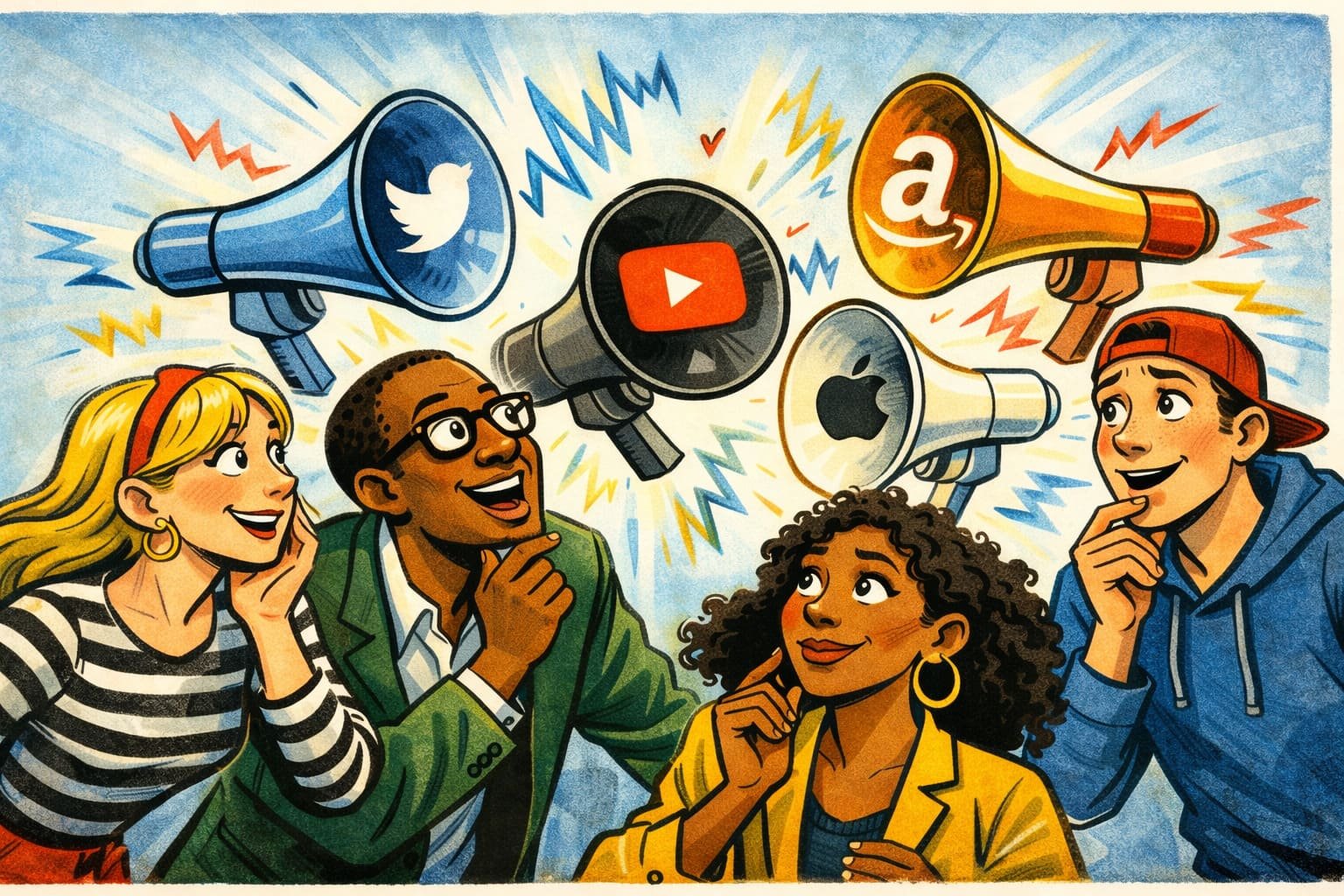
Static crackled through an aging radio while dozens of stations blurred into one forgettable stream of polished voices. Then a familiar laugh cut across the noise, unmistakable before a single sentence finished. Recognition arrived faster than explanation. Brands work the same way. People rarely remember every feature, campaign, or advertisement. They remember a voice that sounds human, carries conviction, and remains consistent long after scrolling fingers move to the next distraction.
Marketing teams often obsess over visual identity while neglecting verbal identity. Logos can be copied, colors can be imitated, and layouts quickly become trends everyone follows. Voice survives those changes because it reflects character rather than decoration. Mailchimp built an approachable personality that made marketing software feel welcoming instead of intimidating. Liquid Death transformed ordinary bottled water into an irreverent cultural symbol by speaking with fearless confidence, proving memorable language often creates stronger differentiation than expensive advertising.
Leila inherited communications for a respected financial consultancy whose articles sounded interchangeable with every competitor in the industry. Every sentence felt technically correct but emotionally invisible. She interviewed clients instead of rewriting headlines, discovering they appreciated directness, honesty, and practical language more than polished corporate vocabulary. Gradually every newsletter, presentation, and website page adopted that natural rhythm. Prospective clients began mentioning the writing itself during meetings, saying the company finally sounded like people they wanted to trust.
Curiously, great novelists understand a lesson marketers frequently overlook. Readers recognize Ernest Hemingway or Toni Morrison after only a handful of paragraphs because voice leaves fingerprints on every sentence. Business follows that same principle. Patagonia consistently communicates environmental commitment without abandoning commercial purpose, while Oatly built a loyal following through playful, conversational packaging that felt refreshingly unfiltered. Neither company depends solely on products. Each earns loyalty because personality appears wherever customers encounter the brand.
A weathered café tucked beside a crowded railway station still attracts regular visitors despite serving coffee no different from neighboring shops. Conversations linger there because the owner greets every guest with familiar warmth, remembers forgotten details, and treats strangers like returning friends. Brand voice creates similar emotional gravity. Audiences forgive occasional mistakes when authenticity feels genuine, yet quickly abandon organizations speaking in borrowed language that changes with every passing trend or executive presentation.
Lanterns glimmered across a winding harbor while echoes from countless conversations slowly disappeared into evening air, leaving only one familiar voice lingering above the tide. Reputation grows through repeated moments of recognition rather than isolated bursts of attention. Markets reward organizations brave enough to sound unmistakably themselves, even when imitation appears safer in the short term. Memorable brands are rarely the loudest voices in crowded markets. They are simply the ones people recognize before hearing the second sentence.
