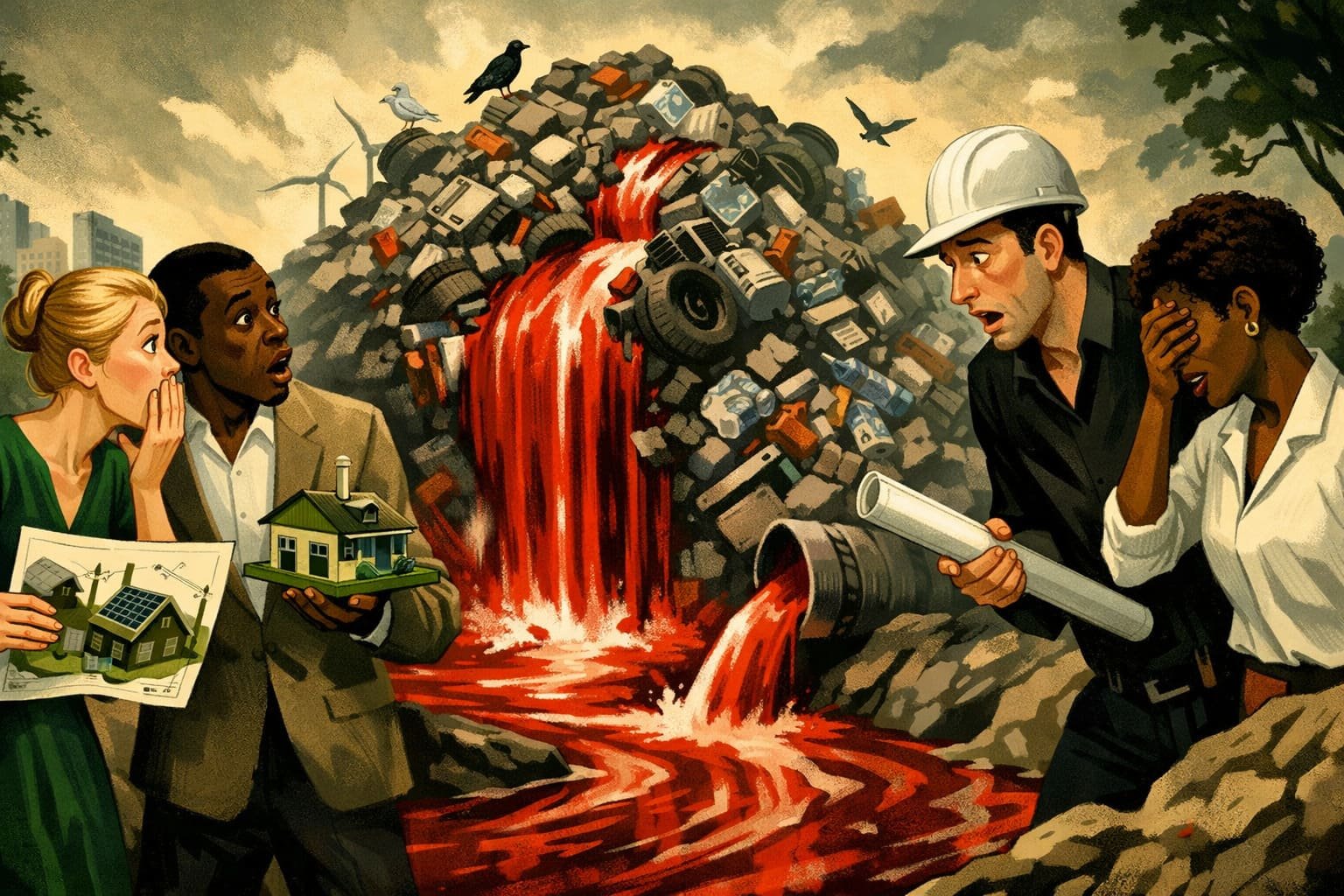
A warehouse sat under fluorescent light, full of objects that had already outlived their usefulness. Broken packaging. Overbuilt cartons. Plastic sleeves that would survive longer than the products inside them. The room looked ordinary, which was part of the problem. Waste rarely enters the world wearing a villain’s face. It arrives dressed as convenience, cheapness, and “good enough.”
The Beautiful Threat: When Design Finally Turns Against Waste
For years, design was praised for making things look desirable. Sleekness sold. Gloss seduced. Excess passed as success. But the mood has changed. Climate pressure, resource scarcity, and consumer fatigue have made waste look less like an accident and more like a design failure. The old game was to make products appealing. The new one is to make them lighter, cleaner, and harder to regret.
That shift has given rise to a different kind of creative ambition. Green design is no longer a niche language for eco-minded brands. It is becoming a strategic discipline, a business advantage, and, in some industries, a survival tactic. Packaging, architecture, product development, digital systems, and supply chains are all being rethought through the same brutal question: what is this thing costing the world after the sale is over?
The most interesting part is that the answer is often visual before it is political. Waste bleeds when design starts telling the truth.
Less Is Hot: The New Status Symbol Is Restraint
Luxury once meant more. More material. More shine. More layers. More weight. That logic now looks tired in places where consumers have begun linking taste with restraint instead of accumulation.
A product designer named Nerea once worked on a household goods line that looked polished on shelves but felt embarrassing in disposal. The outer wrap, inner tray, and secondary insert made the unboxing feel theatrical, yet the experience left a sour aftertaste. The team stripped the packaging down, removed decorative fillers, switched to recycled stock, and simplified the construction. Sales did not collapse. Brand affection improved. Customers seemed relieved to buy something that did not insult their intelligence.
That is the quiet revolution inside sustainable design. People are starting to admire objects that know when to stop. Minimal packaging, modular products, repairable devices, low-impact materials, and circular design all signal a larger cultural shift. Status is drifting away from wasteful abundance and toward intelligence with discipline.
The fashion industry has already felt the change. So has furniture. So has consumer electronics. Green product design works when it looks less like sacrifice and more like confidence. The object does not beg for attention. It earns it by being thoughtful.
Architecture Learns Humility: Buildings Start Breathing
The old fantasy of construction was domination. Move earth. Pour concrete. Stand tall. Repeat. The new reality asks buildings to cooperate with climate, not bully it.
Green architecture has become one of the clearest examples of design responding to planetary pressure. Passive cooling, natural ventilation, reused materials, daylight optimization, water harvesting, and energy-efficient systems are no longer fringe ideas. They are becoming practical responses to rising costs and unstable environmental conditions.
A developer named Jalen oversaw a mid-sized office retrofit in a city where summers had become punishing. The original plan was simple: add more cooling. The better plan turned out to be smarter design. The team introduced shaded facades, low-energy glass, better airflow, and internal zoning that reduced waste without making the building feel clinical. Tenants noticed the difference immediately. The air felt less forced. The building felt calmer, almost polite.
That is the strange beauty of green architecture. It does not just lower emissions. It changes the emotional temperature of space. People feel it in quieter rooms, softer light, and surfaces that do not scream for maintenance.
There is a reason the best sustainable buildings often feel easier to live in. They stop pretending that comfort must be wasteful. They prove that refinement and restraint can share the same address.
Product Afterlife: The Future Belongs To Things That Return
Most products are treated like endings. Buy, use, discard, repeat. Green design insists that an object’s life should continue after the first owner is done pretending it is timeless.
This is where circular design becomes more than an environmental slogan. Repairability, disassembly, recycling, refurbishment, and remanufacturing all push companies to think beyond the moment of purchase. The question is not only how a product is made. It is what the product becomes after its first chapter ends.
A startup founder named Imani built a small electronics company around that principle. Her earliest prototypes were not the flashiest on the market. They were, however, easy to open, easy to fix, and easy to reclaim. Competitors mocked the approach as unsexy. Then customer trust started clustering around the brand because buyers understood they were not being trapped in an expensive disposal cycle. The products felt honest.
That honesty matters because modern consumers are increasingly allergic to planned inconvenience. They can sense when a brand is designing for obsolescence rather than longevity. Green design exposes that old habit and punishes it.
Some companies still treat sustainability as a coat of paint. The smarter ones treat it as an operating system. They redesign parts, packaging, logistics, and maintenance together. Waste begins to shrink when the product’s entire life is considered, not just its first impression.
The Waste Tax: What Invisible Damage Really Costs
Waste has a talent for hiding in plain sight. It sits in the margins of invoices, supply contracts, construction specs, product photos, and digital workflows. Then the bill comes later, and everyone acts shocked.
What used to be dismissed as external impact now shows up as real business exposure. Raw material costs rise. Energy bills tighten. Regulations sharpen. Consumers ask harder questions. Investors notice environmental risk. Waste stops looking abstract and starts looking expensive.
A food brand manager named Tomas discovered this when his team reviewed the cost of packaging across an entire distribution chain. The expensive part was not only the materials. It was the damage, the excess weight, the storage burden, the transport inefficiency, and the disposal problems downstream. Once the team redesigned the package, waste fell and logistics improved. The savings were not merely environmental. They were structural.
This is where green design becomes emotionally and financially intelligent. It stops treating sustainability as charity and starts treating it as common sense. Less material often means less cost. Simpler systems often mean fewer failures. Cleaner design often means stronger trust.
The deeper lesson is uncomfortable. Waste is not just a byproduct. It is frequently a symptom of lazy thinking. And once that becomes visible, it is hard to unsee.
The Quiet Victory: When Design Starts Leaving No Scar
In a well-run studio, a sheet of paper lies beside a laptop, both marked by revisions. One version wastes too much. Another wastes less. The better one does not necessarily announce itself. It just feels calmer, smarter, more durable. That is how the new design culture works. It rewards objects, buildings, and systems that do not leave bruises behind.
The future of green design is not about making everything look rustic or preachy. It is about taste with discipline. It is about building things people want to keep, repair, reuse, and respect. The brands and organizations that understand this will not just look responsible. They will feel more intelligent than the ones still decorating waste and calling it premium.
This is why green design matters beyond sustainability circles. It is not only a climate response. It is a cultural correction. It asks whether modern life can remain beautiful without becoming reckless.
The answer is starting to appear in factories, studios, city blocks, and product labs around the world. Waste is losing its costume. Design is learning to tell the truth. And once that happens, the old habit of throwing everything away begins to look less like progress and more like embarrassment.
