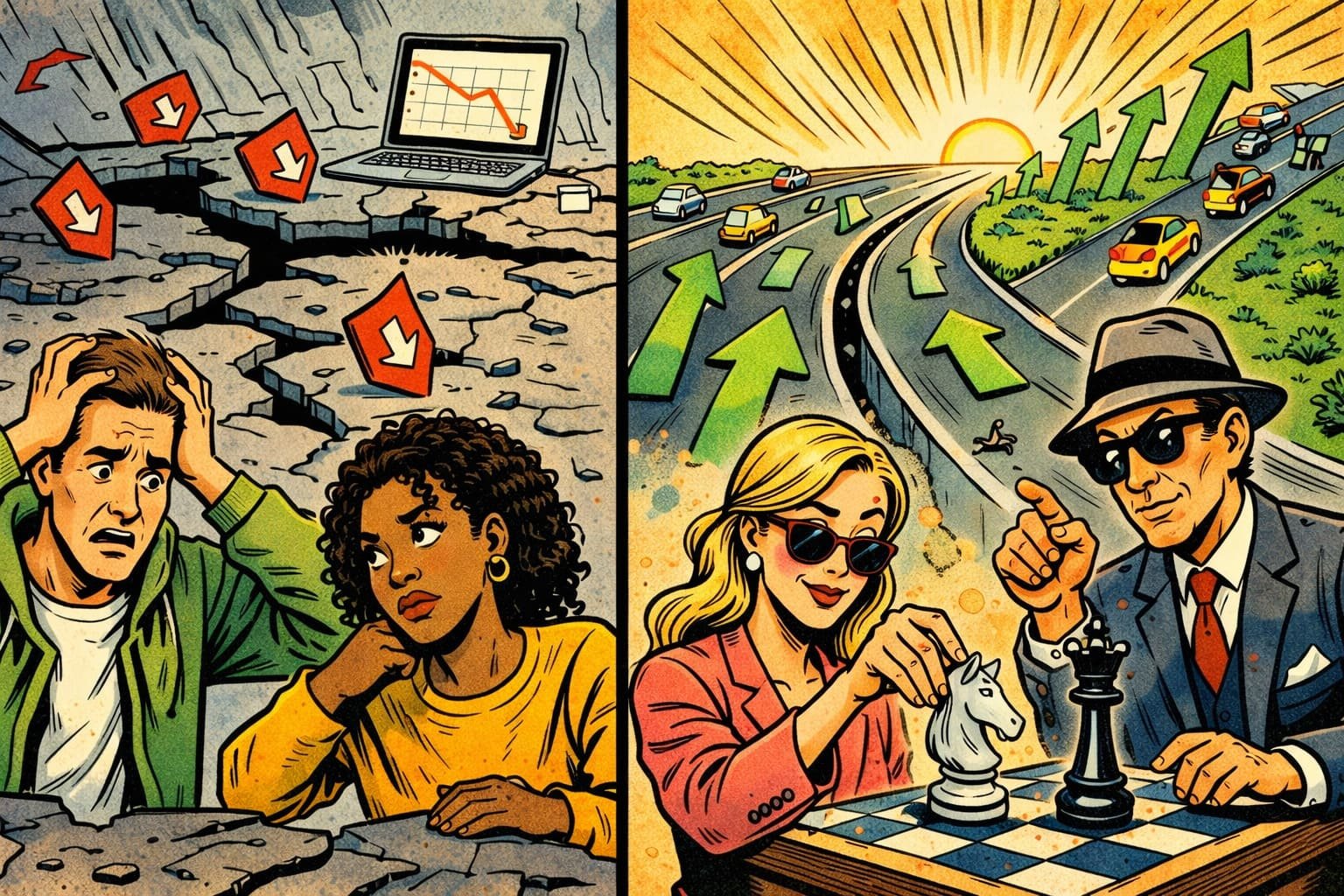
Dust floated through a nearly empty newsroom where yesterday’s triumph still hung on fading analytics dashboards, mocking everyone who believed success could coast forever. Every refresh brought another disappointing number. Nobody had changed the quality of the reporting, yet readers had quietly wandered elsewhere. That unsettling moment visits almost every growing brand. Traffic rarely disappears because audiences suddenly lose interest. More often, momentum fades because yesterday’s strategy keeps showing up for tomorrow’s competition.
Executives often respond with panic. More articles, larger advertising budgets, and frantic redesigns feel productive, yet they rarely solve the real problem. HubSpot rebuilt momentum by treating search intent as a moving target instead of a permanent destination, constantly refining content around evolving customer questions. Adobe followed a similar philosophy by expanding educational resources instead of relying only on product announcements. Growth returned because relevance replaced routine. Markets reward adaptation long before they reward effort.
Daniel managed content for a family-owned travel company that watched organic visitors shrink month after month. Colleagues blamed search algorithms, shrinking attention spans, and rising competition. Curious instead of frustrated, he interviewed loyal readers who admitted older guides no longer answered newer travel concerns. Fresh articles addressing remote work, flexible itineraries, and local experiences steadily revived engagement. Readers had changed first. Content simply arrived late to the conversation.
Behavioral patterns reveal an uncomfortable truth. People rarely search for information alone. They search for reassurance before making uncertain decisions. Google increasingly rewards pages that solve complete problems instead of matching isolated keywords, encouraging publishers to think about intent rather than mechanical optimization. That explains why comprehensive resources consistently outperform shallow updates. Lasting visibility belongs to organizations willing to understand evolving human behavior before reacting to shifting technology.
A small financial education website faced declining traffic despite publishing almost daily. Rather than increasing output, its editor paused production for several weeks and mapped every reader question from emails, comments, and customer calls onto existing articles. Large knowledge gaps appeared immediately. New content answered overlooked concerns while outdated guides received thoughtful revisions instead of cosmetic edits. Visitors stayed longer, recommendations increased, and search visibility gradually recovered. Recovery looked dramatic. Preparation had been remarkably ordinary.
Candles still burn brightest after careful trimming, even though that quiet maintenance rarely attracts applause. Businesses experience the same paradox. Sustainable traffic grows from disciplined observation, thoughtful adaptation, and relentless curiosity rather than desperate reaction. Every decline carries hidden information waiting for patient interpretation. Numbers never tell the entire story, but they always leave clues. Before chasing another quick marketing fix, ask whether lost traffic reflects weaker promotion, or whether your audience quietly became someone new while your strategy remained exactly the same.
