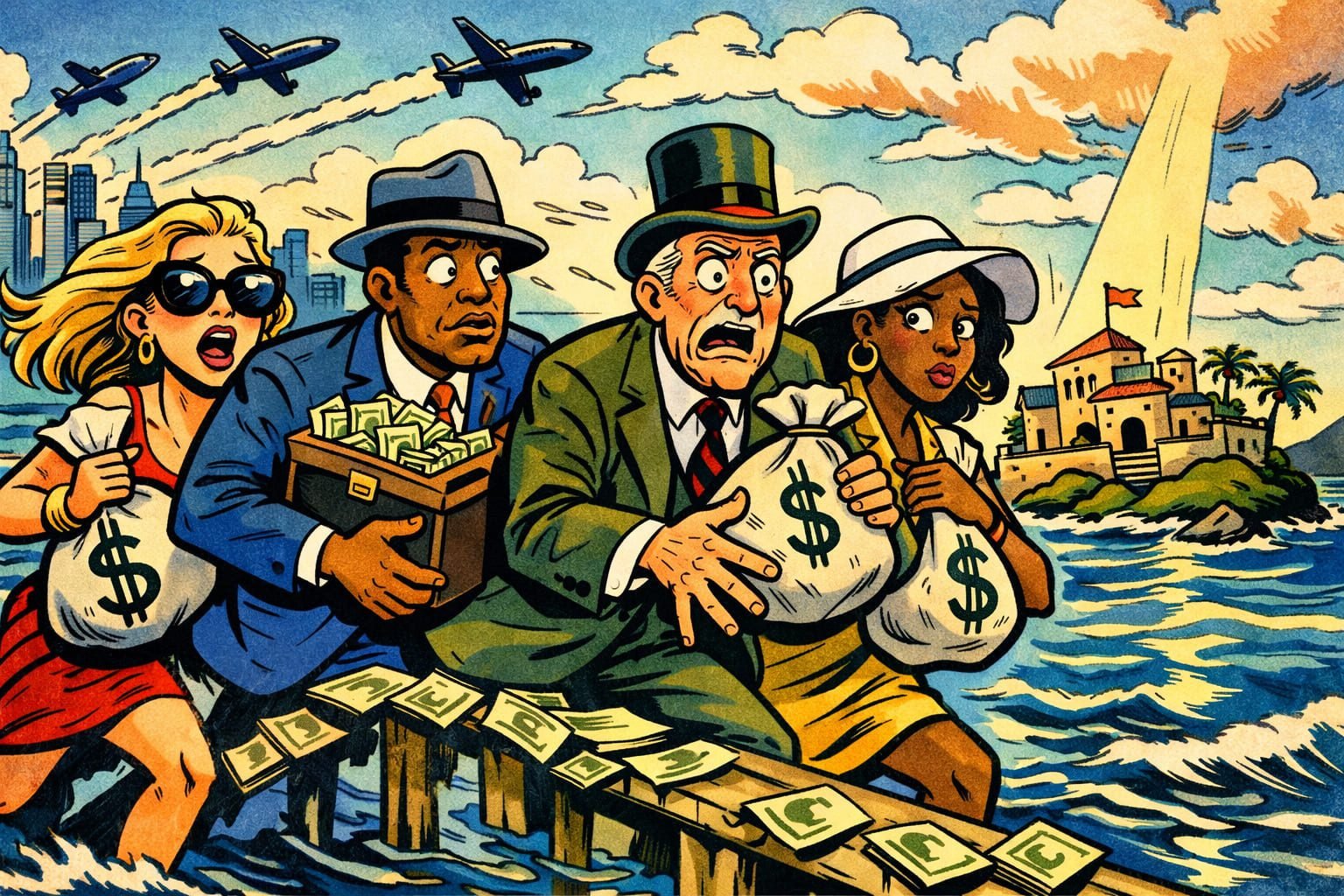
Smoke curled from a rooftop restaurant overlooking a glittering financial district where champagne glasses still clinked with practiced confidence. Across town, no crowds gathered outside banks, no television crews chased breaking news, and no sirens pierced the evening. Yet fortunes had already begun moving elsewhere. Capital rarely escapes through dramatic exits. It slips away through silent wire transfers, new offshore accounts, foreign investments, and cautious conversations whispered behind polished boardroom doors long before ordinary citizens sense that confidence has started packing its bags.
Capital flight is often misunderstood as an event driven solely by political turmoil or economic collapse. Reality is subtler. Investors constantly compare opportunity against risk, weighing taxation, inflation, regulatory uncertainty, currency stability, and legal protections before deciding where wealth should reside. Money behaves like water. It flows toward environments offering confidence and predictability rather than merely chasing the highest possible return. That movement reshapes exchange rates, investment activity, and economic resilience with surprising speed.
Argentina has repeatedly demonstrated how uncertainty surrounding inflation and currency controls encourages businesses and households to seek assets beyond domestic borders. Wealthy families purchased overseas property while companies diversified cash holdings into stronger currencies whenever confidence weakened. China presents another fascinating contrast, where authorities have carefully managed capital controls while investors continually search for legitimate international diversification. Different systems produced similar behavior. Wealth consistently favors jurisdictions where tomorrow appears easier to predict than today.
Nadia owned a successful textile exporter whose revenues steadily expanded across regional markets. Friends assumed prosperity guaranteed confidence. Instead, late evenings became consumed by discussions with accountants about currency exposure and international banking arrangements after local volatility intensified. Expansion remained attractive, but preserving accumulated value became equally important. Economist Dani Rodrik has long argued that institutions matter because trust in predictable governance encourages investment more effectively than temporary incentives or generous tax concessions.
Accounting often exposes capital flight before dramatic headlines emerge. Foreign direct investment slows while domestic investment weakens despite healthy consumer demand. Banking systems experience slower deposit growth as businesses increase overseas holdings. Currency reserves become increasingly important because central banks must reassure markets that financial stability remains credible. These changes appear incremental. Together they reveal whether confidence continues compounding inside an economy or gradually compounds somewhere else where uncertainty feels easier to tolerate.
Footsteps fade fastest across polished marble because echoes disappear before anyone notices who has already left. Financial systems experience a similar illusion whenever outward capital flows begin accelerating beneath reassuring public narratives. Prosperity depends not only upon attracting investment but also upon giving existing investors compelling reasons to remain committed through difficult seasons. Wealth rarely asks permission before relocating. When confidence becomes portable, every nation competes for trust before competing for capital.
