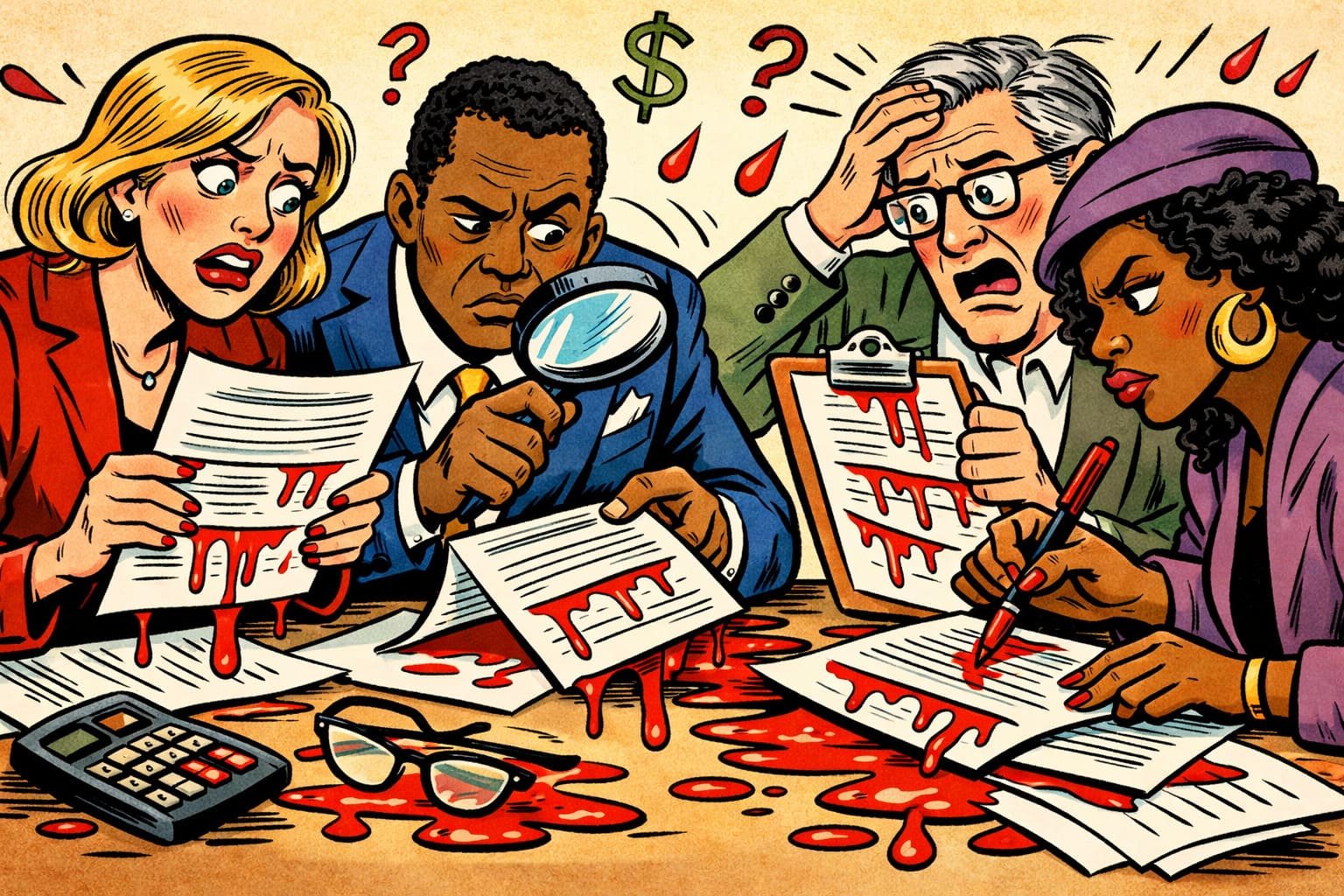
A true spending review does not feel like strategy at first. It feels like a bright light switched on in a room where everyone had learned to live with the shadows. Programs that once sounded virtuous are asked to justify themselves. Sacred line items lose their halo. Agencies discover that history is not the same thing as necessity. Ministers are forced to compare pain against pain. That is why spending reviews hurt. They are not just technical exercises. They are organized disappointment, a disciplined way of admitting that the budget contains more affection than money.
The OECD has become clear on the point. Spending reviews are most useful when they are closely linked to the budget process and used to reallocate resources according to changing priorities, not treated as occasional rituals of administrative guilt. The IMF has similarly argued that well-designed reviews can help governments improve efficiency and create fiscal space, but only when the process is politically led, analytically serious, and actually connected to decisions. In plain language, a review that does not cut, shift, or stop anything is just a conference with spreadsheets.
What makes reviews so painful is that every budget line has a constituency and a story. A subsidy supports jobs somewhere. A tax break protects somebody’s expectation. A grant, office, unit, or program survives partly because people inside the system can describe its purpose with real feeling. That does not mean the program should stay. It means cutting it will never feel clean. Fiscal reformers sometimes talk as if low-value spending glows neon under the right analytical lens. Usually it does not. It hides inside arrangements that are politically normal and emotionally defended.
That is why spending reviews often fail when governments treat them like salami slicing. Across-the-board trims may look impartial, but they are usually lazy. They ignore value and protect the status quo by shaving everything equally. The stronger approach is more ruthless and more intelligent. Ask what no longer works. Ask what is duplicated. Ask what was created for a world that has already vanished. Ask what would not be approved if designed from scratch today. Then cut there, even if the answer is awkward and the affected people know exactly how to call the press.
A health administrator in Britain once described a review season as “budget archaeology performed with a knife.” She meant that old decisions keep resurfacing, each with its own logic from another era. The knife part came when officials had to decide which legacy could still be defended and which had merely become familiar. Nobody in the room was frivolous. That is the myth outsiders often tell themselves, that waste is always obvious and housed in villainous departments. In real governments, spending reviews often involve cutting things that were once sensible and still have articulate defenders.
Good reviews also expose a darker fiscal truth. Budgets are often additive by default. New priorities get bolted on. Crises create layers. Temporary measures overstay. Pilot schemes become furniture. Political systems are excellent at starting and unusually clumsy at stopping. Spending reviews are one of the few institutional tools designed to reverse that bias. They force the state to remember that every continuation is also a choice. That sounds obvious until you watch a government struggle to end a measure whose original context has already evaporated.
The emotional cost of reviews should not be underestimated. Public servants often identify with the programs they run. Communities identify with the services they receive. Departments hear scrutiny as accusation. Ministers fear that rational reprioritization will be narrated as moral abandonment. Sometimes they are right. That is why review processes need political cover, analytical credibility, and communication strong enough to explain why reallocating money is not the same thing as devaluing the people who depended on the older pattern. Without that, even wise changes can land as random cruelty.
Yet avoiding reviews has its own cruelty. When governments never revisit existing spending, adjustment eventually arrives through blunter instruments, sudden freezes, debt stress, tax hikes, or decaying public services. A regular review culture is painful in the way exercise is painful. Skipping it does not cancel the bill. It postpones and compounds it. By the time the crisis version arrives, the cuts are often less thoughtful and more panicked. Every line bleeds anyway, only now it does so without strategy.
A transport ministry in one Nordic country discovered during a review that a legacy subsidy survived mostly because no one wanted to own its removal. The amount was not civilization-ending, but the principle mattered. Officials mapped the actual objective, found better tools, and redesigned support in a more targeted form. The most interesting part was not the savings. It was the institutional lesson. The subsidy had not persisted because it was brilliant. It had persisted because stopping is politically lonelier than starting. Spending reviews are, among other things, devices for making that loneliness shareable.
Strong reviews also help governments create room for the future. Aging, climate adaptation, defense, digital infrastructure, and health resilience all demand resources. Those resources will not materialize because a minister says innovation three times into a microphone. They have to be found. If every old commitment is untouchable, every new priority becomes a debt issue. A mature state does not merely ask how to fund tomorrow. It asks what yesterday is still doing on the payroll and whether nostalgia has become a fiscal category.
The OECD’s current guidance treats spending reviews as a core budget institution in many countries, not a niche austerity ritual. That is the right framing. Reviews are about prioritization, performance, and credibility, not only cuts. The pain is real because the choices are real. The point is not to glorify pruning for its own sake. It is to prevent the budget from becoming a mausoleum of unexamined continuation.
In the end, spending reviews hurt because they force governments to stop speaking in generalities and start choosing between goods that all have human faces attached. Every line bleeds because every line is somebody’s mission, memory, habit, or shield. That is precisely why the exercise matters. A budget worthy of public trust cannot be built only by adding dreams. It must also have the courage to look backward, touch the old architecture, and decide what still deserves to stand when the future is already pounding at the door.
