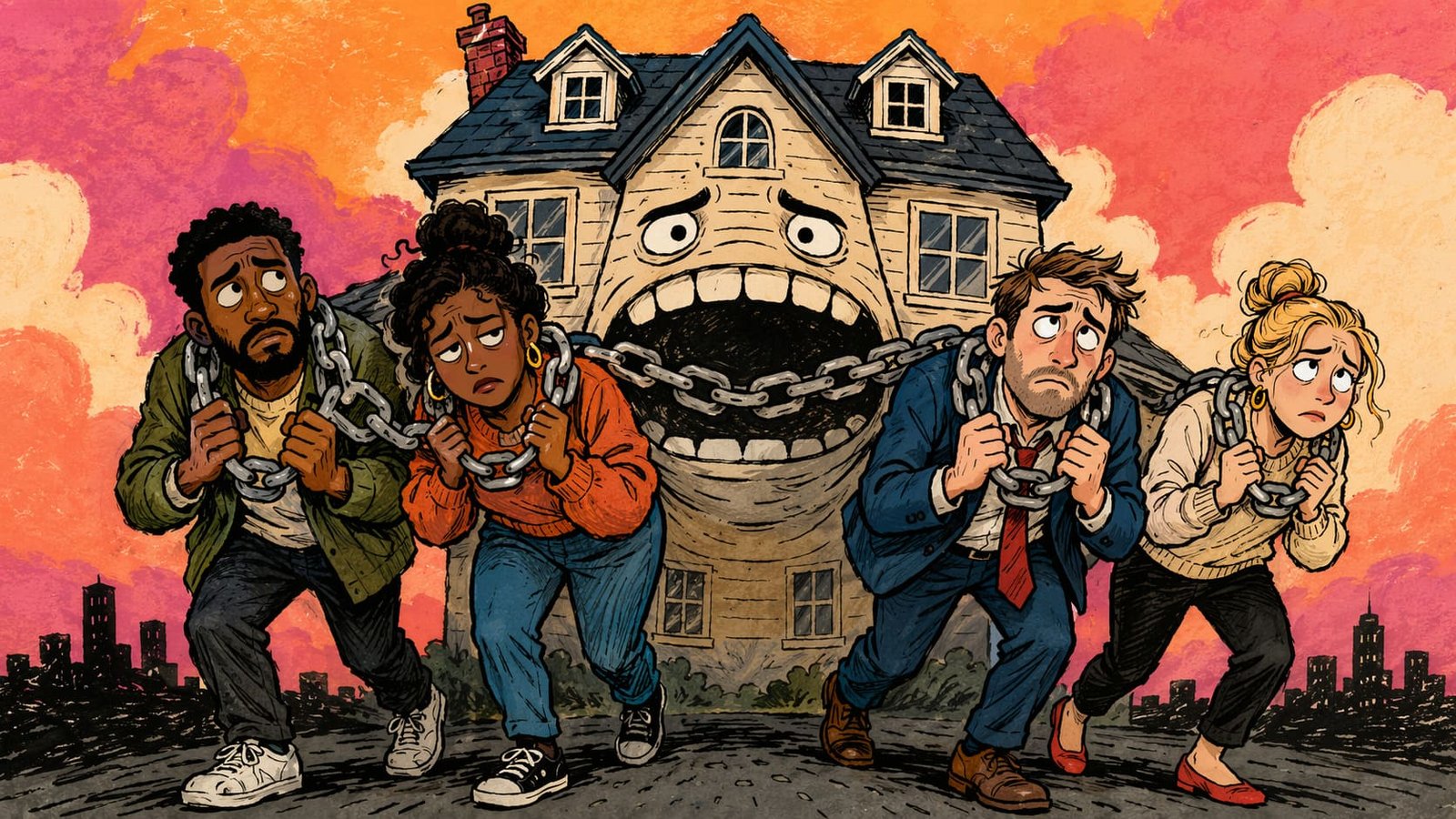
The keys feel heavier than expected, cool metal resting in a palm that trembles just slightly, not from excitement alone, but from something harder to name. The front door opens to a space that smells faintly of fresh paint and financial commitment. It looks like arrival. It feels like a beginning. Yet beneath the quiet pride, another realization settles in, slow and unmistakable. This is not just a purchase. It is a timeline.
For decades, homeownership symbolized stability, a milestone that marked entry into adulthood and a certain kind of security. Mortgages were long, but finite, a structured path toward eventual ownership. That structure is now stretching. In places like Japan and parts of United Kingdom, fifty-year mortgages have emerged as a response to rising property prices and stagnant wage growth. The logic is straightforward. Extend the term, lower the monthly payment, make ownership accessible. The reality is more complicated.
Lengthening a mortgage changes more than affordability. It alters the relationship between time, money, and life itself. A loan that spans half a century does not simply fit into a life. It shapes it. Decisions about career, family, mobility, even risk begin to orbit around a financial commitment that stretches far beyond traditional expectations. The house is no longer just a home. It becomes an anchor, sometimes stabilizing, sometimes restrictive.
Consider Oliver, a graphic designer in Manchester, who secured a long-term mortgage after years of renting. The monthly payments felt manageable, even reassuring compared to unpredictable rent increases. Friends congratulated him, framing the decision as a step forward. Months later, during a casual conversation, he admitted something quieter. The idea of carrying that debt into his seventies felt less like security and more like a horizon that refused to move.
The broader economic context makes these arrangements almost inevitable. Property values in major cities have outpaced income growth, creating a gap that traditional mortgage structures struggle to bridge. Financial institutions respond by extending terms, effectively spreading the cost across more years. It solves an immediate problem while introducing a longer-term tension. Accessibility increases, but so does duration.
This tension reshapes cultural expectations around adulthood. Previous generations often associated financial independence with a clear endpoint, a moment when debts were paid, and ownership was complete. That endpoint becomes less defined when the timeline extends across most of an adult life. The idea of “paying off the house” shifts from a goal to a distant possibility, sometimes even an abstraction.
A small story from Toronto captures this shift. Amara, a nurse, and her partner entered into a long-term mortgage after calculating that shorter terms would push them out of the market entirely. The decision felt rational, even necessary. Over time, they noticed how often future plans were filtered through the lens of that commitment. Career changes were weighed against stability. Travel plans were adjusted. The house provided comfort, but it also introduced a constant, low-level negotiation with the future.
Pop culture has begun to reflect this evolving reality in subtle ways. Conversations about financial independence, once framed around early retirement or aggressive saving, now often include discussions about managing long-term debt structures. The narrative shifts from ownership as freedom to ownership as managed obligation. It is less romantic, more pragmatic.
There is also a psychological dimension that runs beneath the financial calculations. A long-term mortgage can create a sense of permanence that feels both grounding and limiting. It anchors identity to a place, a structure, a set of obligations that extend far into the future. For some, this provides clarity. For others, it introduces a quiet tension between stability and flexibility.
Critics argue that such extended loans normalize a system where affordability is addressed by stretching time rather than addressing underlying costs. The concern is not just economic, but cultural. When debt becomes a lifelong companion, it changes how people think about risk, ambition, and possibility. The future becomes less open, more pre-allocated.
Yet there is also a pragmatic acceptance emerging. For many, the choice is not between a traditional mortgage and a fifty-year one, but between entering the housing market or remaining outside it entirely. In that context, extended terms feel less like a trap and more like a compromise. The decision is shaped by constraints that individuals did not create but must navigate.
There are alternative approaches being explored, from co-ownership models to community housing initiatives, each attempting to redefine what ownership means in a changing economic landscape. These models challenge the idea that a home must be tied to a single, long-term debt structure. They are not yet dominant, but they signal a willingness to rethink the system rather than simply extend it.
Somewhere, in that newly opened home, the quiet settles in. Furniture is arranged, routines begin to form, life unfolds within walls that feel both protective and binding. The keys rest on a table now, no longer held, but still carrying their weight.
And in that stillness, a deeper question begins to take shape, one that stretches far beyond any single mortgage agreement: when the cost of belonging is measured across a lifetime, what exactly are you agreeing to own, and what, quietly, begins to own you?
