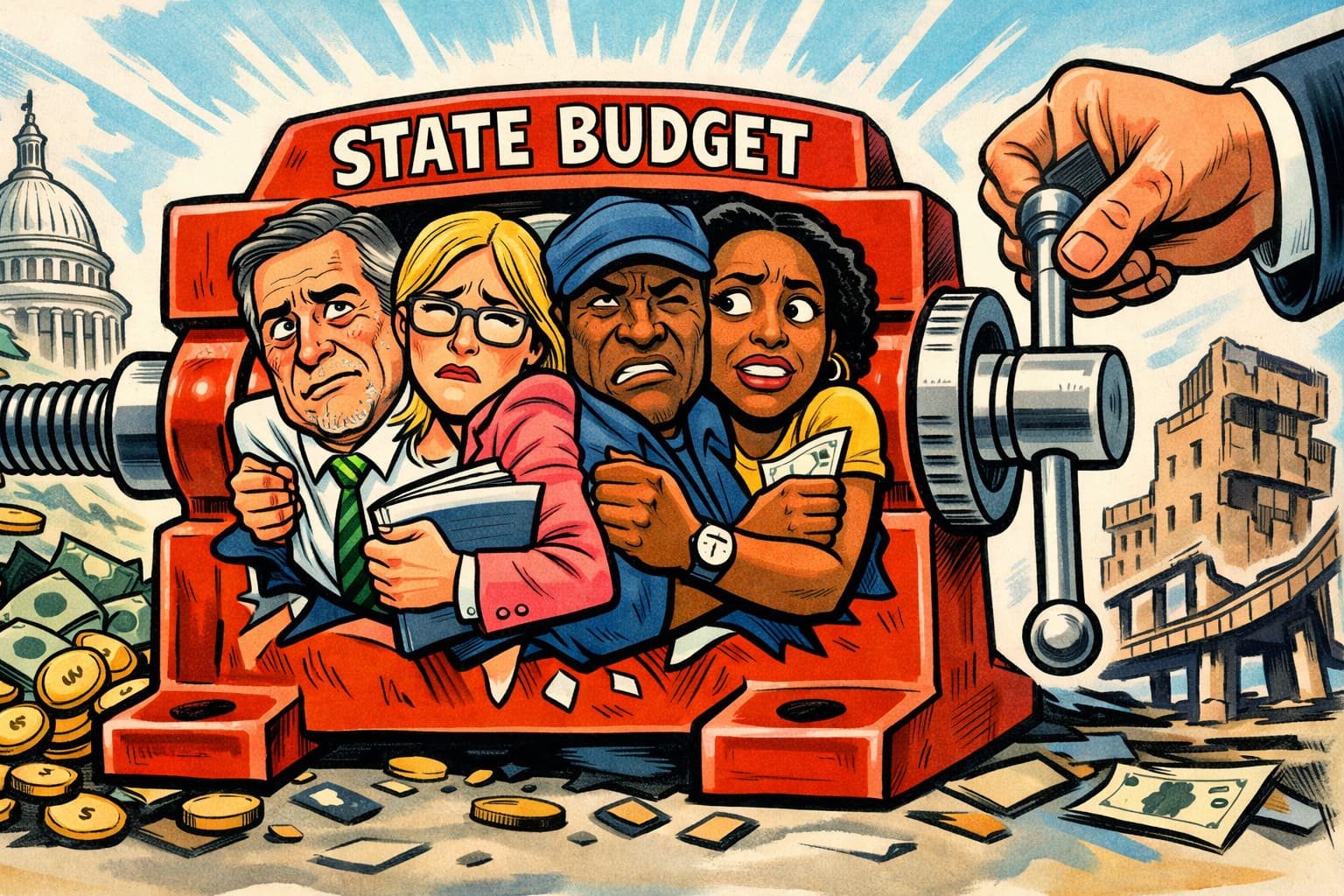
The state does not function through slogans. It functions through people. Teachers open classrooms. Nurses steady broken systems. Police officers, clerks, sanitation workers, inspectors, firefighters, social workers, transport staff, and administrators keep daily order from collapsing into improvisation. Yet payroll is also where fiscal pressure becomes brutally concrete. Wages are large, recurring, politically sensitive, and impossible to cut without consequences that citizens quickly notice. That is why governments under strain always circle the public payroll with a nervous look. It is both the engine of service delivery and the largest obvious target when budgets need relief.
Public payroll pressure grows from several directions at once. Inflation pushes workers to demand higher pay. Labor shortages make recruitment harder. Unions resist austerity. Aging staff raise pension and healthcare costs. Citizens want better services while taxpayers balk at higher bills. Governments then talk about efficiency, digital transformation, and modernization, which often means trying to extract more output from exhausted systems without admitting the tradeoff. The phrase may sound managerial. The reality is simpler. States begin squeezing because payroll is too big to ignore and too essential to handle casually. The squeeze then spreads from budgets into morale.
The United Kingdom’s waves of strikes across healthcare, transport, education, and public services made this tension painfully visible. Workers argued that pay had failed to keep pace with the cost and intensity of the job. Government argued that large settlements would deepen fiscal strain and inflation pressure. Citizens watched the collision in cancelled trains, delayed treatment, disrupted schooling, and a broader feeling that the public realm was fraying. What looked like a wage dispute was really a deeper argument about what kind of state the country still wanted and whether it was willing to fund that preference honestly.
Many developing economies face an even sharper version of the dilemma. Public payroll can dominate recurrent spending, leaving too little for maintenance, drugs, teaching materials, capital investment, or local service delivery. Yet cutting headcount can be politically explosive and socially destabilizing, especially where public employment is one of the few formal labor ladders available. Governments get trapped. They need the wage bill under control, but they also need teachers in schools, nurses in clinics, and enough jobs to prevent social anger from boiling over. Fiscal discipline then collides with labor market reality in a room with poor ventilation.
South Africa’s long running debates over the public wage bill capture the problem with unusual clarity. Pay demands, weak growth, state capacity issues, and service pressure all meet in one budgetary knot. The issue is not that public workers are villains or that treasuries are heartless. The issue is that payroll becomes the battlefield where economic weakness, political patronage, labor bargaining, and citizen expectations all try to occupy the same square meter. A government can freeze posts and call it prudence. It can grant raises and call it justice. Either way, something else often ends up underfunded.
A provincial hospital shows the human texture of this problem better than any speech. Staff shortages mean longer waits, frayed tempers, and skilled workers carrying workloads that eat into judgment. Raise pay without fixing management and the system still groans. Freeze wages and talent leaks into the private sector or overseas. Hire more people without accountability and payroll expands while outcomes disappoint. Public payroll pressure is not only about money. It is about design, leadership, and whether institutions know the difference between staffing a mission and feeding a machine. Too many states discover that they have done some of each.
The lazy solution is to demonize bureaucrats. The equally lazy solution is to treat every payroll increase as morally sacred. Strong states avoid both fantasies. They know that frontline roles are not identical to administrative sprawl. A hiring freeze applied blindly can starve critical services while preserving layers of paperwork that should have been redesigned years ago. The point is not smaller government in the abstract. It is sharper government. Protect scarce talent where service quality depends on it. Remove duplication where process has become self referential. Public payroll reform fails when ideology does the mapping instead of operational reality.
Technology complicates the debate in useful and misleading ways. Digital tools can reduce repetitive administrative work, improve scheduling, speed permitting, and make service delivery less painful. They can also become a fashionable excuse for underinvestment in people. A state that digitizes a bad process often just creates an online version of the same frustration. Real productivity gains come from redesign, training, accountability, and cultural change, not from software procurement alone. The future public payroll is not no workers. It is fewer unnecessary tasks, better management, and a more deliberate distinction between care work, core administration, and ornamental bureaucracy.
There is also a political honesty problem. Governments love to celebrate public workers during crisis, then return to wage restraint once the applause becomes expensive. Citizens notice that rhythm. So do workers. The result is cynicism on both sides. Public employees stop trusting praise. The public starts seeing service failure and assumes payroll must already be too generous. The center cannot hold for long under those conditions. A healthy social contract needs a stronger sentence than thank you and a stronger budget rule than no. It needs a clear view of which services matter enough to be staffed well, and why.
Better payroll reform starts with mission clarity. What should the state directly do, where does it need deep professional capacity, and where has it drifted into layers of compliance and administration that no longer justify their cost? Once that is answered, pay can be linked to retention, skill scarcity, and service quality instead of blunt across the board habits. Performance systems must be fair enough to matter and simple enough to use. Training should be treated as investment, not decoration. Leadership quality should be a payroll issue too, because weak management can waste more public value than a modest wage rise ever could.
A deeper truth lurks underneath all this. Public payroll pressure is really pressure on the meaning of collective life. When a society underpays teachers, stretches nurses, freezes essential hiring, and keeps multiplying tasks that do not serve the public well, it is making a moral statement about what counts. Budgets are not neutral documents. They reveal the hidden ranking of national priorities more honestly than speeches do. That is why wage bill fights feel so intense. They are battles over whether the state is still a capable partner in everyday life or just a tired employer defending its own abstractions.
In the administrative half light where budget ceilings meet human fatigue, the state begins to show its true face. Not in ceremonies, not in slogans, but in whether the people who keep ordinary life working are treated as assets, burdens, or disposable line items. Cut too brutally and services hollow out. Spend too carelessly and the system swells without improving. The art lies in refusing both panic and sentimentality. Public payroll is not dead weight to be hacked away, nor a shrine to be protected from scrutiny. It is the human machinery of the state, and when governments start squeezing blindly, it is usually citizens who feel the bruise first.
